A Comparative Study of Rule-Based and AI-Based Educational Robots for Vision-Based Waste Sorting

Dashboard

Local-first laboratory

Test the system,
not just the algorithm.

Compare deterministic control with AI-assisted perception under reproducible conditions inspired by the 2026 BRAIN study.

Article benchmark 91.7% System A accuracy
Experimental benchmark

Two architectures, one objective

Reference values come from the 15 rounds × 8 objects described in the article.

A
Deterministic control

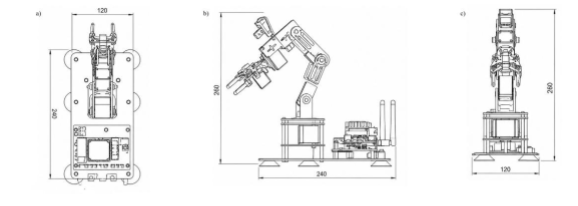
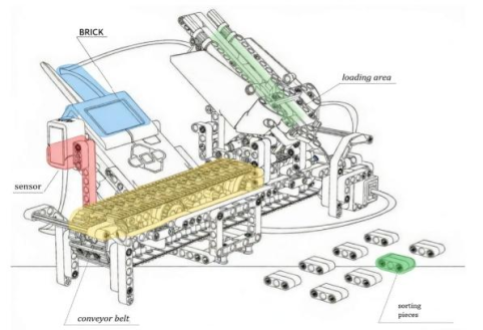
LEGO Mindstorms EV3

RULE-BASED
91.7% Mean accuracy
Time2.96 s
Efficiency0.31/s
Error8%
B
Adaptive perception

NextLab.tech AI

AI-ASSISTED
84.2% Mean accuracy
Time7.00 s
Efficiency0.12/s
Error16%
Key insight
“AI does not automatically guarantee superior robotic performance.”

Perception, mechanics, positioning, and control must be evaluated together.

Local history

Recent experiment accuracy

System A System B
No data yet Run the first experiment to populate this chart.
Active metric

System efficiency

η = Ncorrect / Ttotal

The number of correctly sorted objects per unit of time.

Article validation 0.917 / 2.96 ≈ 0.310
Educational digital twin

Configure. Run. Compare.

Ready for experiment
CELL / RS-01 System A · Rule-based
00 Round 000 Object
SCAN
CORRECT
REJECTED
TRUE
PRED
CONF
CYCLE
Accuracy waiting
Mean time seconds / object
Efficiency correct objects / s
Error rate incorrect classifications
Round by round

Performance

Results appear after the simulation.
Classification

Confusion matrix

Pred. recyclablePred. rejected Actual recyclable Actual rejected
Local classification

Upload. Capture. Select. Verify.

Loading Teachable Machine model… Preparing the local classifier.
Drop an image here or
PNG, JPG or WEBP · max. 10 MB
Local test set

Recent analyses

FilePredictionConfidenceActual classValidationDate
Verified analyses will appear here.
IndexedDB workspace

History and comparisons

Total experiments0saved locally
Mean accuracyall systems
Best resultno data
Estimated storage0 KBin this browser

No saved simulations

Your first experiment will automatically create a local dataset, without an account or server database.

BRAIN · Vol. 17 · Special Issue 1

Rule-Based vs. AI-Based
Educational Robots

An interactive interpretation of the 2026 study on vision-based waste sorting.

Coșniță · Antonescu · Vârlan
120objects / system 166student participants 15experimental rounds
01 / Hypothesis

AI complexity is not synonymous with performance.

The study evaluates two robotic cells under identical conditions, measuring accuracy, error rate, time, productivity, and stability.

PerceptionManipulationControlSTEM education
02 / Platforms
System A LEGO Mindstorms
System AColor sensor + fixed rules
System B NextLab.tech
System BCamera + ML classification
03 / Results
Accuracy
91.7%
84.2%
Efficiency
0.31/s
0.12/s
System ASystem B
04 / Formulas
AccuracyNcorrect / Ntotal × 100
EfficiencyNcorrect / Ttotal
ErrorNincorrect / Ntotal
Mean timeTtotal / Ntotal