News: 📢 亲爱的中国科研人员和作者 |
|
| 🇨🇳 简体中文(Simplified Chinese) 📢 亲爱的中国科研人员和作者: 诚挚邀请您关注 《BRAIN:Broad Research in Artificial Intelligence and Neuroscience》 微信公众号,及时获取本刊最新论文、专刊信息、征稿通知以及其他学术动态。 📱 微信号:brainjournal 您可以在微信中搜索 brainjournal,或扫描下方二维码关注我们。 期待您的关注,欢迎加入 BRAIN 国际学术社区! |
|
| Posted: 2026-08-02 | More... |
News: From Research to Interactive Learning |
|
| At BRAIN. Broad Research in Artificial Intelligence and Neuroscience, we are dedicated to making rigorously peer-reviewed and professionally edited scientific research accessible to a wider audience. To support this mission, selected articles are accompanied by online applications, including AI-powered tools, interactive demonstrations, educational games, and puzzles. These resources help students and the general public better understand and engage with the scientific concepts presented in our published research. |
|
| Posted: 2026-06-07 | More... |
Important about BRAIN: Our policy regarding the use of AI |
|
| In the current context of the widespread use of Artificial Intelligence across many domains — including the publication of scientific results — the 𝐄𝐝𝐮𝐒𝐨𝐟𝐭 𝐏𝐮𝐛𝐥𝐢𝐬𝐡𝐢𝐧𝐠 team maintains a cautious and responsible attitude toward the use of AI in academic publishing. The journal 𝐁𝐑𝐀𝐈𝐍. 𝐁𝐫𝐨𝐚𝐝 𝐑𝐞𝐬𝐞𝐚𝐫𝐜𝐡 𝐢𝐧 𝐀𝐫𝐭𝐢𝐟𝐢𝐜𝐢𝐚𝐥 𝐈𝐧𝐭𝐞𝐥𝐥𝐢𝐠𝐞𝐧𝐜𝐞 𝐚𝐧𝐝 𝐍𝐞𝐮𝐫𝐨𝐬𝐜𝐢𝐞𝐧𝐜𝐞 follows a clear policy regarding the use of AI, aligned with widely accepted ethical standards in scholarly communication. Our policy includes the following principles: • 𝐀𝐈 𝐢𝐬 𝐧𝐨𝐭 𝐚𝐥𝐥𝐨𝐰𝐞𝐝 𝐭𝐨 𝐠𝐞𝐧𝐞𝐫𝐚𝐭𝐞 𝐭𝐞𝐱𝐭𝐮𝐚𝐥 𝐜𝐨𝐧𝐭𝐞𝐧𝐭 𝐟𝐨𝐫 𝐚𝐮𝐭𝐡𝐨𝐫𝐬’ 𝐚𝐫𝐭𝐢𝐜𝐥𝐞𝐬. • 𝐀𝐈 𝐢𝐬 𝐧𝐨𝐭 𝐚𝐥𝐥𝐨𝐰𝐞𝐝 𝐭𝐨 𝐠𝐞𝐧𝐞𝐫𝐚𝐭𝐞 𝐟𝐚𝐥𝐬𝐢𝐟𝐢𝐞𝐝 𝐝𝐚𝐭𝐚 𝐢𝐧 𝐦𝐞𝐝𝐢𝐜𝐚𝐥 𝐨𝐫 𝐬𝐜𝐢𝐞𝐧𝐭𝐢𝐟𝐢𝐜 𝐚𝐫𝐭𝐢𝐜𝐥𝐞𝐬. • 𝐀𝐈 𝐢𝐬 𝐧𝐨𝐭 𝐚𝐥𝐥𝐨𝐰𝐞𝐝 𝐢𝐧 𝐭𝐡𝐞 𝐩𝐞𝐞𝐫-𝐫𝐞𝐯𝐢𝐞𝐰 𝐩𝐫𝐨𝐜𝐞𝐬𝐬. • 𝐀𝐈 𝐦𝐚𝐲 𝐛𝐞 𝐮𝐬𝐞𝐝 𝐟𝐨𝐫 𝐥𝐚𝐧𝐠𝐮𝐚𝐠𝐞 𝐩𝐨𝐥𝐢𝐬𝐡𝐢𝐧𝐠, such as improving sentence structure (for example, through tools like Grammarly), 𝐚𝐬 𝐥𝐨𝐧𝐠 𝐚𝐬 𝐭𝐡𝐞 𝐨𝐫𝐢𝐠𝐢𝐧𝐚𝐥 𝐦𝐞𝐚𝐧𝐢𝐧𝐠 𝐨𝐟 𝐭𝐡𝐞 𝐭𝐞𝐱𝐭 𝐢𝐬 𝐧𝐨𝐭 𝐚𝐥𝐭𝐞𝐫𝐞𝐝. • 𝐀𝐈 𝐦𝐚𝐲 𝐛𝐞 𝐮𝐬𝐞𝐝 𝐭𝐨 𝐜𝐫𝐞𝐚𝐭𝐞 𝐢𝐦𝐚𝐠𝐞𝐬, 𝐝𝐢𝐚𝐠𝐫𝐚𝐦𝐬, 𝐨𝐫 𝐯𝐢𝐬𝐮𝐚𝐥 𝐬𝐜𝐡𝐞𝐦𝐞𝐬, provided that these are carefully verified by the authors and accurately reflect scientific reality. • 𝐀𝐈 𝐦𝐚𝐲 𝐛𝐞 𝐮𝐬𝐞𝐝 𝐭𝐨 𝐠𝐞𝐧𝐞𝐫𝐚𝐭𝐞 𝐩𝐫𝐨𝐦𝐨𝐭𝐢𝐨𝐧𝐚𝐥 𝐢𝐦𝐚𝐠𝐞𝐬 𝐟𝐨𝐫 𝐬𝐨𝐜𝐢𝐚𝐥 𝐦𝐞𝐝𝐢𝐚 𝐨𝐫 𝐰𝐞𝐛𝐬𝐢𝐭𝐞𝐬, used to promote articles that have been published or are in the process of publication in the journal. • 𝐀𝐈 𝐦𝐚𝐲 𝐛𝐞 𝐮𝐬𝐞𝐝 𝐢𝐧 𝐜𝐨𝐫𝐫𝐞𝐬𝐩𝐨𝐧𝐝𝐞𝐧𝐜𝐞 𝐰𝐢𝐭𝐡 𝐨𝐮𝐫 𝐞𝐝𝐢𝐭𝐨𝐫𝐢𝐚𝐥 𝐨𝐟𝐟𝐢𝐜𝐞, for example to help formulate messages in a clearer, more formal, or more elegant way. Through this balanced approach, we aim to encourage responsible use of emerging technologies while maintaining the integrity, reliability, and ethical standards that scientific publishing requires. |
|
| Posted: 2026-03-16 | More... |
Important about BRAIN: Editorial Announcement to the Readers and Authors of BRAIN. Broad Research in Artificial Intelligence and Neuroscience |
|
Dear readers and authors, The editorial team of BRAIN. Broad Research in Artificial Intelligence and Neuroscience would like to reaffirm our ongoing commitment to rigorous scientific standards and responsible editorial practices. Our evaluation process remains serious and thorough at every stage:
At the same time, we believe that a modern scientific journal should not only be rigorous, but also adapted to the evolving ways in which readers and authors interact with knowledge and research. AI-based tools to support authorsWe have developed several artificial intelligence tools designed to assist authors, for example by:
We want to emphasize very clearly:
Our peer-review process involves:
Modern promotion of published researchIn line with contemporary scientific communication practices, for most articles published since October 2024, our team has created:
We are present on Facebook, YouTube, Instagram, LinkedIn, and X, where we promote the work of our authors to both the scientific community and a broader interested audience. We are pleased to note that these overview videos have begun to be indexed as research-related datasets within Clarivate’s Web of Science ecosystem, increasing the visibility and discoverability of the research we publish through modern multimedia formats. |
|
| Posted: 2026-02-04 | More... |
News: Does your research fit in BRAIN? |
|
The academic journal BRAIN. Broad Research in Artificial Intelligence and Neuroscience is always dedicated to supporting authors who wish to publish their work with us. To make your publishing journey even smoother, our team has developed a brand-new Artificial Intelligence application that checks whether your article (in PDF format) aligns with the focus and scope of our journal. Introducing BRAIN Self-Review — a smart tool that allows authors to perform a preliminary self-assessment of how well their manuscript fits the themes and topics of BRAIN before submission. This early insight can help you refine and improve your work where needed. You can access the application online, even from mobile devices, right here: 👉 https://brain-self-review.edusoft.ro/
|
|
| Posted: 2025-12-10 | More... |
News: Upcoming publication, in just a few days, of Issue 4 of Volume 16 (December 2025) |
|
It is a genuine pleasure and a great honor to announce the upcoming publication, in just a few days, of Issue 4 of Volume 16 (December 2025) of BRAIN. Broad Research in Artificial Intelligence and Neuroscience. This issue is, without exaggeration, one of the most diverse and complex volumes published so far—both through its thematic richness and through the extraordinary geographical diversity of its authors and contributing institutions. A Strategic Objective Achieved: 4 Continents United Through ResearchIn this issue, we include works originating from Europe, Asia, Africa, and North America. The authors represent academic institutions and research centers from Romania, Italy, Spain, Czech Republic, Bulgaria, Turkey, Saudi Arabia, Pakistan, Algeria, Finland, the United Arab Emirates, Ukraine, Hungary, Slovakia, Israel, Switzerland, and the United States. We particularly highlight the presence of: Thus, Issue 4 becomes not only an issue of diversity, but also one of international excellence in AI, neuroscience, and behavioral sciences. The Four Major Themes of This IssueThe structure of the journal, organized into four major categories, reflects the breadth and emerging directions of contemporary research. A. Artificial Intelligence, Society & Digital InnovationThis section explores how AI technologies interact with society, education, digital culture, and emerging social environments. Section A is one of the most geographically diverse, demonstrating that AI is a truly global phenomenon, with applications ranging from education to security, mobility, and digital media. |
|
| Posted: 2025-11-29 | More... |
News: BRAIN Junior Researchers |
|
The editorial board of BRAIN. Broad Research in Artificial Intelligence and Neuroscience is pleased to announce the launch of a new section: BRAIN Junior Researchers. This initiative is dedicated to high school and undergraduate students who are curious about Artificial Intelligence, Neuroscience, Cognitive Science, and related fields. Our goal is to give young minds the opportunity to share their ideas, projects, and perspectives within an international academic platform. What You Can Submit
|
|
| Posted: 2025-09-12 | More... |
News: Dr. Shlomo Mendlovic has joined the Editorial Team |
|
| 🌟 We are delighted to share wonderful news with our community: Dr. Shlomo Mendlovic has joined the Editorial Team of BRAIN. Broad Research in Artificial Intelligence and Neuroscience as Associate Editor! 🙌✨ Dr. Mendlovic is a renowned psychiatrist, researcher, and innovator in mental health. |
|
| Posted: 2025-08-22 | More... |
News: Official Announcement - Volume 16, Issue 2 (2025) |
|
Official Announcement To whom it may concern, We hereby inform all interested parties that Volume 16, Issue 2 of the journal BRAIN. Broad Research in Artificial Intelligence and Neuroscience is scheduled for official publication on June 12, 2025. At present, the editorial and technical teams are performing the final verifications and assigning DOI (Digital Object Identifier) codes to each article. For the benefit of readers, authors, evaluators, and all competent academic or non-academic bodies that may require official evidence of publication—for instance, in support of academic promotions, habilitation processes, or research certification for university professors, medical professionals, and researchers—we have made available an Extended Table of Contents of the forthcoming issue at the following link: |
|
| Posted: 2025-06-02 | More... |
News: BRAIN. Broad Research in Artificial Intelligence and Neuroscience has increased the number of articles published per issue |
|
We are pleased to inform our readers, contributors, and partners that, beginning with Issue 2 of Volume 16 (2025), BRAIN. Broad Research in Artificial Intelligence and Neuroscience has increased the number of articles published per issue from 25–28 to 30–35. This expansion reflects the growing visibility and academic recognition of our journal, which has significantly increased since EduSoft Publishing resumed active editorial leadership. Several key factors have contributed to this progress:
Despite this growth, we remain committed to maintaining rigorous academic standards. All submissions undergo a strict double-blind peer-review process, and we proudly maintain a rejection rate of 55%, meaning that the acceptance rate is now 45%, reflecting our commitment to publishing only high-quality, impactful research. |
|
| Posted: 2025-05-25 | More... |
News: Call for Papers - Special issue on Neuroscience and AI in Education |
|
Call for Papers Submission Deadline: March 5, 2025 BRAIN. Broad Research in Artificial Intelligence and Neuroscience invites researchers, educators, and practitioners to submit original manuscripts for Special Issue 1 (March-April 2025), titled "Neuroscience, Artificial Intelligence, and Innovation in Education." This special issue aims to explore the intersection of neuroscience, artificial intelligence (AI), and education, addressing how technological advancements and cognitive research are shaping modern pedagogical practices. We welcome high-quality research that examines AI-driven learning methodologies, neuroeducational approaches, digitalization in education, and inclusive learning strategies. |
|
| Posted: 2025-01-01 | More... |
News: ¡Servicios editoriales dedicados a los investigadores y autores de habla hispana por parte del equipo de BRAIN! |
|
 ¡Servicios editoriales dedicados a los investigadores y autores de habla hispana por parte del equipo de BRAIN! ¡Servicios editoriales dedicados a los investigadores y autores de habla hispana por parte del equipo de BRAIN!  El equipo editorial de la revista BRAIN. Broad Research in Artificial Intelligence and Neuroscience (o CEREBRO. Investigación Amplia en Inteligencia Artificial y Neurociencia) no solo se dedica a publicar artículos científicos de gran valor, sino también a popularizar la ciencia y apoyar a nuestros lectores y autores.    Para autores y lectores de hablahispana: Para autores y lectores de hablahispana:Los resúmenes de nuestros artículos están disponibles en español, para que puedan identificar rápidamente qué temas les interesan antes de leer los artículos completos en inglés. Si son autores de habla hispana y no dominan bien el inglés, pueden enviar sus artículos en español, y nuestro equipo editorial se encargará de traducirlos al inglés.   Publicar su artículo en BRAIN. Broad Research in Artificial Intelligence and Neuroscience es una inversión valiosa para su trayectoria académica, ¡y estamos aquí para apoyarlos en este camino!  Si tienen preguntas o desean enviar un manuscrito, no duden en contactarnos. ¡Estamos encantados de recibirlos! Si tienen preguntas o desean enviar un manuscrito, no duden en contactarnos. ¡Estamos encantados de recibirlos! A continuación, encuentran los resúmenes de los artículos del último número de la revista BRAIN, en español. A continuación, encuentran los resúmenes de los artículos del último número de la revista BRAIN, en español. |
|
| Posted: 2025-01-24 | More... |
News: Message from the Editor-in-Chief |
|
Dear friends, colleagues, and supporters, As 2024 draws to a close, I reflect with immense gratitude on the incredible contributions of everyone who made this year so successful for BRAIN. Broad Research in Artificial Intelligence and Neuroscience. Your hard work, dedication, and passion for excellence have truly shaped our journal. Top 10 Most Active Reviewers of 2024A huge round of applause for the following reviewers, whose exceptional efforts have made this year remarkable: Thank you for your extraordinary dedication and the impact you've made on the journal's success! Special Recognition for the Contributions of Associate and Consultant EditorsWe are deeply grateful to the following associate and consultant editors for their invaluable expertise and support: Your contributions have strengthened our mission and extended our global impact. Acknowledgment to All ReviewersWe would also like to thank the following reviewers, whose valuable feedback and support have been essential to our progress: |
|
| Posted: 2024-12-19 | More... |
News: BRAIN. Broad Research in Artificial Intelligence and Neuroscience Scholarship Awarded to Dr. Diana Rotaru |
|
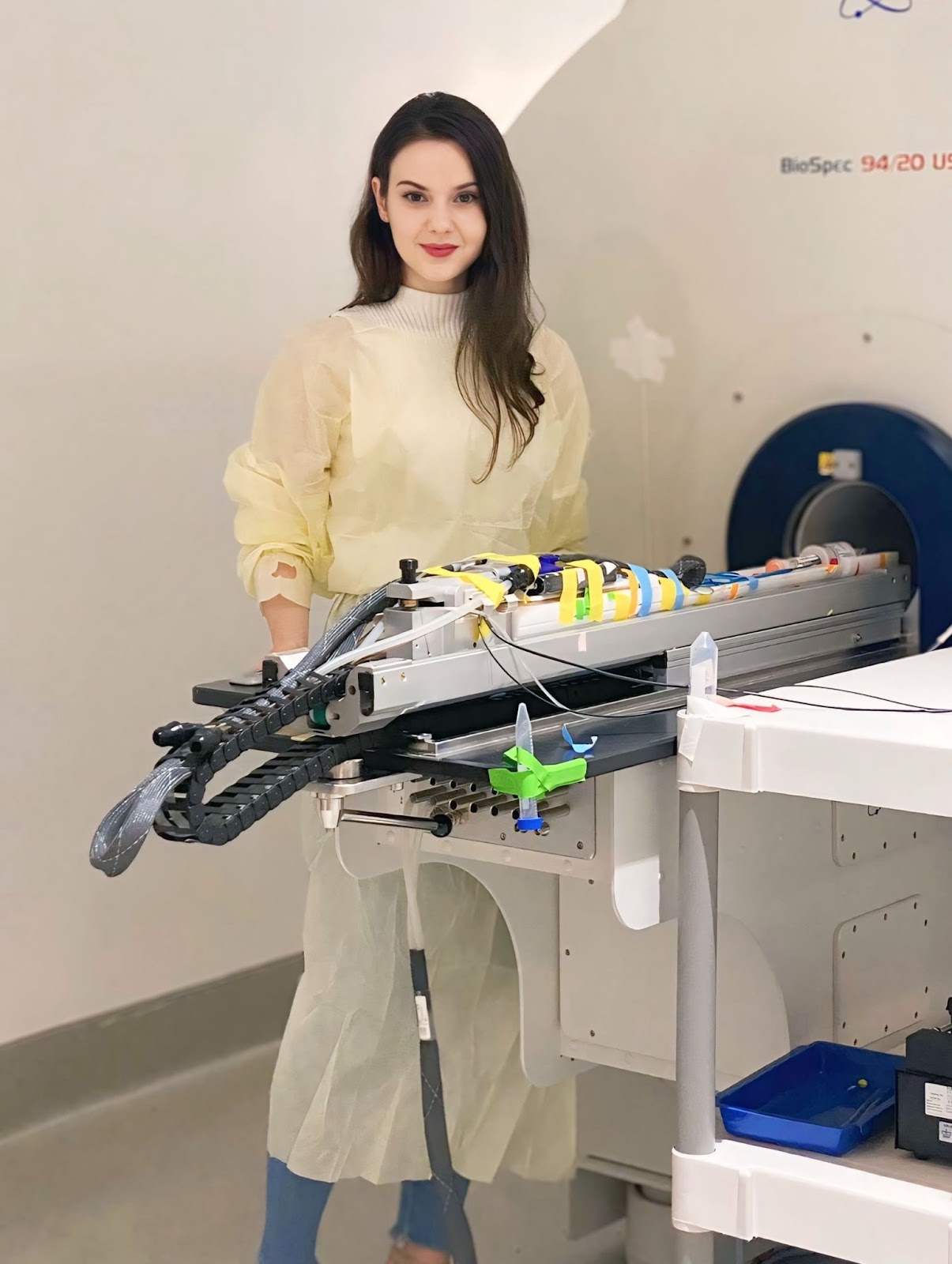
The editorial board of BRAIN. Broad Research in Artificial Intelligence and Neuroscience, in partnership with Asociatia EduSoft, is honored to award a scholarship to Dr. Diana Rotaru, Post-Doctoral Research Scientist at Columbia University. This scholarship, provided through the generosity of Asociatia EduSoft, is granted in recognition of Ms. Rotaruâ's exceptional achievements and her potential as a promising leader in neuroimaging and artificial intelligence research. Dr. Rotaru's impressive background includes a Ph.D. in Neuroimaging Physics from the Institute of Psychiatry, Psychology & Neuroscience at King's College London, and an MSc in Neuroimaging from the same institution. Her professional experience spans roles as a Postdoctoral Research Associate at the University of Cambridge, Vice President for Projects & Sponsorships at Biomentorhub, and internships at globally recognized research centers, such as Creatis at CNRS - INSA Lyon. Ms. Rotaru's academic journey and professional background speak to her dedication and potential as an emerging leader in neuroscience and artificial intelligence research. With a Ph.D. in Neuroimaging Physics from the Institute of Psychiatry, Psychology & Neuroscience at King's College London, and an MSc in Neuroimaging from the same prestigious institution, Ms. Rotaru has established a solid foundation in these fields. Her career path includes notable positions, such as Postdoctoral Research Associate at the University of Cambridge, Vice President for Projects & Sponsorships at Biomentorhub, Intern at Creatis, the Medical Imaging Research Center at CNRS - INSA Lyon, and PR & Communications Coordinator at MED. Having earned her BSc in Medical Engineering from the Politehnica University of Bucharest, Ms. Rotaru exemplifies the global excellence that Romanian researchers are contributing to the scientific community. Her commitment to advancing medical imaging and neuroimaging has positioned her as a promising figure whose research has the potential to drive innovation in these critical areas. This scholarship is awarded to Ms. Rotaru as a testament to her exceptional contributions and to support her continued work in advancing neuroimaging and artificial intelligence. Asociația EduSoft and BRAIN are proud to foster the careers of young researchers who exemplify the innovative spirit and dedication needed to drive progress in these interdisciplinary fields. We look forward to the continued impact of Ms. Rotaru's work on the global research community and are honored to support her journey. Photo credit: Claudiu Petringenaru, https://www.facebook.com/claudiupetringenaru |
|
| Posted: 2024-11-14 | More... |
Important about BRAIN: Termination of Collaboration and Updated Editorial Policies for BRAIN Journal |
|
Dear Authors and Contributors, We hereby inform you that the collaboration between Academia EduSoft and Lumen Publishing has officially concluded as of August 2024. Consequently, starting with Issue 3 of Volume 15 (2024), the BRAIN Journal will be exclusively edited and published by EduSoft Publishing. In light of this transition, we wish to notify you of significant changes concerning the Scientific Committee and the editorial policies of the journal. BRAIN is committed to upholding the highest standards of academic quality, prioritizing excellence over quantity in all our publications. Accordingly, our peer-review process will be rigorously enforced to ensure that only works of the highest scholarly merit are accepted. Please be advised that any submission that does not align with the thematic scope of the journal will be automatically rejected by an editor without further review. Additionally, any manuscript found to be plagiarized or bearing substantial similarity to previously published works will be rejected, and the authors will be barred from submitting any future articles for a period of two years. Furthermore, strict adherence to the article template is mandatory. Submissions that fail to comply with the formatting requirements will be rejected outright. We appreciate your understanding and cooperation as we strive to maintain the integrity and quality of our journal. Sincerely, |
|
| Posted: 2024-08-11 | More... |
| 1 - 15 of 15 Items | |
☰











 ▲
▲
▲
Information
Font Size
User
p-ISSN: 2068 - 0473
e-ISSN: 2067 - 3957
DOI:
10.18662/brain
DOI prefix: 10.70594/brain (currently edited by EduSoft) | 10.18662/brain (when was edited by Lumen)
Frequency:
4 issues/year (occasional additional issues)
Abstracting & Indexing
Web of Science (ESCI, IF 0.6), EBSCO, Google Scholar etc.
Member in CrossRef
Go to Article ID
CURRENT ISSUE 
LAST 2 PREVIOUS ISSUE


Keywords
Artificial Intelligence
adaptation
anxiety
artificial intelligence
autism
deep learning
depression
education
emotional intelligence
higher education
machine learning
mental health
motivation
neuropedagogy
neuroplasticity
neuropsychology
neuroscience
schizophrenia
stress
students
virtual reality