










 ▲
▲




 Email this article
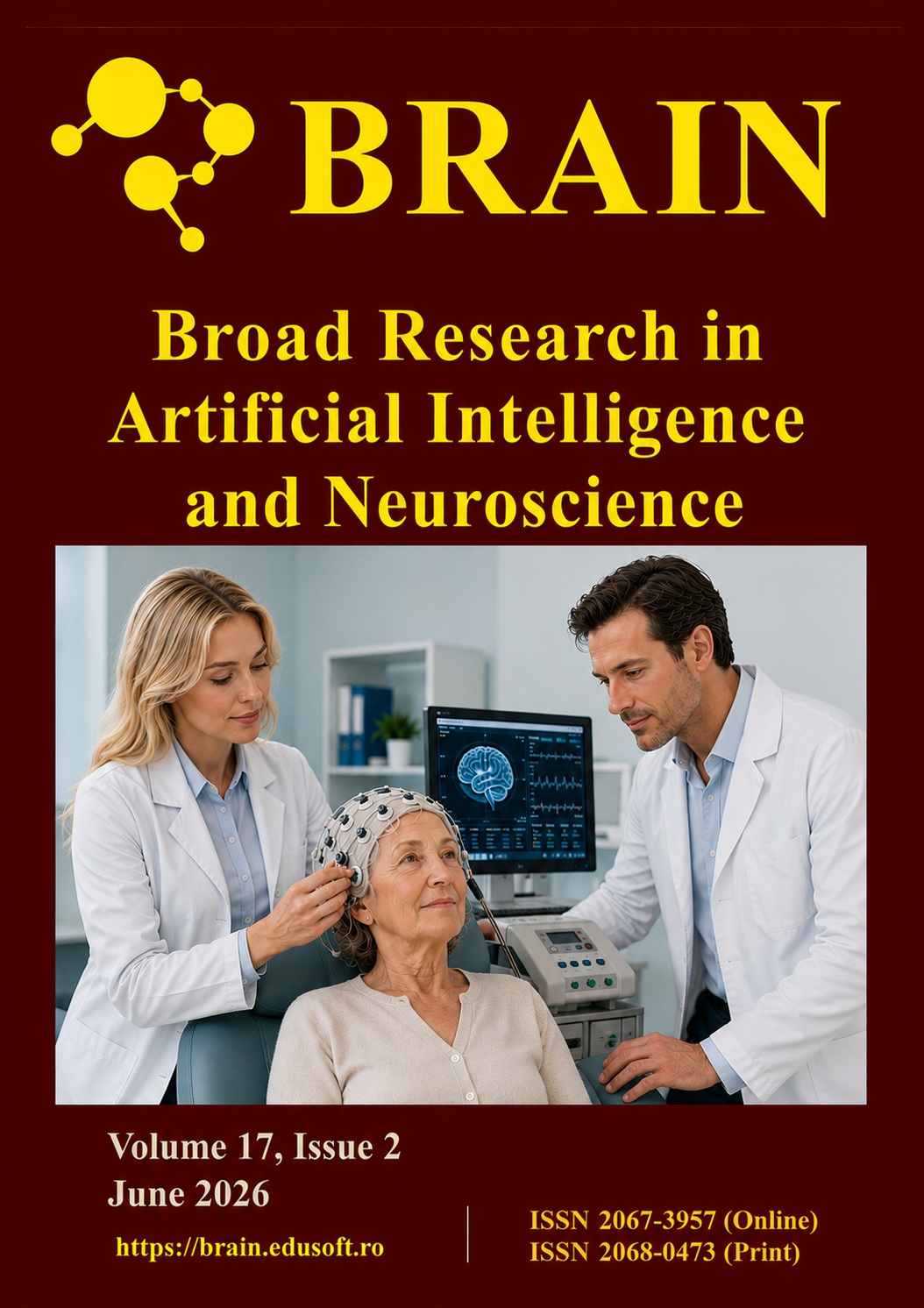


BRAIN. Broad Research in Artificial Intelligence and Neuroscience
Volume: 17 | Issue: 2 |
Artificial Intelligence – Assisted Neurobehavioural Assessment of Aquatic Pollutants: Valproic Acid as a Case Study in Zebrafish
Published June 3, 2026
❝
Cite

Abstract
The increasing presence of pharmaceuticals in aquatic ecosystems has raised significant concerns due to their detrimental effects on both environmental and human health. The present study discusses the rising concern about pharmaceuticals in aquatic environments, focusing on valproic acid (VPA), an antiepileptic drug identified as a neuroactive contaminant. Its persistence in wastewater and limited removal by conventional treatments, along with its known neuroactive properties, prompted the investigation of its neurobehavioural effects in zebrafish (Danio rerio), a model organism for environmental neurotoxicology. Conventional behavioural scoring techniques frequently suffer from subjectivity and inadequate resolution, especially when evaluating the nuanced effects of low-dose exposure or mixture-induced, characteristic in the natural environments. The study highlights the importance of behavioural endpoints as indicators of brain disorders and the role of artificial intelligence (AI) in improving behavioral analysis. By integrating automated video tracking with an AI-assisted exploratory workflow and multivariate analytics, this study illustrates the feasibility of computational approaches for detecting neurobehavioural alterations. After 96 h of exposure, VPA was associated with altered locomotor and spatial behavior in adult zebrafish, evaluated using an optimised low-variance subset (n = 5 per group) within a proof-of-concept framework. These findings highlight the neuroactive potential of VPA and support the use of AI-enhanced zebrafish behavioural models for exploratory environmental neurotoxicology.
Academic discipline and sub-disciplines:
Neuroscience; Artificial Intelligence; Environmental Toxicology
Keywords
DOI: http://dx.doi.org/10.70594/brain/17.2/18