

It is a genuine pleasure and a great honor to announce the upcoming publication, in just a few days, of Issue 4 of Volume 16 (December 2025) of BRAIN. Broad Research in Artificial Intelligence and Neuroscience. This issue is, without exaggeration, one of the most diverse and complex volumes published so far—both through its thematic richness and through the extraordinary geographical diversity of its authors and contributing institutions. A Strategic Objective Achieved: 4 Continents United Through ResearchIn this issue, we include works originating from Europe, Asia, Africa, and North America. The authors represent academic institutions and research centers from Romania, Italy, Spain, Czech Republic, Bulgaria, Turkey, Saudi Arabia, Pakistan, Algeria, Finland, the United Arab Emirates, Ukraine, Hungary, Slovakia, Israel, Switzerland, and the United States. We particularly highlight the presence of: Thus, Issue 4 becomes not only an issue of diversity, but also one of international excellence in AI, neuroscience, and behavioral sciences. The Four Major Themes of This IssueThe structure of the journal, organized into four major categories, reflects the breadth and emerging directions of contemporary research. A. Artificial Intelligence, Society & Digital InnovationThis section explores how AI technologies interact with society, education, digital culture, and emerging social environments. Section A is one of the most geographically diverse, demonstrating that AI is a truly global phenomenon, with applications ranging from education to security, mobility, and digital media. B. Neurosciences in the Age of AIThis category brings together neurobiological, cognitive, educational, and psychophysiological perspectives, emphasizing how AI can support neuroscience. Section B is perhaps the most conceptual, offering both original empirical research and theoretical syntheses of neural and neurocognitive models assisted by AI. C. Biomedical & Clinical AI ApplicationsCategory C brings together clinical medicine, pathology, oncology, gynecology, neuropsychiatry, immunology, eating behavior research, and AI-based biomedical predictive models. Category C is marked by medical rigor, interdisciplinarity, and an applied orientation—AI becomes a critical tool in prediction, diagnosis, and advanced clinical analysis. D. Psychology, Psychotherapy, Clinical Neuroscience & Mental HealthThis rich section integrates clinical psychology, psychotherapy, ethology, psychiatry, educational psychology, psychometrics, and conceptual research. Section D reinforces one of the journal’s core objectives: integrating cognitive, affective, clinical, and social sciences. Acknowledgments to the Editorial TeamThis issue would not have been possible without the vast effort and dedication of an international team. Editorial team: Essential role in editorial coordination: Editorial coordination & production: We also thank our distinguished reviewers from the United Kingdom, France, Italy, Czech Republic, Slovakia, and Romania, who helped maintain the high academic standards of the journal. In ConclusionIssue 4 of Volume 16 of BRAIN is a celebration of interdisciplinarity, international openness, and the fruitful dialogue between artificial intelligence, neuroscience, psychology, and clinical sciences. We thank all our authors, editors, reviewers, and readers! In the spirit of ongoing modernization and broader accessibility, we warmly invite the readers, authors, and reviewers of BRAIN to install the official mobile app, available at: Through the app, you can easily follow editorial news, citation alerts, calls for papers, and the international scientific activity connected to our journal. With respect and enthusiasm, |
☰











 ▲
▲
▲
Information
Font Size
User
p-ISSN: 2068 - 0473
e-ISSN: 2067 - 3957
DOI:
10.18662/brain
DOI prefix: 10.70594/brain (currently edited by EduSoft) | 10.18662/brain (when was edited by Lumen)
Frequency:
4 issues/year (occasional additional issues)
Abstracting & Indexing
Web of Science (ESCI, IF 0.6), EBSCO, Google Scholar etc.
Member in CrossRef
Go to Article ID
CURRENT ISSUE 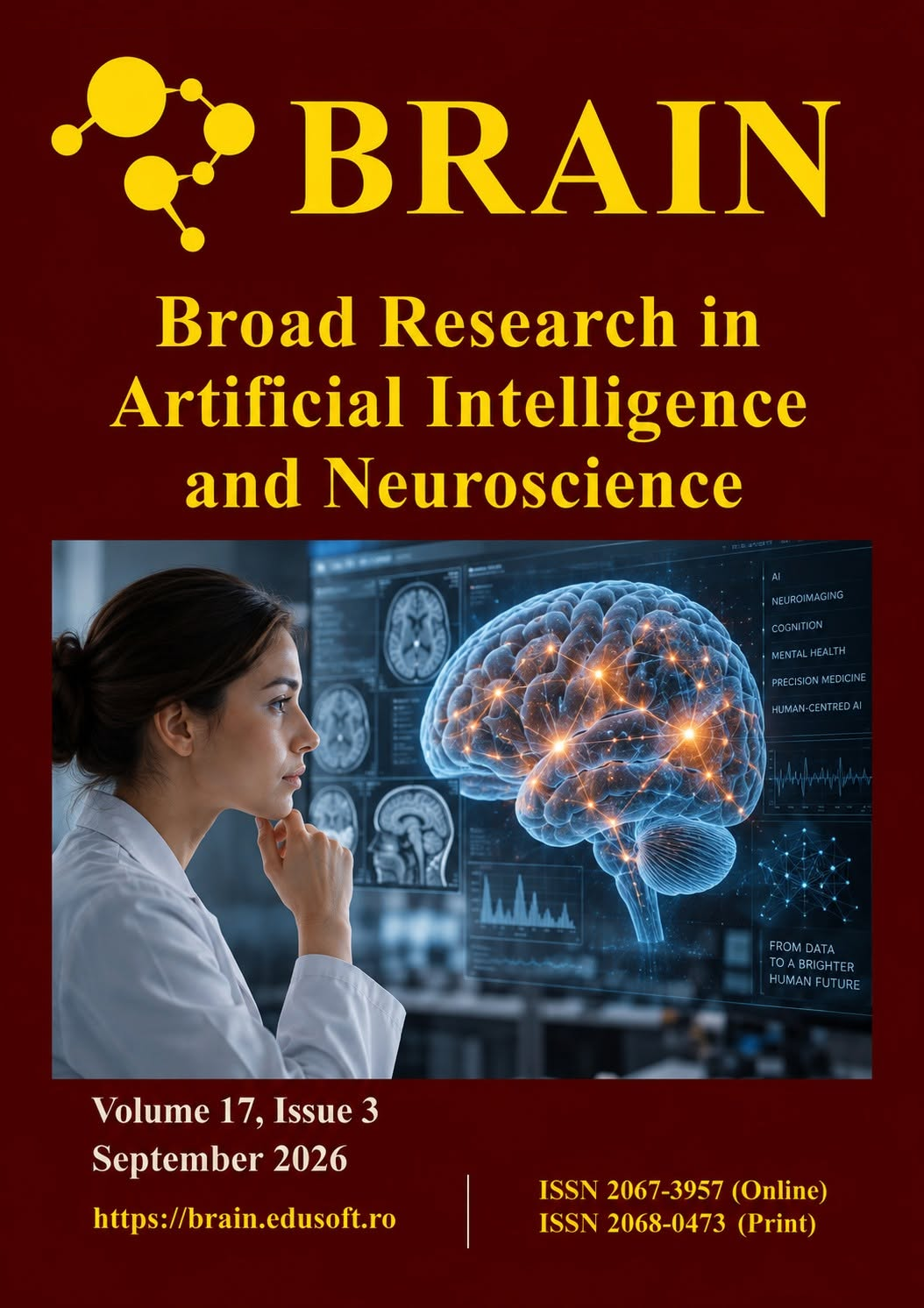
LAST 2 PREVIOUS ISSUE
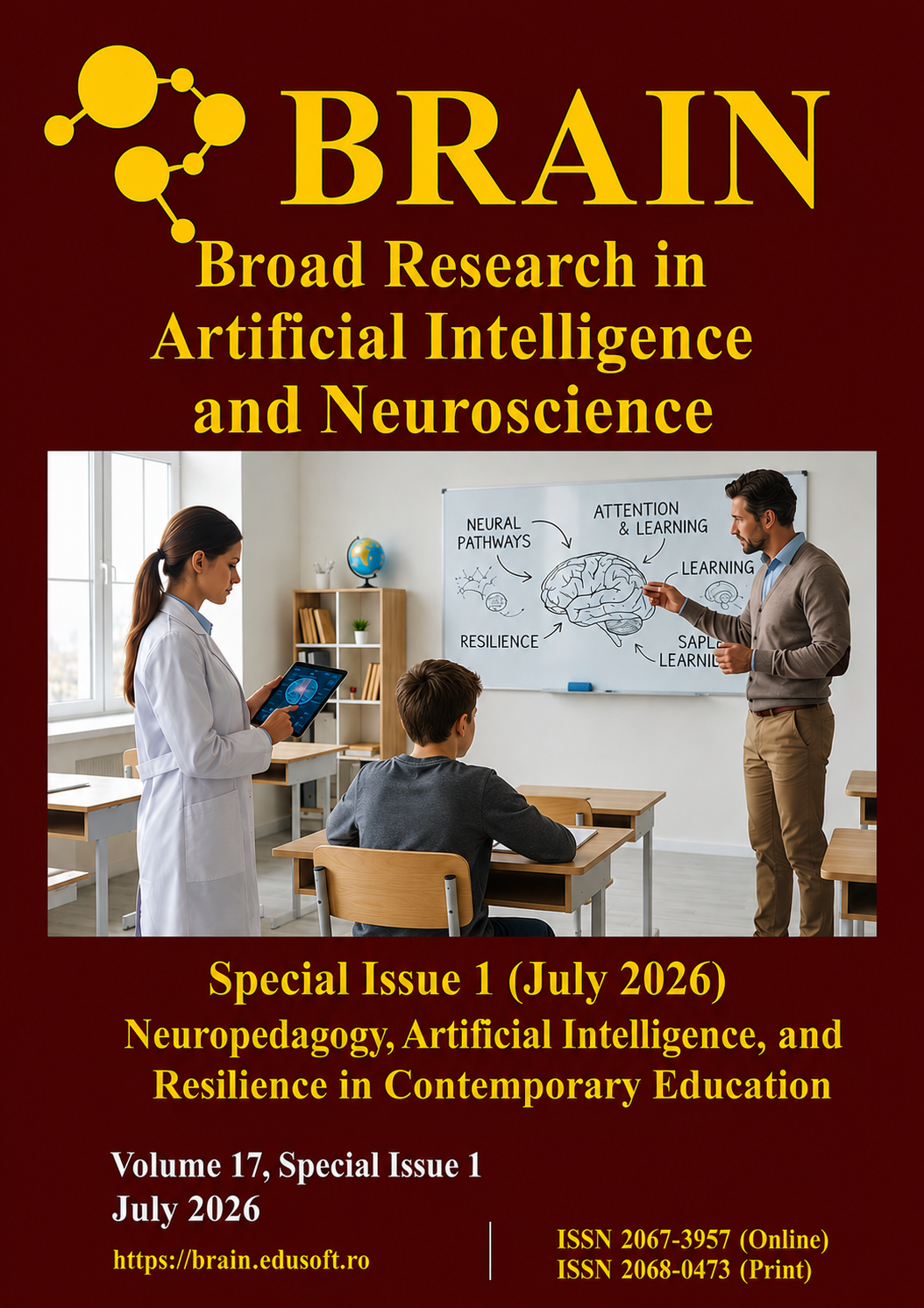
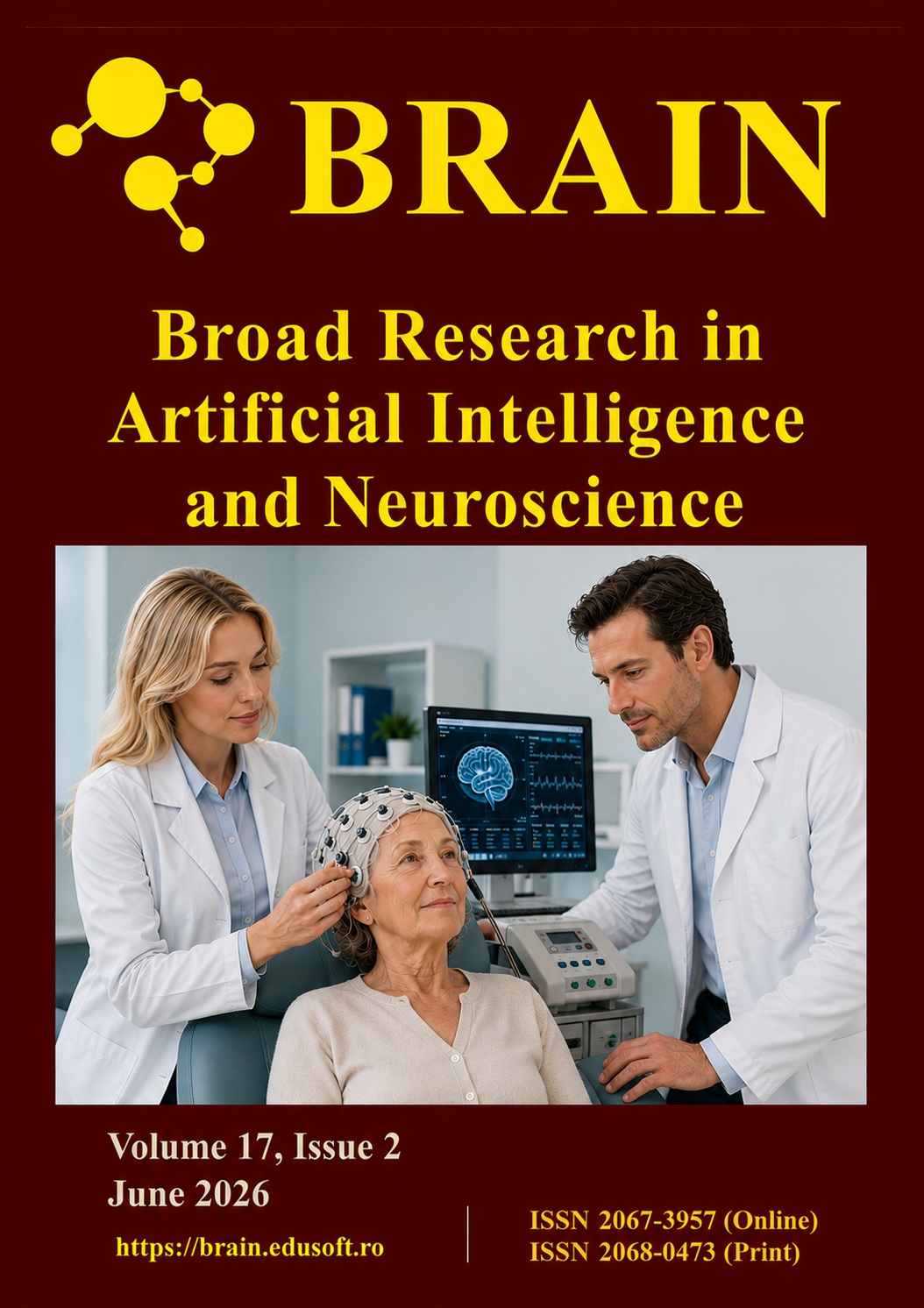


Keywords
Artificial Intelligence
adaptation
anxiety
artificial intelligence
autism
deep learning
depression
education
emotional intelligence
higher education
machine learning
mental health
motivation
neuropedagogy
neuroplasticity
neuropsychology
neuroscience
schizophrenia
stress
students
virtual reality