

Dear readers and authors, The editorial team of BRAIN. Broad Research in Artificial Intelligence and Neuroscience would like to reaffirm our ongoing commitment to rigorous scientific standards and responsible editorial practices. Our evaluation process remains serious and thorough at every stage:
At the same time, we believe that a modern scientific journal should not only be rigorous, but also adapted to the evolving ways in which readers and authors interact with knowledge and research. AI-based tools to support authorsWe have developed several artificial intelligence tools designed to assist authors, for example by:
We want to emphasize very clearly:
Our peer-review process involves:
Modern promotion of published researchIn line with contemporary scientific communication practices, for most articles published since October 2024, our team has created:
We are present on Facebook, YouTube, Instagram, LinkedIn, and X, where we promote the work of our authors to both the scientific community and a broader interested audience. We are pleased to note that these overview videos have begun to be indexed as research-related datasets within Clarivate’s Web of Science ecosystem, increasing the visibility and discoverability of the research we publish through modern multimedia formats. Transparency and ethical practicesWe would also like to state clearly that we do not send spam emails to authors and we do not use aggressive or unsolicited solicitation practices. We prefer to be discovered organically, through the quality of the research we publish and through the trust built within our academic community. Visual and interactive elements for readers and authorsTo make our content more accessible, engaging, and visible, we have introduced:
These elements do not replace scientific rigor; they complement it by helping readers understand the essence of the research more quickly and by increasing the visibility of authors’ work. We thank you for your trust, contributions, and continued engagement with BRAIN. The BRAIN Editorial Team |
☰











 ▲
▲
▲
Information
Font Size
User
p-ISSN: 2068 - 0473
e-ISSN: 2067 - 3957
DOI:
10.18662/brain
DOI prefix: 10.70594/brain (currently edited by EduSoft) | 10.18662/brain (when was edited by Lumen)
Frequency:
4 issues/year (occasional additional issues)
Abstracting & Indexing
Web of Science (ESCI, IF 0.6), EBSCO, Google Scholar etc.
Member in CrossRef
Go to Article ID
CURRENT ISSUE 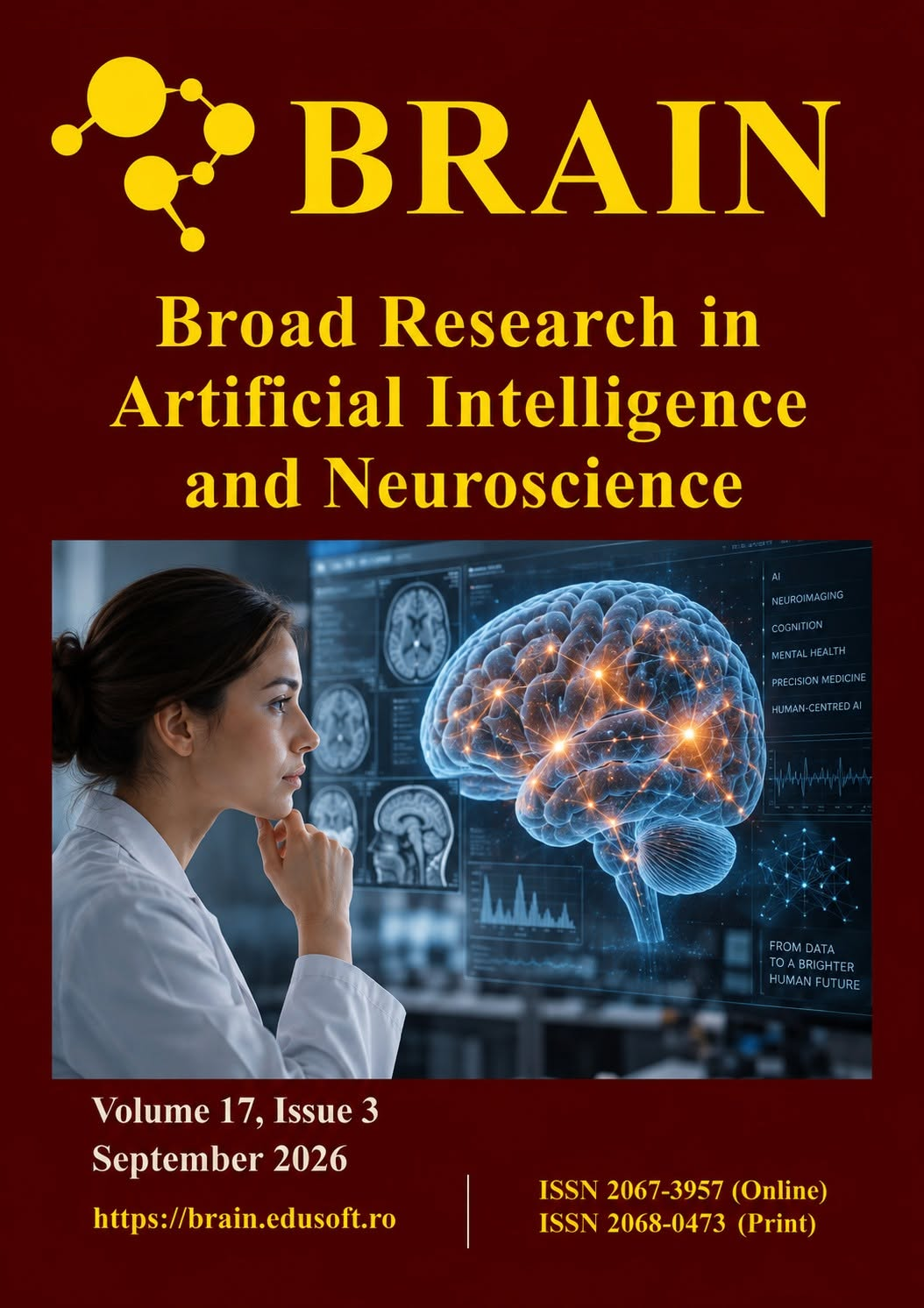
LAST 2 PREVIOUS ISSUE
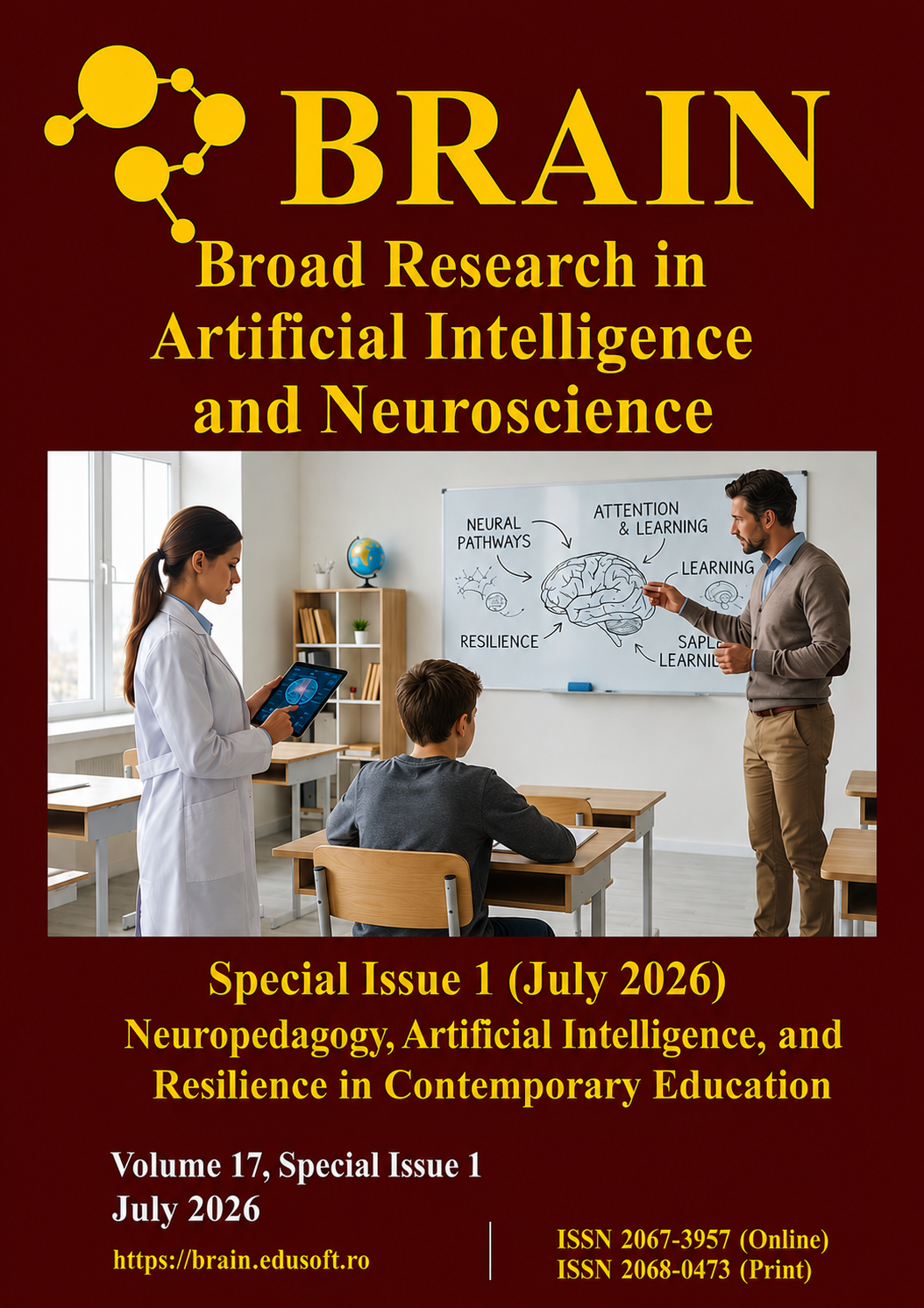
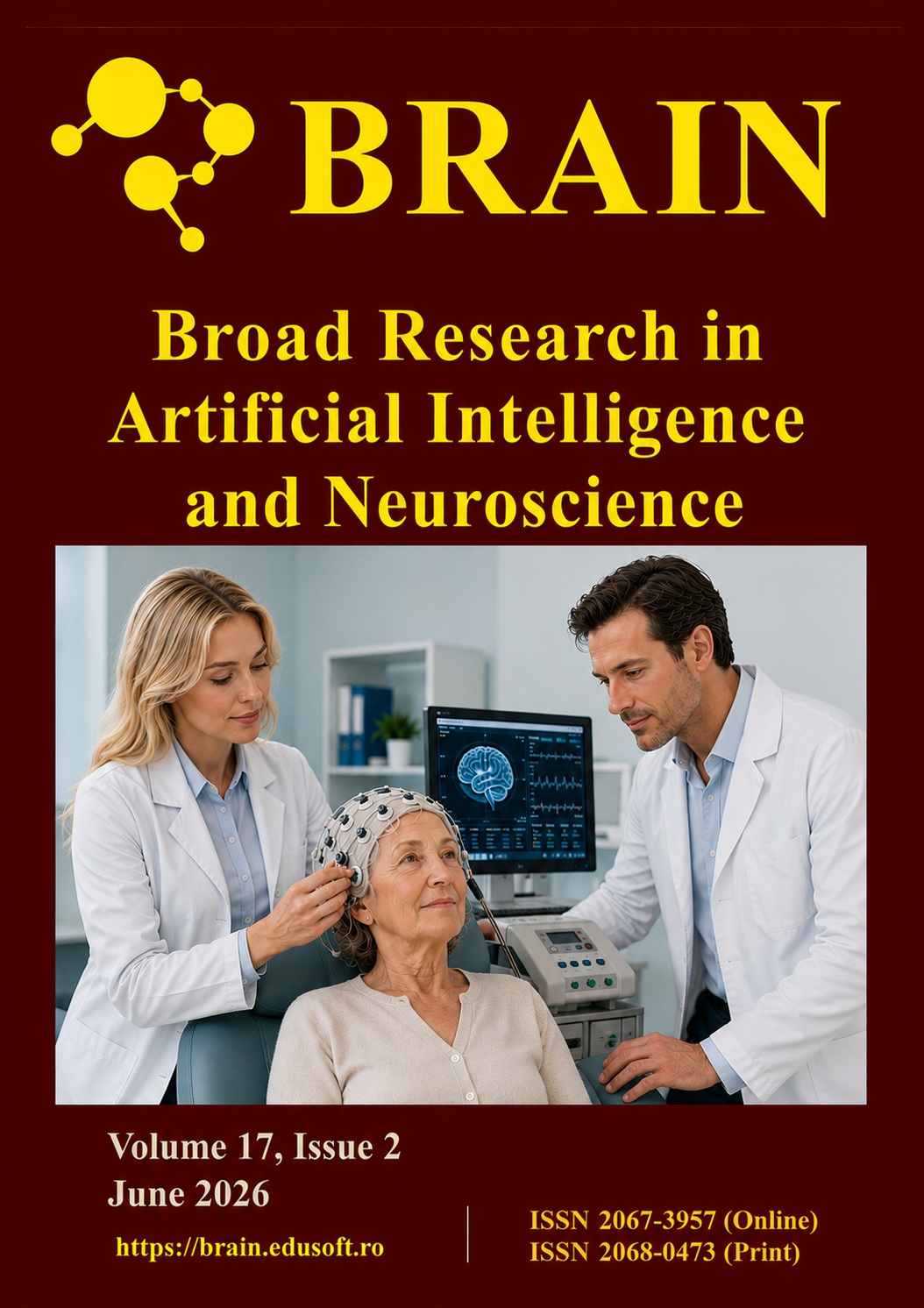


Keywords
Artificial Intelligence
adaptation
anxiety
artificial intelligence
autism
deep learning
depression
education
emotional intelligence
higher education
machine learning
mental health
motivation
neuropedagogy
neuroplasticity
neuropsychology
neuroscience
schizophrenia
stress
students
virtual reality