

| In the current context of the widespread use of Artificial Intelligence across many domains — including the publication of scientific results — the 𝐄𝐝𝐮𝐒𝐨𝐟𝐭 𝐏𝐮𝐛𝐥𝐢𝐬𝐡𝐢𝐧𝐠 team maintains a cautious and responsible attitude toward the use of AI in academic publishing. The journal 𝐁𝐑𝐀𝐈𝐍. 𝐁𝐫𝐨𝐚𝐝 𝐑𝐞𝐬𝐞𝐚𝐫𝐜𝐡 𝐢𝐧 𝐀𝐫𝐭𝐢𝐟𝐢𝐜𝐢𝐚𝐥 𝐈𝐧𝐭𝐞𝐥𝐥𝐢𝐠𝐞𝐧𝐜𝐞 𝐚𝐧𝐝 𝐍𝐞𝐮𝐫𝐨𝐬𝐜𝐢𝐞𝐧𝐜𝐞 follows a clear policy regarding the use of AI, aligned with widely accepted ethical standards in scholarly communication. Our policy includes the following principles: • 𝐀𝐈 𝐢𝐬 𝐧𝐨𝐭 𝐚𝐥𝐥𝐨𝐰𝐞𝐝 𝐭𝐨 𝐠𝐞𝐧𝐞𝐫𝐚𝐭𝐞 𝐭𝐞𝐱𝐭𝐮𝐚𝐥 𝐜𝐨𝐧𝐭𝐞𝐧𝐭 𝐟𝐨𝐫 𝐚𝐮𝐭𝐡𝐨𝐫𝐬’ 𝐚𝐫𝐭𝐢𝐜𝐥𝐞𝐬. We have encountered situations where submitted manuscripts contained references to non-existent articles, articles attributed to different authors than those cited, or sources cited in the text that do not support, contradict, or are simply unrelated to the ideas for which they were referenced. • 𝐀𝐈 𝐢𝐬 𝐧𝐨𝐭 𝐚𝐥𝐥𝐨𝐰𝐞𝐝 𝐭𝐨 𝐠𝐞𝐧𝐞𝐫𝐚𝐭𝐞 𝐟𝐚𝐥𝐬𝐢𝐟𝐢𝐞𝐝 𝐝𝐚𝐭𝐚 𝐢𝐧 𝐦𝐞𝐝𝐢𝐜𝐚𝐥 𝐨𝐫 𝐬𝐜𝐢𝐞𝐧𝐭𝐢𝐟𝐢𝐜 𝐚𝐫𝐭𝐢𝐜𝐥𝐞𝐬. This includes fabricated images from surgeries, diseases or medical conditions, invented patients, or artificial datasets containing non-existent patients. Our editors remain highly vigilant in identifying and preventing such situations. • 𝐀𝐈 𝐢𝐬 𝐧𝐨𝐭 𝐚𝐥𝐥𝐨𝐰𝐞𝐝 𝐢𝐧 𝐭𝐡𝐞 𝐩𝐞𝐞𝐫-𝐫𝐞𝐯𝐢𝐞𝐰 𝐩𝐫𝐨𝐜𝐞𝐬𝐬. While we cannot fully control how reviewers conduct their evaluations, our editorial checks allow us to identify whether AI might have been used merely as a guiding tool for detecting potential issues, which reviewers then carefully analyze and formulate in their own professional judgment. • 𝐀𝐈 𝐦𝐚𝐲 𝐛𝐞 𝐮𝐬𝐞𝐝 𝐟𝐨𝐫 𝐥𝐚𝐧𝐠𝐮𝐚𝐠𝐞 𝐩𝐨𝐥𝐢𝐬𝐡𝐢𝐧𝐠, such as improving sentence structure (for example, through tools like Grammarly), 𝐚𝐬 𝐥𝐨𝐧𝐠 𝐚𝐬 𝐭𝐡𝐞 𝐨𝐫𝐢𝐠𝐢𝐧𝐚𝐥 𝐦𝐞𝐚𝐧𝐢𝐧𝐠 𝐨𝐟 𝐭𝐡𝐞 𝐭𝐞𝐱𝐭 𝐢𝐬 𝐧𝐨𝐭 𝐚𝐥𝐭𝐞𝐫𝐞𝐝. • 𝐀𝐈 𝐦𝐚𝐲 𝐛𝐞 𝐮𝐬𝐞𝐝 𝐭𝐨 𝐜𝐫𝐞𝐚𝐭𝐞 𝐢𝐦𝐚𝐠𝐞𝐬, 𝐝𝐢𝐚𝐠𝐫𝐚𝐦𝐬, 𝐨𝐫 𝐯𝐢𝐬𝐮𝐚𝐥 𝐬𝐜𝐡𝐞𝐦𝐞𝐬, provided that these are carefully verified by the authors and accurately reflect scientific reality. Our editorial team carefully checks all figures and signals any potential scientific inaccuracies. We ourselves sometimes use AI to create infographics, but these are always thoroughly reviewed by our team. • 𝐀𝐈 𝐦𝐚𝐲 𝐛𝐞 𝐮𝐬𝐞𝐝 𝐭𝐨 𝐠𝐞𝐧𝐞𝐫𝐚𝐭𝐞 𝐩𝐫𝐨𝐦𝐨𝐭𝐢𝐨𝐧𝐚𝐥 𝐢𝐦𝐚𝐠𝐞𝐬 𝐟𝐨𝐫 𝐬𝐨𝐜𝐢𝐚𝐥 𝐦𝐞𝐝𝐢𝐚 𝐨𝐫 𝐰𝐞𝐛𝐬𝐢𝐭𝐞𝐬, used to promote articles that have been published or are in the process of publication in the journal. • 𝐀𝐈 𝐦𝐚𝐲 𝐛𝐞 𝐮𝐬𝐞𝐝 𝐢𝐧 𝐜𝐨𝐫𝐫𝐞𝐬𝐩𝐨𝐧𝐝𝐞𝐧𝐜𝐞 𝐰𝐢𝐭𝐡 𝐨𝐮𝐫 𝐞𝐝𝐢𝐭𝐨𝐫𝐢𝐚𝐥 𝐨𝐟𝐟𝐢𝐜𝐞, for example to help formulate messages in a clearer, more formal, or more elegant way. Through this balanced approach, we aim to encourage responsible use of emerging technologies while maintaining the integrity, reliability, and ethical standards that scientific publishing requires. |
☰











 ▲
▲
▲
Information
Font Size
User
p-ISSN: 2068 - 0473
e-ISSN: 2067 - 3957
DOI:
10.18662/brain
DOI prefix: 10.70594/brain (currently edited by EduSoft) | 10.18662/brain (when was edited by Lumen)
Frequency:
4 issues/year (occasional additional issues)
Abstracting & Indexing
Web of Science (ESCI, IF 0.6), EBSCO, Google Scholar etc.
Member in CrossRef
Go to Article ID
CURRENT ISSUE 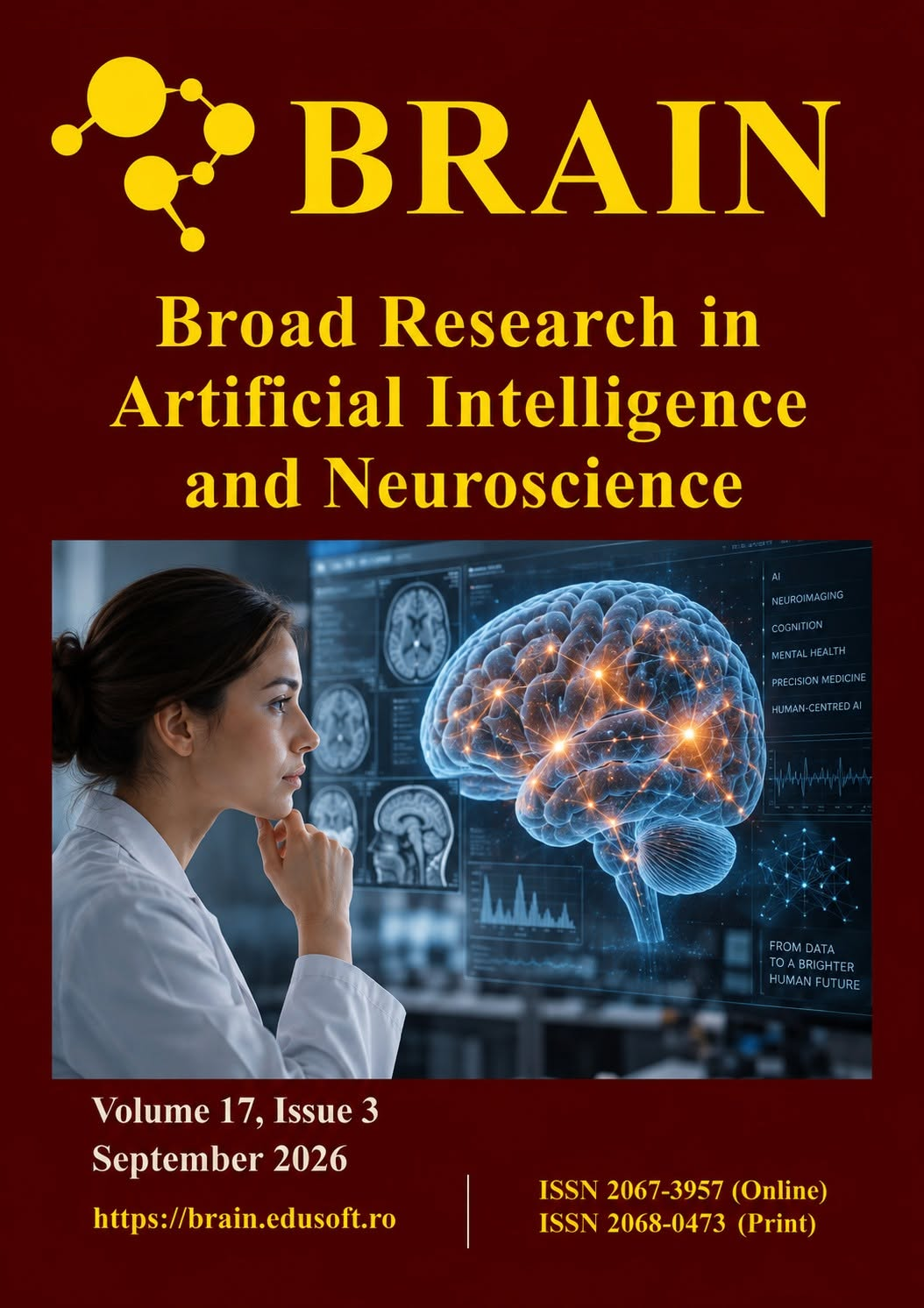
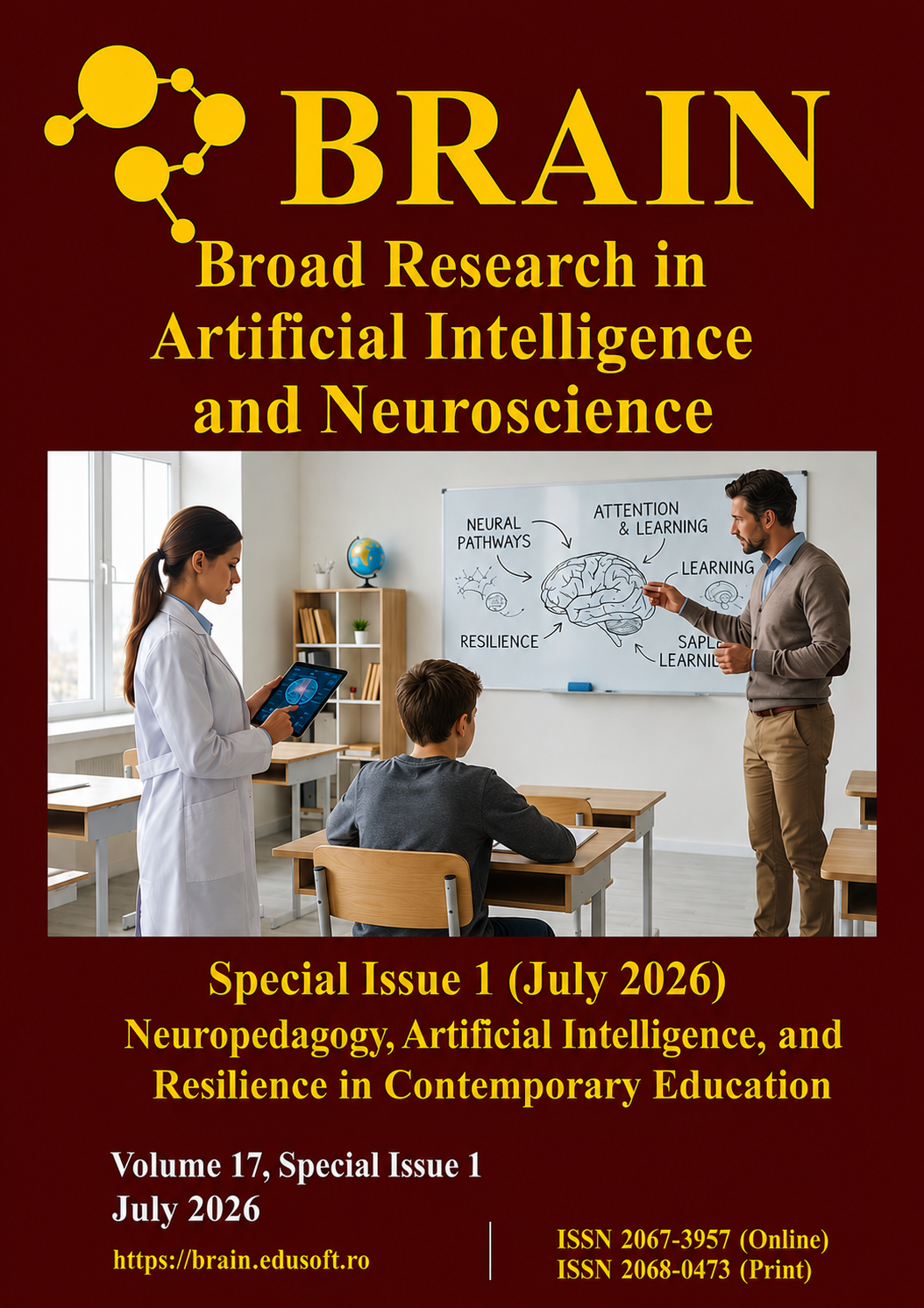
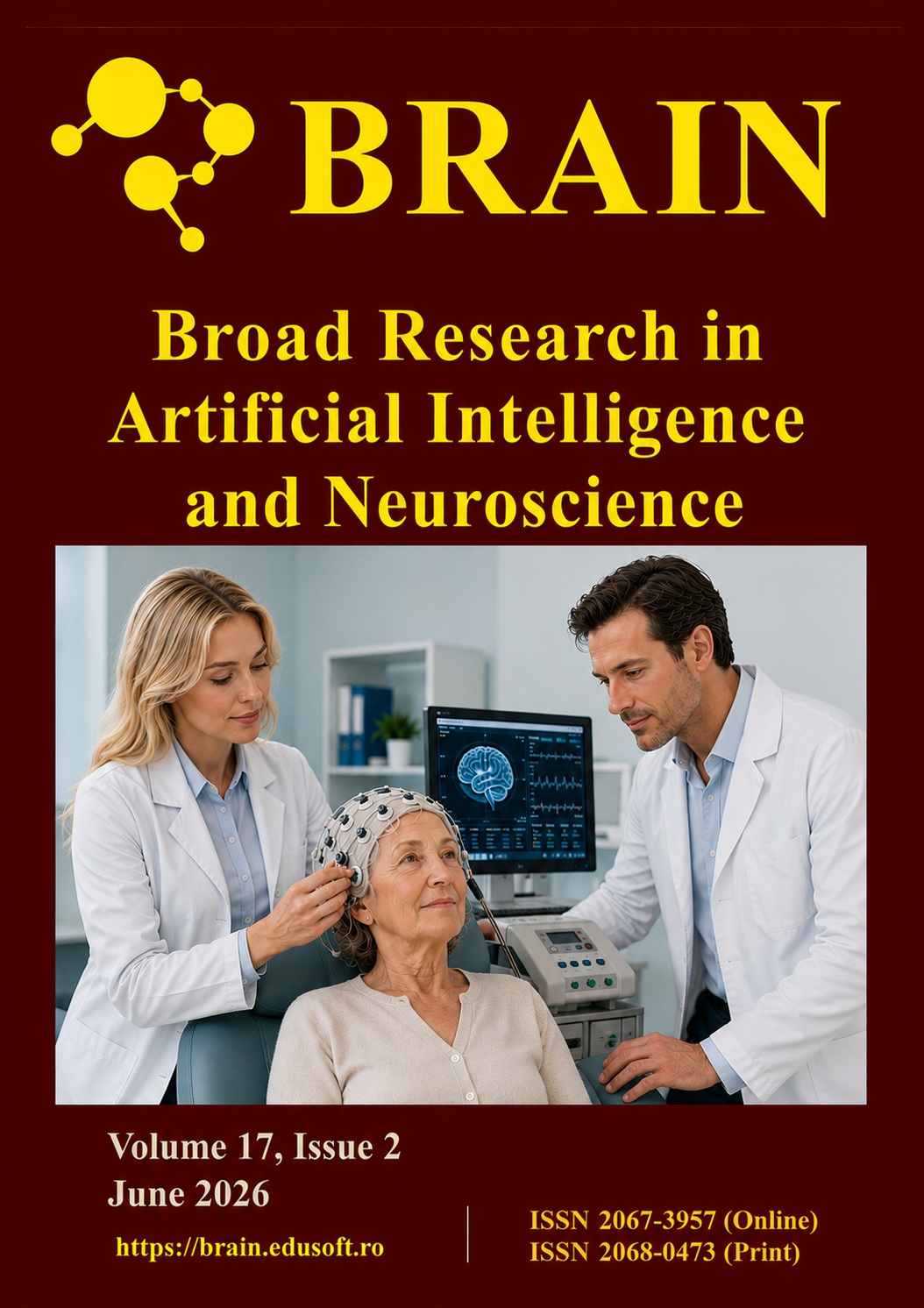
LAST 2 PREVIOUS ISSUE


Keywords
Artificial Intelligence
adaptation
anxiety
artificial intelligence
autism
deep learning
depression
education
emotional intelligence
higher education
machine learning
mental health
motivation
neuropedagogy
neuroplasticity
neuropsychology
neuroscience
schizophrenia
stress
students
virtual reality