










 ▲
▲




 Email this article
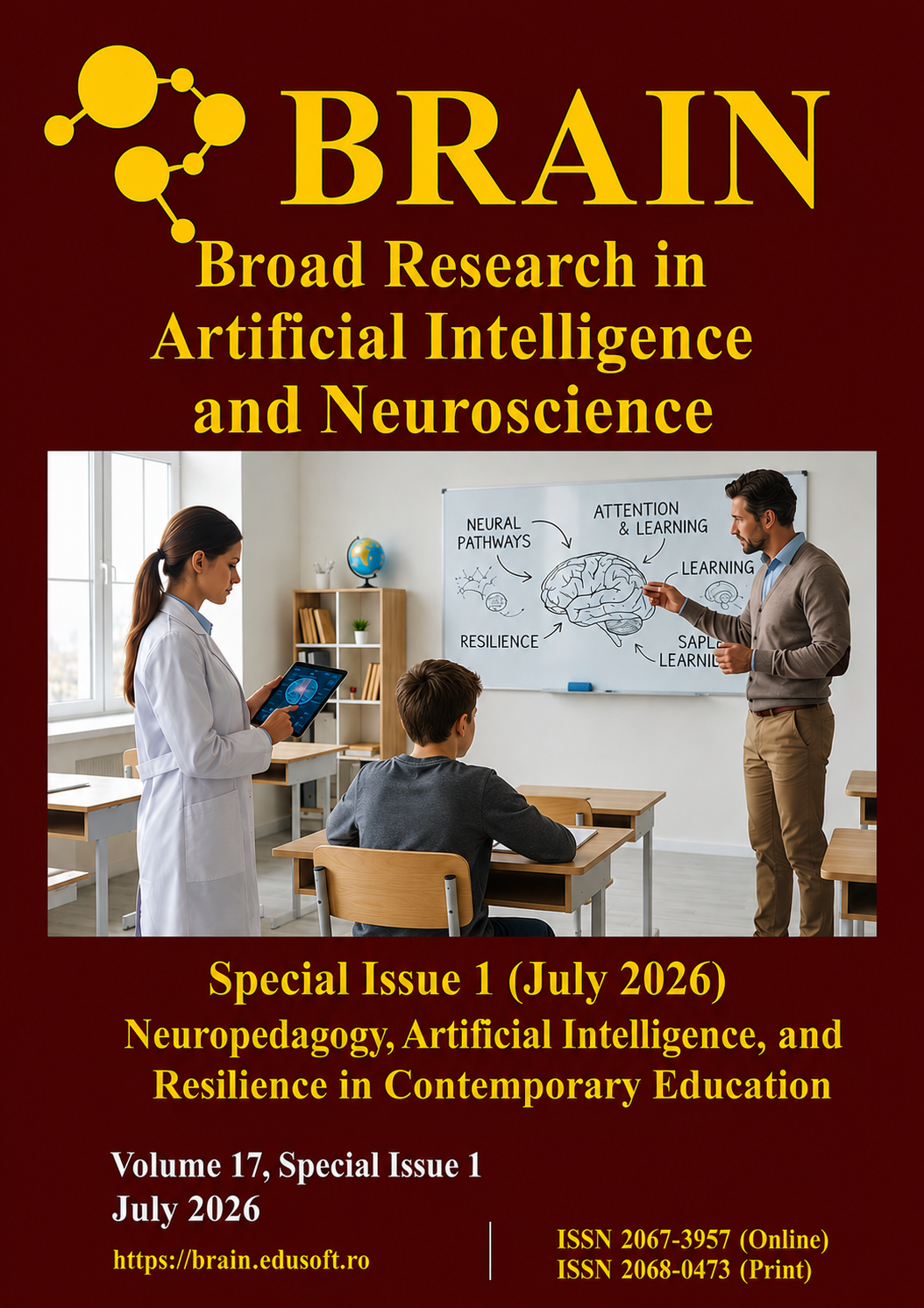


BRAIN. Broad Research in Artificial Intelligence and Neuroscience
Volume: 17 | Issue: 1S |
Neuropedagogy of Albinism: Visual Impairment, Neurodevelopment, Mental Health and Educational Inclusion
Published July 20, 2026
❝
Cite

Abstract
Albinism is a rare and heterogeneous genetic condition traditionally defined by reduced or absent melanin synthesis and by dermatological and ophthalmological manifestations. However, its functional consequences, particularly congenital visual impairment, extend beyond the biomedical dimension and may influence children’s neuropsychological development, behavioural adaptation, educational participation, emotional functioning and social inclusion. This narrative review aims to examine albinism from a neuropedagogical perspective, integrating medical, psychological, neurodevelopmental and educational dimensions. Within this interdisciplinary framework, the review explores the relationship between visual impairment, neuroeducational functioning, anxiety, depression, autism-spectrum features, emotional dysregulation, bullying and school inclusion. Visual impairment associated with albinism should not be understood only as a sensory limitation, but also as a factor that may affect access to information, nonverbal communication, autonomy, peer interaction and classroom participation. Particular attention is given to the differential interpretation of autism-like behaviors, since reduced eye contact, limited access to facial expressions and difficulties in interpreting visual social cues may reflect sensory limitations rather than autism spectrum disorder. Rather than proposing a direct causal relationship between albinism and psychiatric or neurodevelopmental disorders, this article adopts a biopsychosocial and neuropedagogical perspective. Emotional vulnerability may result from the interaction between visual limitations, stigma, bullying, reduced accessibility, limited autonomy, and insufficient educational support. From this perspective, functional vision assessment, individualised educational adaptations, assistive technologies, psychopedagogical support, family counseling and anti-bullying strategies are essential for reducing exclusion and supporting children’s development. The review concludes that an interdisciplinary neuropedagogical approach can provide a more comprehensive understanding of albinism and can guide ethical, individualised and inclusive interventions.
Academic discipline and sub-disciplines:
Medicine; Pedagogy; Psychology; Psychiatry; Neuroscience
Keywords
DOI: http://dx.doi.org/10.70594/brain/17.S1/20