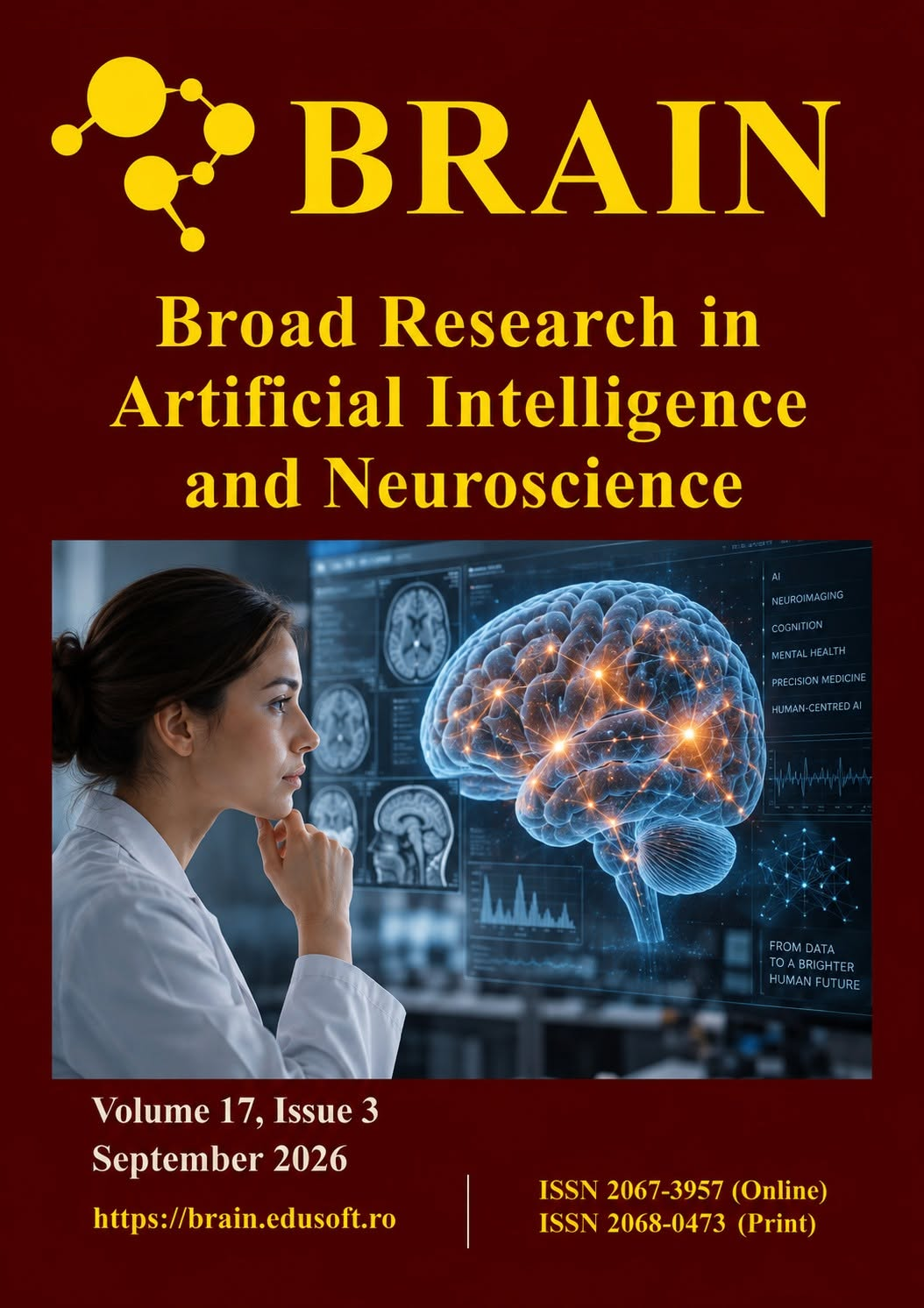
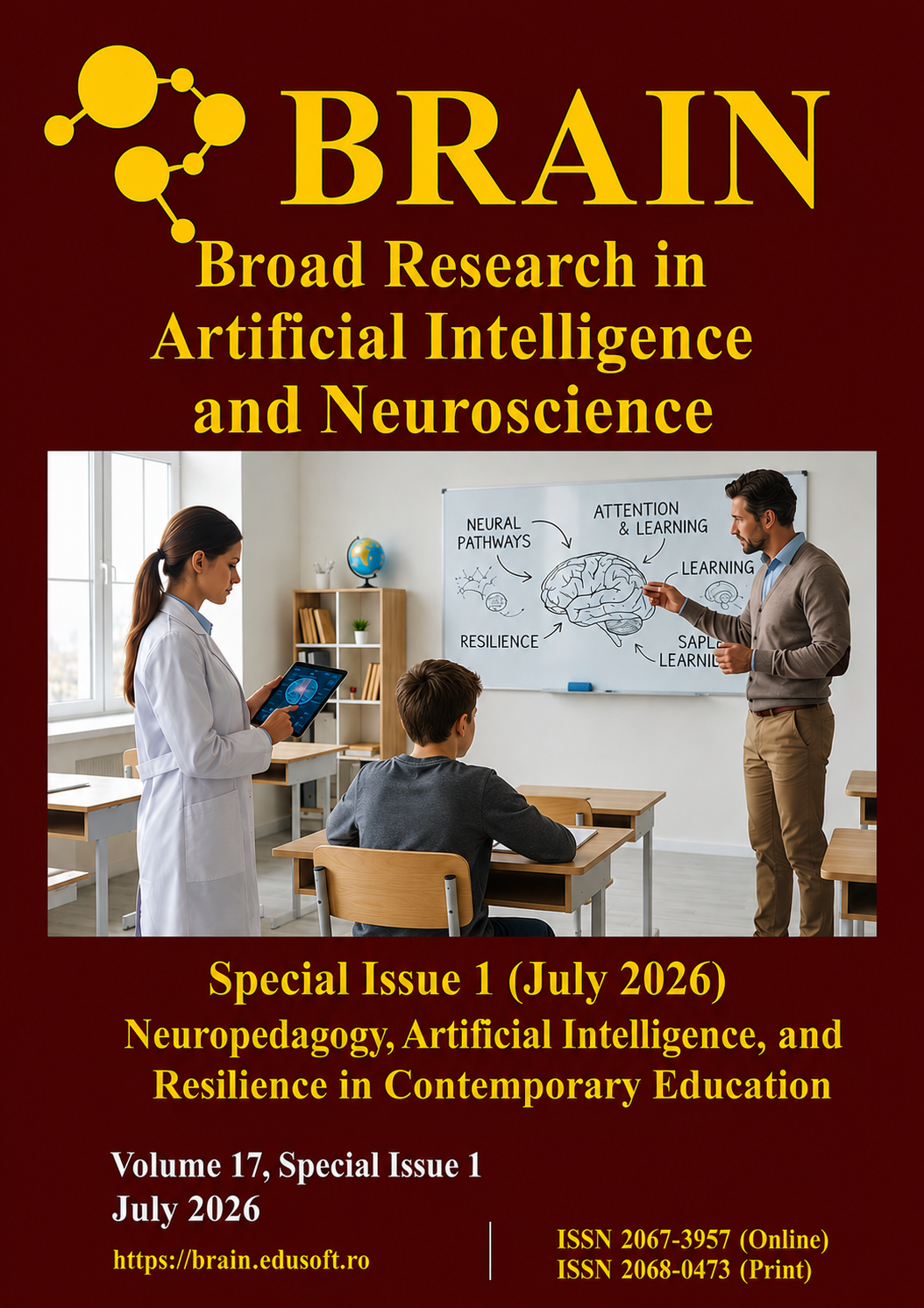
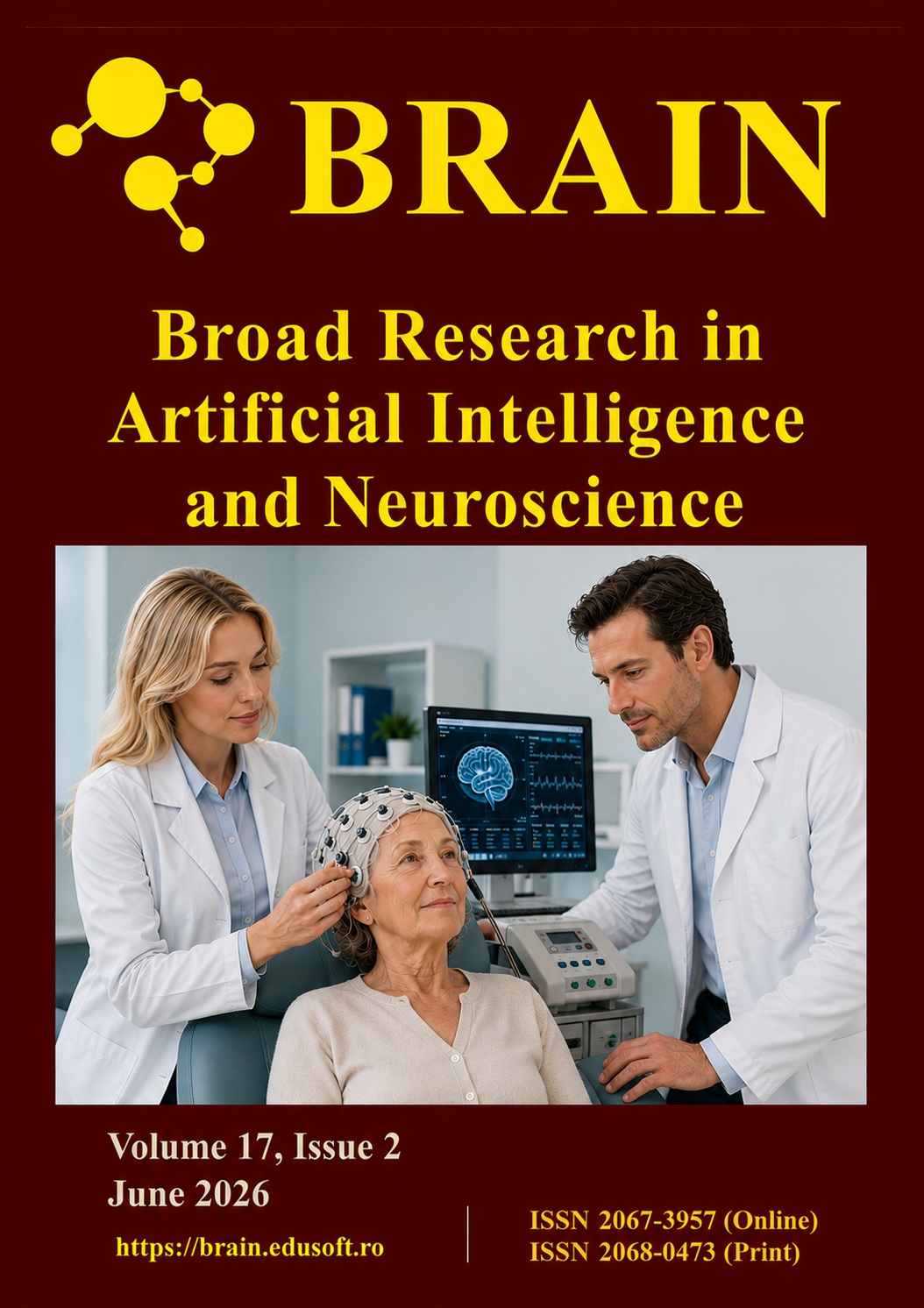
Disclaimer: These images were generated using artificial intelligence and may contain inaccuracies or inconsistencies.
They are provided solely as a visual aid to facilitate the rapid understanding of the key ideas presented
in these article. Our editorial team conducts ongoing reviews of AI-generated images and will correct
or replace them whenever an error or discrepancy is identified or reported.
BRAINovations
Disclaimer: This image was generated using artificial intelligence and may contain inaccuracies or inconsistencies.
It is provided solely as a visual aid to facilitate the rapid understanding of the key ideas presented
in this article. Our editorial team conducts ongoing reviews of AI-generated images and will correct
or replace them whenever an error or discrepancy is identified or reported.
Authors:
S. Hamidreza
Mohades Kasaei
, S. Mohammadreza
Mohades Kasaei
, S. Alireza
Mohades Kasaei
, Mohsen
Taheri
Abstract:
Robocup is an international competition for multi agent research and related subject like: Artificial intelligence, Image processing, machine learning, robot path planning, control, and
obstacle avoidance. In a soccer robot game, the environment is highly competitive and dynamic. In order to work in the dynamically changing environment, the decision-making system of a soccer robot system should have the features of flexibility and real-time adaptation. In this paper we will
focus on the Middle Size Soccer Robot league (MSL) and new hierarchical hybrid fuzzy methods for decision making and action selection of a robot in Middle Size Soccer Robot league (MSL) are presented. First, the behaviors of an agent are introduced, implemented and classified in two layers,
the Low_Level_Behaviors and the High_Level_Behaviors. In the second layer, a two phase mechanism for decision making is introduced. In phase one, some useful methods are implemented which check the robot’s situation for performing required behaviors. In the next phase, the team strategy, team formation, robot’s role and the robot’s positioning system are introduced. A fuzzy logical approach is employed to recognize the team strategy and further more to tell the player the
best position to move. We believe that a Dynamic role engine is necessary for a successful team. Dynamic role engine and formation control during offensive or defensive play, help us to prevent collision avoidance among own players when attacking the ball and obstacle avoidance of the opponents. At last, we comprised our implemented algorithm in the Robocup 2007 and 2008 and results showed the efficiency of the introduced methodology. The results are satisfactory which has already been successfully implemented in ADRO RoboCup team. This project is still in progress and some new interesting methods are described in the current report.
BRAINStorming
Disclaimer: This image was generated using artificial intelligence and may contain inaccuracies or inconsistencies.
It is provided solely as a visual aid to facilitate the rapid understanding of the key ideas presented
in this article. Our editorial team conducts ongoing reviews of AI-generated images and will correct
or replace them whenever an error or discrepancy is identified or reported.
Authors:
Ronald
J. Swallow
Abstract:
The post-synaptic potential of a neuron for a long time has been known to be a crosscorrelation between an input axonal frequency pattern and an excititory synaptic strength connection strength pattern. In order for correlations to be useful, they must be able to be compared and must be normalized (covariance of the connection strengths must be constant over all the correlations). A biologically feasible net of neurons was studied (net of N excitatory neurons interacting with an inhibitory neuron) and a very simple Pavlovian rule used for connection strength variation (same rule for both excititory and inhibitory neurons). The surprise was that the neurons of
such a net are able to compare their correlations in a normalized way. Also, the net exhibited greater learning for new input patterns than for old input patterns, thereby explaining the brain’s curiosity drive and reduction of permanent memory plasticity as one ages.
.......
Disclaimer: This image was generated using artificial intelligence and may contain inaccuracies or inconsistencies.
It is provided solely as a visual aid to facilitate the rapid understanding of the key ideas presented
in this article. Our editorial team conducts ongoing reviews of AI-generated images and will correct
or replace them whenever an error or discrepancy is identified or reported.
Authors:
Mansour
Fahim
, Marzieh
Bagherkazemi
, Minoo
Alemi
Abstract:
The present study aimed at investigating the hypothetical relationship between the multiple intelligences of test takers and their performance on the reading sections of TOEFL and IELTS. Howard Gardner’s theory of multiple intelligences suggests that intelligence is not a single and solely inborn capacity, rather a multiple construct which is only partly genetic, and can be crystallized or paralyzed over one’s lifetime. Based on the theory, there are eight types of intelligence: linguistic, mathematical, musical, bodily, spatial, intrapersonal, interpersonal and naturalist, but the list is not exhaustive. The multiple intelligences of test takers were estimated by means of MIDAS, the Multiple Intelligences Developmental Assessment Scales, developed by Shearer (1994). Subsequently, the bias detection for the reading section of TOEFL was carried out on 90 participants, and this subtest was found to correlate positively with linguistic and logical intelligences. By the same token, 89 out of the 163 participants in the study were included in the analysis of the relationship between the multiple intelligences of test takers and their performance on the reading section of IELTS, and this test proved biased toward linguistic and spatial intelligences. The implications concern the inadequacy of the definition of language proficiency .Moreover, Measurement-Driven Instruction courses and preparatory materials of the two proficiency tests, TOEFL and IELTS, can benefit from the results of the study by being designed in such a way as to represent the intelligences which are positively correlated with performance on the tests in question.
Disclaimer: This image was generated using artificial intelligence and may contain inaccuracies or inconsistencies.
It is provided solely as a visual aid to facilitate the rapid understanding of the key ideas presented
in this article. Our editorial team conducts ongoing reviews of AI-generated images and will correct
or replace them whenever an error or discrepancy is identified or reported.
Authors:
Gheorghe
Blioju
Abstract:
This paper describes a cheapest method to realise a compact monitoring EKG system, using a electronic device and software. The device will be able to increase biosignals and forward them to
the PC through the sound-card. It will also have software dedicated to taking over the received signals and displaying them on the screen of the PC.
Disclaimer: This image was generated using artificial intelligence and may contain inaccuracies or inconsistencies.
It is provided solely as a visual aid to facilitate the rapid understanding of the key ideas presented
in this article. Our editorial team conducts ongoing reviews of AI-generated images and will correct
or replace them whenever an error or discrepancy is identified or reported.
Authors:
S. Hamidreza
Mohades Kasaei
, S.Mohammadreza
Mohades Kasaei
, S. Alireza
Mohades Kasaei
, S. A.
Monadjemi
, Mohsen
Taheri
Abstract:
Research on humanoid robotics in Mechatronics and Automation Laboratory, Electrical and Computer Engineering, Islamic Azad University Khorasgan branch (Isfahan) of Iran was started at the beginning of this decade. Various research prototypes for humanoid robots have been designed and are going through evolution over these years. This paper describes the hardware and software design of the kid size humanoid robot systems of the PERSIA Team in 2009. The robot has 20 actuated degrees of freedom based on Hitec HSR898. In this paper we have tried to focus on areas such as mechanical structure, Image processing unit, robot controller, Robot AI and behavior learning. In 2009, our developments for the Kid size humanoid robot include: (1) the design and construction of our new humanoid robots (2) the design and construction of a new hardware and software controller to be used in our robots. The project is described in two main parts: Hardware and Software. The software is developed a robot application which consists walking controller, autonomous motion robot, self localization base on vision and Particle Filter, local AI, Trajectory Planning, Motion Controller and Network. The hardware consists of the mechanical structure and the driver circuit board. Each robot is able to walk, fast walk, pass, kick and dribble when it catches the ball. These humanoids have been successfully participating in various robotic soccer competitions. This project is still in progress and some new interesting methods are described in the current report.

Disclaimer: This image was generated using artificial intelligence and may contain inaccuracies or inconsistencies.
It is provided solely as a visual aid to facilitate the rapid understanding of the key ideas presented
in this article. Our editorial team conducts ongoing reviews of AI-generated images and will correct
or replace them whenever an error or discrepancy is identified or reported.
Authors:
S. Hamidreza
Mohades Kasaei
, S.Mohammadreza
Mohades Kasaei
, S. A.
Monadjemi
, Mohsen
Taheri
Abstract:
The purpose of this paper is to design and implement a middle size soccer robot to conform RoboCup MSL league. First, according to the rules of RoboCup, we design the middle size soccer robot, The proposed autonomous soccer robot consists of the mechanical platform, motion control module, omni-directional vision module, front vision module, image processing and recognition module, investigated target object positioning and real coordinate reconstruction, robot path planning, competition strategies, and obstacle avoidance. And this soccer robot equips the laptop computer system and interface circuits to make decisions. In fact, the omnidirectional vision sensor of the vision system deals with the image processing and positioning for obstacle avoidance and
target tracking. The boundary-following algorithm (BFA) is applied to find the important features of the field. We utilize the sensor data fusion method in the control system parameters, self localization and world modeling. A vision-based self-localization and the conventional odometry
systems are fused for robust selflocalization. The localization algorithm includes filtering, sharing and integration of the data for different types of objects recognized in the environment. In the control strategies, we present three state modes, which include the Attack Strategy, Defense Strategy and Intercept Strategy. The methods have been tested in the many Robocup competition field middle size robots.
Disclaimer: This image was generated using artificial intelligence and may contain inaccuracies or inconsistencies.
It is provided solely as a visual aid to facilitate the rapid understanding of the key ideas presented
in this article. Our editorial team conducts ongoing reviews of AI-generated images and will correct
or replace them whenever an error or discrepancy is identified or reported.
Authors:
Piedad
Yuste
Abstract:
In ancient Mesopotamia were not practiced neither autopsies nor dissections, so the internal organs of human body were known only from occasional inspections on wounds and injuries. The
brain was considered as a part of the head and was not related to mental activity. However, Babylonian and Assyrian physicians were able to identify the symptoms of many diseases that affect this organ. We will make here a brief overview of them.
Lecture BRAINotes
Disclaimer: This image was generated using artificial intelligence and may contain inaccuracies or inconsistencies.
It is provided solely as a visual aid to facilitate the rapid understanding of the key ideas presented
in this article. Our editorial team conducts ongoing reviews of AI-generated images and will correct
or replace them whenever an error or discrepancy is identified or reported.
Authors:
Minoo
Alemi
, Parisa
Daftarifard
Abstract:
This article aims at delineating the two distinguished paradigms as far as their views towards learning in general and language in particular are concerned. Moreover, it attempts to discuss different views on the flaws and praises raised by each of their proponents and opponents. Therefore, the purpose of this article IS NOT to claim anything in favor of either view. To this end, this article reviews brain and mind issues as well as Modularity and Non-modularity views.
Disclaimer: This image was generated using artificial intelligence and may contain inaccuracies or inconsistencies.
It is provided solely as a visual aid to facilitate the rapid understanding of the key ideas presented
in this article. Our editorial team conducts ongoing reviews of AI-generated images and will correct
or replace them whenever an error or discrepancy is identified or reported.
Authors:
Angel
Garrido
Abstract:
Mathematics is a mere instance of First-Order Predicate Calculus. Therefore it belongs to applied Monotonic Logic. So, we found the limitations of classical logic reasoning and the clear advantages of Fuzzy Logic and many other new interesting tools. We present here some of the more usefulness tools of this new field of Mathematics so-called Artificial Intelligence.
Abstracts in other languages
Disclaimer: This image was generated using artificial intelligence and may contain inaccuracies or inconsistencies.
It is provided solely as a visual aid to facilitate the rapid understanding of the key ideas presented
in this article. Our editorial team conducts ongoing reviews of AI-generated images and will correct
or replace them whenever an error or discrepancy is identified or reported.
Authors:
Bogdan
Patrut
Abstract:
BRAIN. Broad Research in Artificial Intelligence and Neuroscience
CERVEAU. Recherche large en intelligence artificielle et neurosciences
Volume 1, Numéro 3
Juillet 2010: «Un heureux été!!»
www.brain.edusoft.ro
Sous la direction de: Bogdan Pătruț
Disclaimer: This image was generated using artificial intelligence and may contain inaccuracies or inconsistencies.
It is provided solely as a visual aid to facilitate the rapid understanding of the key ideas presented
in this article. Our editorial team conducts ongoing reviews of AI-generated images and will correct
or replace them whenever an error or discrepancy is identified or reported.
Authors:
Bogdan
Patrut
Abstract:
Összefoglalók magyar nyelven
AGY. Átfogó kutatás a mesterséges intelligencia és Fiziológiájával és biokémiájával
ISSN 2067 – 3957
1. kötet, 3. szám
Július 2010: Boldog nyár!
www.brain.edusoft.ro
FÅ‘szerkesztÅ‘: Pătruț Bogdan
Disclaimer: This image was generated using artificial intelligence and may contain inaccuracies or inconsistencies.
It is provided solely as a visual aid to facilitate the rapid understanding of the key ideas presented
in this article. Our editorial team conducts ongoing reviews of AI-generated images and will correct
or replace them whenever an error or discrepancy is identified or reported.
Authors:
Bogdan
Patrut
Abstract:
BRAIN. Broad Research in Artificial Intelligence and Neuroscience
CEREBRO. Investigación Amplia en Inteligencia Artificial y Neurociencia
Volumen 1, Número 2
Julio 2010: ¡Feliz Verano 2010!
www.brain.edusoft.ro
Editor Jefe: Bogdan Patrut
Disclaimer: This image was generated using artificial intelligence and may contain inaccuracies or inconsistencies.
It is provided solely as a visual aid to facilitate the rapid understanding of the key ideas presented
in this article. Our editorial team conducts ongoing reviews of AI-generated images and will correct
or replace them whenever an error or discrepancy is identified or reported.
Authors:
Bogdan
Patrut
Abstract:
Resumos de artigos em Português
BRAIN. Broad Research in Artificial Intelligence and Neuroscience
CÉREBRO. Ampla pesquisa em Inteligência Artificial e Neurociências
ISSN 2067-3957
Volume 1, Número 2
Abril de 2010, "Feliz Verão 2010!"
www.brain.edusoft.ro
Editor - chefe: Bogdan Pătruț
Disclaimer: This image was generated using artificial intelligence and may contain inaccuracies or inconsistencies.
It is provided solely as a visual aid to facilitate the rapid understanding of the key ideas presented
in this article. Our editorial team conducts ongoing reviews of AI-generated images and will correct
or replace them whenever an error or discrepancy is identified or reported.
Authors:
Bogdan
Patrut
Abstract:
BRAIN. Broad Research in Artificial Intelligence and Neuroscience
CREIER. Cercetări Ample în Inteligență Artificială ÅŸi NeuroÅŸtiințe
ISSN 2067 – 3957
Volumul 1, Numărul 3
Iulie 2010: „O vară frumoasă, 2010!”
www.brain.edusoft.ro
Editor ÅŸef: Bogdan Pătruț
Disclaimer: This image was generated using artificial intelligence and may contain inaccuracies or inconsistencies.
It is provided solely as a visual aid to facilitate the rapid understanding of the key ideas presented
in this article. Our editorial team conducts ongoing reviews of AI-generated images and will correct
or replace them whenever an error or discrepancy is identified or reported.
Authors:
Bogdan
Patrut
Abstract:
BRAIN. Broad Research in Artificial Intelligence and Neuroscience
CERVELLO. Ampia ricerca in Intelligenza Artificiale e Neuroscienze
Volume 1, Numero 3
Luglio 2010: Tanti Auguri!
www.brain.edusoft.ro
Direttore Responsabile: Bogdan Patrut
Direttore Responsabile: Bogdan Patrut
Disclaimer: This image was generated using artificial intelligence and may contain inaccuracies or inconsistencies.
It is provided solely as a visual aid to facilitate the rapid understanding of the key ideas presented
in this article. Our editorial team conducts ongoing reviews of AI-generated images and will correct
or replace them whenever an error or discrepancy is identified or reported.
Authors:
Bogdan
Patrut
Abstract:
Zusammenfassungen auf Deutsch
BRAIN. Broad Research in Artificial Intelligence and Neuroscience
GEHIRN. Breitenforschung in der Künstlichen Intelligenz und den Neurowissenschaften
ISSN 2067-3957
Band 1, Heft 3
Juli 2010: “Einen glücklichen Sommer 2010!”
www.brain.edusoft.ro
Chefredakteur: Bogdan Pătruț











 ▲
▲