Spreading some winter joy and great academic news! ⛄ Issue 4 of the BRAIN journal will be officially published this December. Wrap up the year with the latest innovations in brain research and AI!
Drop your thoughts below and stay tuned for the release!
This study explores how high school students view Artificial Intelligence by analyzing factors like gender, age, and academic profile. Based on a survey of 214 students in Bucharest, results show that 42% have an open attitude towards AI. Interestingly, male students and those in technological programs are the most receptive, while humanities students show more reluctance and distrust. These findings provide a valuable foundation for educators to optimize students' perspectives on AI, encouraging a balanced approach that respects ethical principles.
Hello everyone! Today we are exploring a new study about the vital connection between nutrition and mental health. By evaluating 264 participants, researchers found a significant correlation between nutritional deficiencies—such as a lack of B vitamins and omega-3—and the worsening of symptoms like depression and anxiety. This study shows that, alongside medical treatments, targeted nutritional interventions can be a highly effective adjunct to traditional neuropsychiatric care!
Hello everyone. Today we are looking at an article exploring how Artificial Intelligence can assist in the conservative treatment of Cervical Intraepithelial Neoplasia, or CIN. CIN is a precancerous condition primarily caused by HPV. The research highlights that AI technologies and algorithms applied to image analysis, automated cytology, and colposcopy will significantly improve the detection and diagnosis of cervical cancer, and help predict the risk of disease progression.
AI in Neurosurgery: Balancing Innovation and Ethics
大家好。一项关于精准神经肿瘤学的最新研究探讨了人工智能在辅助手术中的伦理影响。研究表明,虽然患者和医生都支持使用 AI 进行医疗规划,但大家都强烈反对由 AI 独立进行手术。核心结论是:AI 必须辅助而非取代人类的判断。在 AI 引导的神经外科手术中,透明度和患者的知情同意至关重要。
Hello everyone. A recent study in precision neuro-oncology explores the ethical implications of using Artificial Intelligence in surgical workflows. The findings show that while both patients and clinicians welcome AI for medical planning, there is strong opposition to autonomous AI surgery. The core conclusion: AI must augment, not replace, human judgment. Transparency and adapted informed consent remain absolutely crucial in AI-guided neurosurgery.
This study of 270 athletes found that coach-athlete interactions can indirectly influence performance through neurocognitive mechanisms. A strong relationship—including closeness, commitment, and complementarity—is crucial for athlete development and serves as a significant predictor of a player's individual status.
A research highlight from the BRAIN journal exploring a study published on October 4, 2023, regarding gender differences in the manifestation of psychomotor behaviors among children practicing sports swimming.
Psychomotricity encompasses various approaches to bodily action to help children and adolescents reach their highest motor and cognitive potential. The study investigated 52 children (26 males, 26 females) aged 8.0 to 9.11 years practicing swimming in a Romanian city pool.
Using specific instruments, participants were assessed for manual dexterity, body schema, hand laterality, body balance, body balance on water/buoyancy, and general coordination. While four variables (manual dexterity, body schema, hand laterality, and spatial orientation) showed no statistically significant differences, the remaining three variables (body balance, body balance on water, and general coordination) recorded statistically significant differences.
The findings indicate gender differences, showing that girls in this age group who practice swimming have more developed psychomotor skills compared to boys.
Stay tuned to BRAIN for more insights at the intersection of sports science and child development!
A research highlight from the BRAIN journal exploring a July 2026 study on the development of emotional intelligence and its influence on foreign language learning among secondary school students.
Addressing the limited research in educational settings, this paper highlights the growing importance of emotional intelligence in a globalized world and for intercultural communication. The study pursues a twofold objective: defining the concept of emotional intelligence and exploring its relationship with student learning outcomes in foreign languages.
Utilizing a comprehensive analysis of scholarly sources alongside semi-structured interviews, the research identifies students' emotional intelligence levels and how they manifest during language acquisition.
Stay tuned to BRAIN for more cutting-edge insights at the intersection of education and psychology!
A research highlight from the BRAIN journal exploring a bibliometric study investigating the impact of artificial intelligence and digitalisation in tourism education.
Analyzing 1,911 documents retrieved from the Scopus database between 2000 and 2023, the study highlights publishing volumes, citation counts, author networks, and key geographic contributors—with China leading in publication output, and notable contributions from scholars like Law Rob and Ivanov Stanislav.
Keyword co-occurrence analysis mapped prominent themes around artificial intelligence, tourism, education, and digitalisation. The study concludes that further research is essential to maximize the benefits of integrating AI and digital tools into tourism education.
Stay tuned to BRAIN for more cutting-edge academic insights!
Hi everyone! Welcome to another update from the BRAIN journal! Today, we are highlighting the Memorandum of Understanding signed between Academia EduSoft and the Communication and Negotiation Committee of the China Industrial Technology Association of Economic Management Colleges.
Under this agreement, both organizations feature each other on their official websites to enhance mutual visibility, support Chinese authors in publishing within EduSoft journals, share event notices, and foster future collaborations in faculty exchanges and academic resources.
This partnership strengthens international academic exchange and broadens the reach of our research publications. Stay tuned to BRAIN for more global academic milestones!
Hi everyone! Welcome to another highlight from the BRAIN journal! Today, we are exploring a June 2026 study on bullying in sports and its long-term psychological impacts.
The research highlights how bullying manifests uniquely in athletic environments, often driven by mismatched training, high pressure, and inadequate mentorship.
Promoting a healthy athletic lifestyle requires prioritizing group cohesion, mental health evaluations, and proactive prevention by sports mentors.
Stay tuned to BRAIN for more cutting-edge insights at the intersection of sports psychology and wellbeing!
Hi everyone! Welcome to another highlight from the BRAIN journal! Today, we are discussing a June 2026 review on Problematic Cosmetic Procedure Seeking (PCPS).
As the aesthetic industry rapidly grows, a distinct subset of patients engages in a maladaptive, relentless pursuit of physical changes. This review examines the triad between body dysmorphic symptoms, emotion dysregulation, and compulsive behaviors, revealing how cosmetic procedures are often mistakenly used to cope with internal emotional distress.
The findings emphasize the critical need for integrated psychiatric screening in aesthetic practices and a shift toward multidisciplinary patient care. Stay tuned to BRAIN for more insights at the intersection of psychiatry and medicine!
Hi everyone! Welcome to another research highlight from the BRAIN journal! Today, we're exploring a July 2026 paper on how digital medical calculators enhance clinical reasoning in medical education.
The study highlights MedicalC.ro, an interactive platform built to help medical students and resident physicians bridge theory and bedside decision-making. Using practical tools like ABG Interpretation and RECIST 1.1 assessment, learners strengthen their quantitative clinical judgment.
Digital educational resources are shaping the future of evidence-based practice. Stay tuned to BRAIN for more cutting-edge research in healthcare technology and education!
Hi everyone! Welcome to another highlight from the BRAIN journal! Today, we're sharing key insights from a June 2026 review on the effectiveness of Ginkgo biloba across diverse dementia populations.
Researchers from Romania evaluated how age, sex, genetic phenotypes, and dementia types influence treatment outcomes. They discovered that older adults with specific genetic markers experienced the most significant cognitive improvements!
This review underscores the urgent need for personalized therapeutic strategies in dementia care. Stay tuned to BRAIN for more cutting-edge breakthroughs in neuroscience and medicine!
Hi everyone! Welcome to another research highlight from the BRAIN journal! Today, we're diving into a study published in July 2026 on how Generative AI impacts cognitive and creative outcomes among Malaysian media students.
The findings reveal that 91% of students turn to ChatGPT when facing creative blocks, primarily using it for brainstorming, outlining, and research. Most respondents noted improved efficiency and content quality.
However, students also raised concerns regarding over-reliance, reduced original thinking, and content accuracy. The study concludes that GenAI is most valuable when students actively evaluate AI outputs while retaining creative agency.
Stay tuned to BRAIN for more insights at the intersection of AI, neuroscience, and education!
🔬 AI in Medicine: BRAIN Journal Invites Global Healthcare Researchers
大家好!随着医疗技术的不断进步,人工智能正在深刻改变我们诊断、治疗以及探索人类健康的方式。《BRAIN:Broad Research in Artificial Intelligence and Neuroscience》期刊致力于构建临床医学与前沿人工智能之间的桥梁。我们诚挚邀请所有运用 AI 技术开展研究的医学专家、神经学学者及医疗创新团队向我们投稿。欢迎加入我们的国际学术社区,向全球展示您的创新成果!
Hello! As medical technology advances, artificial intelligence is transforming how we diagnose, treat, and understand human health. BRAIN: Broad Research in Artificial Intelligence and Neuroscience is dedicated to bridging the gap between clinical medicine and cutting-edge AI. We invite all medical researchers, neurologists, and healthcare innovators using AI technologies to publish their discoveries with us. Join our international community and showcase your research to the world!
A fantastic new study by Xinli Qu, Hui Xiong, and their team from Yangtze University, recently published in our journal BRAIN, reveals that Resveratrol attenuates focal cerebral ischaemic injury in rats by activating the Sirt1/Gpx4 pathway to inhibit ferroptosis!
This breakthrough treatment significantly reduces brain infarct volume and promotes neurological recovery.
By targeting key biochemical pathways, this research opens up exciting new therapeutic possibilities for stroke recovery. We warmly invite researchers worldwide to submit their innovative work and share their groundbreaking findings with our global community!
Follow BRAIN for more cutting-edge discoveries in neuroscience and AI!
Hi everyone! Did you know that publishing with BRAIN: Broad Research in Artificial Intelligence and Neuroscience gives your paper way more than traditional visibility?
Our editorial team goes the extra mile: for every accepted article, we build interactive online software applications and produce dedicated video presentations to highlight your key findings!
Boost your academic impact and bring your research to life. Submit your paper with BRAIN today!
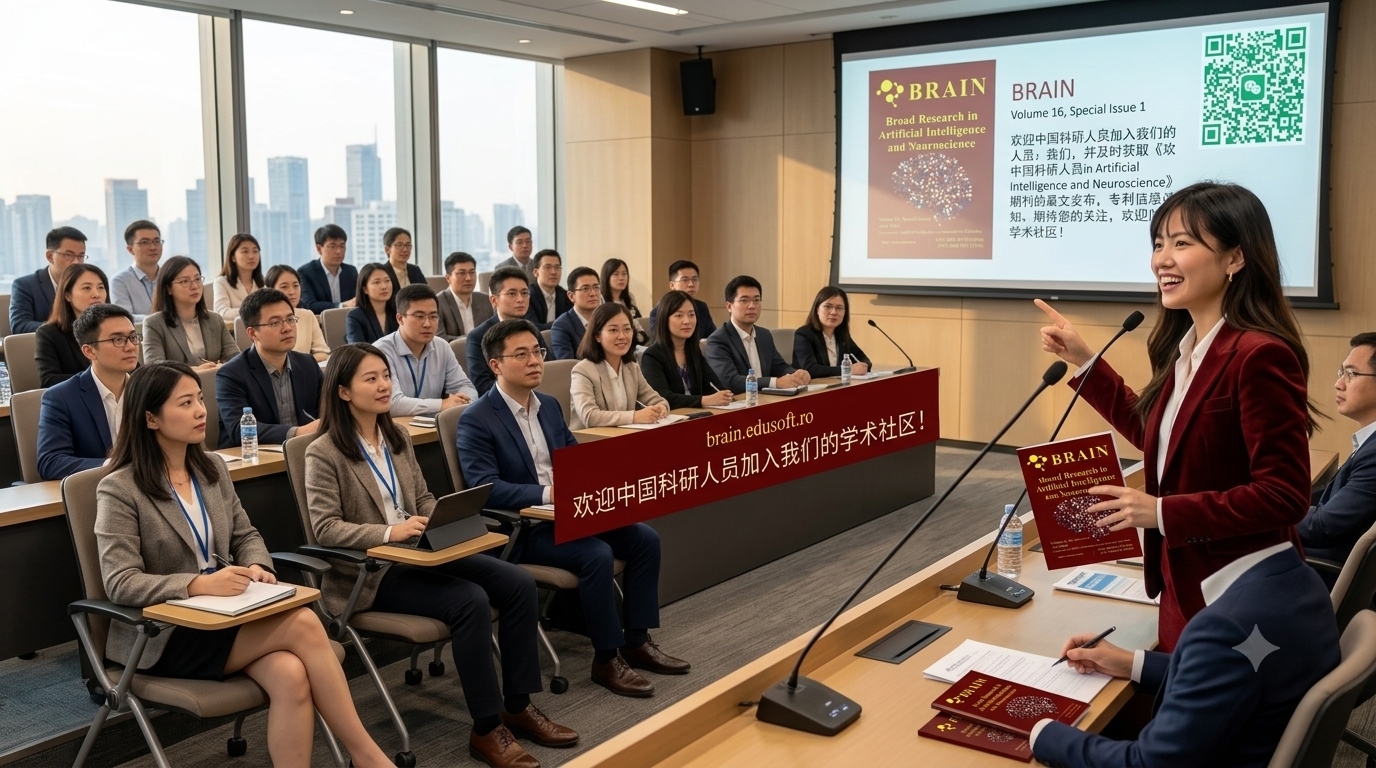
Hello from Shanghai! We have incredible news for Chinese researchers: you can now publish your work in the BRAIN journal with an exclusive 30% discount on publication fees!
To maximize your research visibility and global reach, our team will create a dedicated English video presentation, a Chinese video presentation, and a custom software application summarizing your paper's key findings for every accepted article.
Publish with BRAIN today and let us elevate your scientific impact worldwide!
Welcome to BRAIN – Broad Research in Artificial Intelligence and Neuroscience!
Established in 2010, BRAIN is an international peer-reviewed journal dedicated to publishing high-quality scientific research at the intersection of Artificial Intelligence, Neuroscience, Psychology, Psychiatry, Cognitive Science, and related interdisciplinary fields. The journal places a special emphasis on AI applications in medicine, healthcare, education, and society. The journal has been published since 2010 and appears quarterly (four regular issues per year), while also publishing special issues devoted to emerging and rapidly evolving research topics.
BRAIN is indexed in Web of Science (ESCI) and welcomes original research articles from scientists around the world.
We warmly invite researchers from China to submit their manuscripts via brain@edusoft.ro or through our online submission platform at brain.edusoft.ro.
We look forward to your outstanding scientific contributions!
BRAIN – Broad Research in Artificial Intelligence and Neuroscience publishes four issues every year, and we also publish special issues on emerging research topics.
We warmly invite you to submit your manuscript to brain@edusoft.ro or upload it through our submission platform at brain.edusoft.ro.
On March 19, 2026, BRAIN published a neuroscience study by Chinese researchers investigating the neuroprotective effects of resveratrol in a rat model of focal cerebral ischaemia.
Authors: Xinli Qu, Hui Xiong, Shaoshuai Fang, Pingfan Zeng, Liuyang Deng and Peng Wang.
The researchers used photochemical embolisation to produce focal cerebral ischaemic injury in rats. Neurological scoring, the adhesive removal test, TTC staining and measurements of GSH, iron ions, ROS and MDA were used to assess brain injury and ferroptosis-related changes.
Resveratrol treatment improved neurological deficits, shortened adhesive removal time, reduced cerebral infarction area and brain water content, and alleviated neurological damage. It also restored GSH and iron ion levels, reduced ROS and MDA levels, and promoted the expression of Sirt1 and Gpx4 proteins.
The study suggests that resveratrol may protect against cerebral ischaemic injury by increasing Sirt1 and Gpx4 protein expression and inhibiting ferroptosis.
🥂 Celebrating Innovation: BRAIN Journal Welcomes Researchers from China!
干杯!我们正在共同庆祝一个美好的时刻:《BRAIN:Broad Research in Artificial Intelligence and Neuroscience》期刊全面向中国科研人员开放!无论您的研究聚焦于前沿人工智能、神经科学,还是二者的交叉应用领域,我们都诚挚欢迎您的投稿。欢迎加入我们的国际学术社区,向世界展示您的科研成果!
Cheers! We are celebrating a wonderful milestone: BRAIN: Broad Research in Artificial Intelligence and Neuroscience is fully open to Chinese researchers! Whether your work focuses on cutting-edge AI, neuroscience, or their multidisciplinary applications, we warmly welcome your contributions. Join our global academic community and share your research with the world!
Artificial intelligence, medicine, cognitive science and the human mind
BRAIN 发表人工智能在医学中的应用研究,包括临床决策支持、医学影像、数字健康和智能医疗技术。
本期刊也欢迎认知科学、神经科学、心理学以及其他与人类心智、意识和行为相关领域的研究。
BRAIN publishes research on the use of artificial intelligence in medicine, including clinical decision support, medical imaging, digital health and intelligent healthcare technologies.
The journal also welcomes studies in cognitive science, neuroscience, psychology and other fields related to the human mind, consciousness and behaviour.
In BRAIN Volume 17, Issue 1, published in March 2026, we presented international research in artificial intelligence, neuroscience, medicine and psychology.
To highlight the breadth and diversity of the issue, the articles were organised into four main categories:
A
Artificial Intelligence, Society and Digital Innovation
B
Neurosciences in the Age of AI
C
Biomedical and Clinical AI Applications
D
Psychology, Psychotherapy, Clinical Neuroscience and Mental Health
BRAIN recently published a special issue devoted to neuropedagogy, artificial intelligence in education and resilience in contemporary education.
The issue brings together recent research on the use of artificial intelligence, digital technologies and neuroscience in educational innovation, cognitive development, learning optimisation and educational psychology.
Welcome to BRAIN — Broad Research in Artificial Intelligence and Neuroscience. Established in 2010, BRAIN is an international open-access academic journal dedicated to cutting-edge research at the intersection of artificial intelligence and brain science.
The journal covers neuroscience, artificial intelligence, medicine, psychology, cognitive science, machine learning, brain–computer interfaces, AI ethics and related interdisciplinary research.