Varia

  • News - Varia

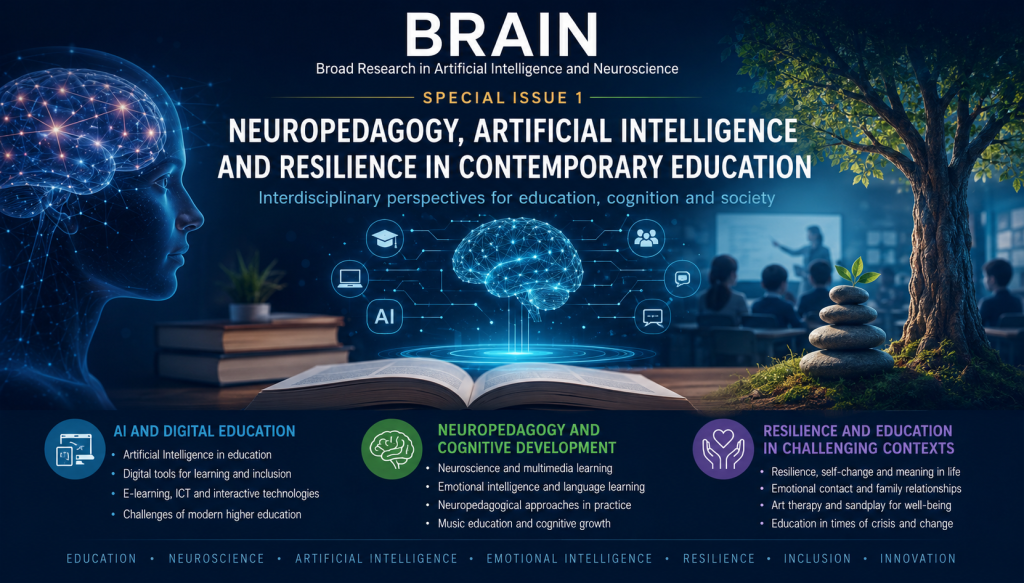
    Special Issue 1: Neuropedagogy, Artificial Intelligence and Resilience in Contemporary Education.

    We are delighted to announce that, at the beginning of July, BRAIN. Broad Research in Artificial Intelligence and Neuroscience will publish Special Issue 1: Neuropedagogy, Artificial Intelligence and Resilience in Contemporary Education.

    This special issue represents one of the most coherent and academically robust collections published by the journal to date. It stands out through its clear thematic unity, the strong compatibility of the included contributions, its excellent alignment with the scientific profile of BRAIN, and its outstanding international relevance.

    The volume brings together scholars from diverse educational and research contexts, exploring three major thematic directions:

    🔹 AI and Digital Education

    • Artificial Intelligence as a Tool for Inclusive Educational Planning
    • Ethical Uses of Artificial Intelligence in Higher Education
    • AI and Interactive Technologies in Cognitive Language Acquisition
    • ICT in the Training of Translators and Interpreters
    • Neuropsychological Aspects of E-learning
    • Distance Education in the Era of Digitalisation
    • Flipped Classrooms and Autonomous Learning
    • Contemporary Challenges in Legal Education

    🔹 Neuropedagogy and Cognitive Development

    • Neuroscientific Foundations of Multimedia Technologies
    • Neuropsychological Education for Preschool Children
    • Emotional Intelligence and Intercultural Competence
    • Foreign Language Acquisition and Emotional Intelligence
    • Neuropedagogical Approaches in Tactical Training
    • Music Education During Wartime in Ukraine
    • Musical and Patriotic Education under New Socio-Political Conditions

    🔹 Resilience and Education in Challenging Social Contexts

    • Resilience, Self-Change and Meaning in Life
    • Emotional Contact between Parents and Children
    • Art Therapy in the Digital Age
    • Sandplay Therapy for Reducing Stress in Children

    This special issue offers valuable insights into the intersections of neuroscience, education, artificial intelligence, emotional development, and resilience, addressing some of the most pressing challenges facing contemporary societies and educational systems.

    Stay tuned for its official release in early July.
  • Varia

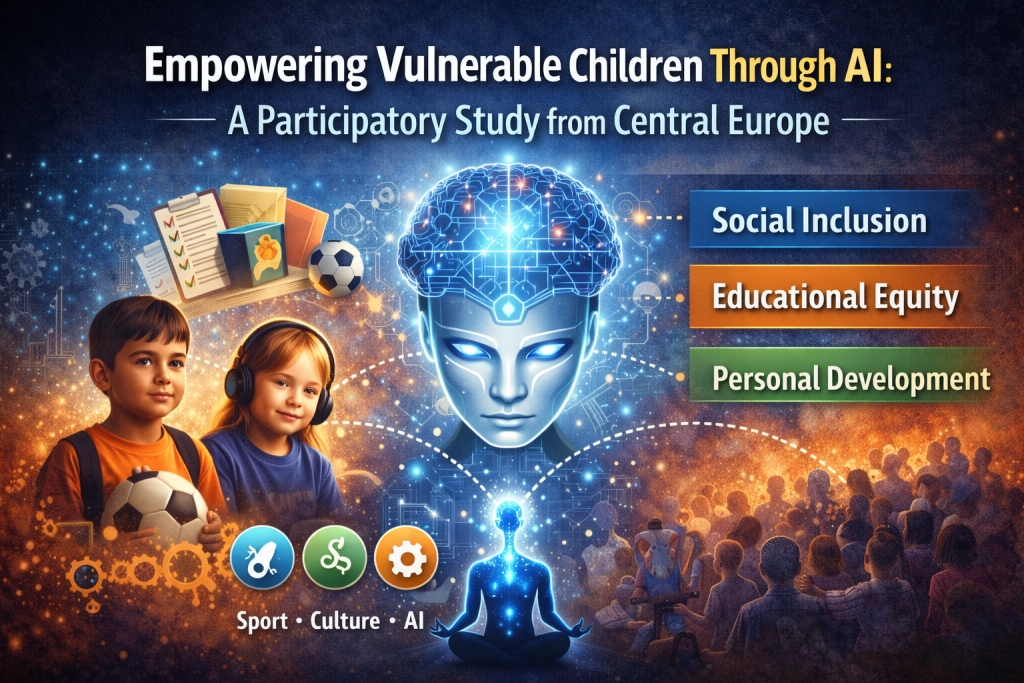
    Empowering Vulnerable Children Through AI: A Participatory Study from Central Europe

    Children living in residential childcare institutions worldwide face significant barriers to social inclusion, personal development, and educational equity. This article reports findings from the international project Sport, Culture, and Education: Empowering Visegrad’s Children for a Brighter Future, which integrating non-formal education, cultural expression, and sports to foster inclusion and 21st-century competencies among children in residential childcare.


    An important innovation of the project was the integrative use of artificial intelligence (AI) to support pedagogical planning, adaptive content creation, and participatory evaluation processes. Employing a participatory action research design and mixed methods, the study involved 68 children from residential childcare institutions in the Czech Republic, Slovakia, and Ukraine, accompanied by 21 childcare professionals.


    Results show that AI has significantly enhanced the quality and individualisation of educational and cultural interventions, while also improving the efficiency of data collection and analysis. At the same time, our study highlights critical ethical, linguistic, and contextual challenges to the deployment of AI in these vulnerable populations. The article discusses the broader implications of AI in the context of residential childcare. It presents evidence-based recommendations for educators, not only in residential childcare settings but also those seeking to employ AI responsibly and effectively in the fields of child welfare and inclusive education.

  • Varia

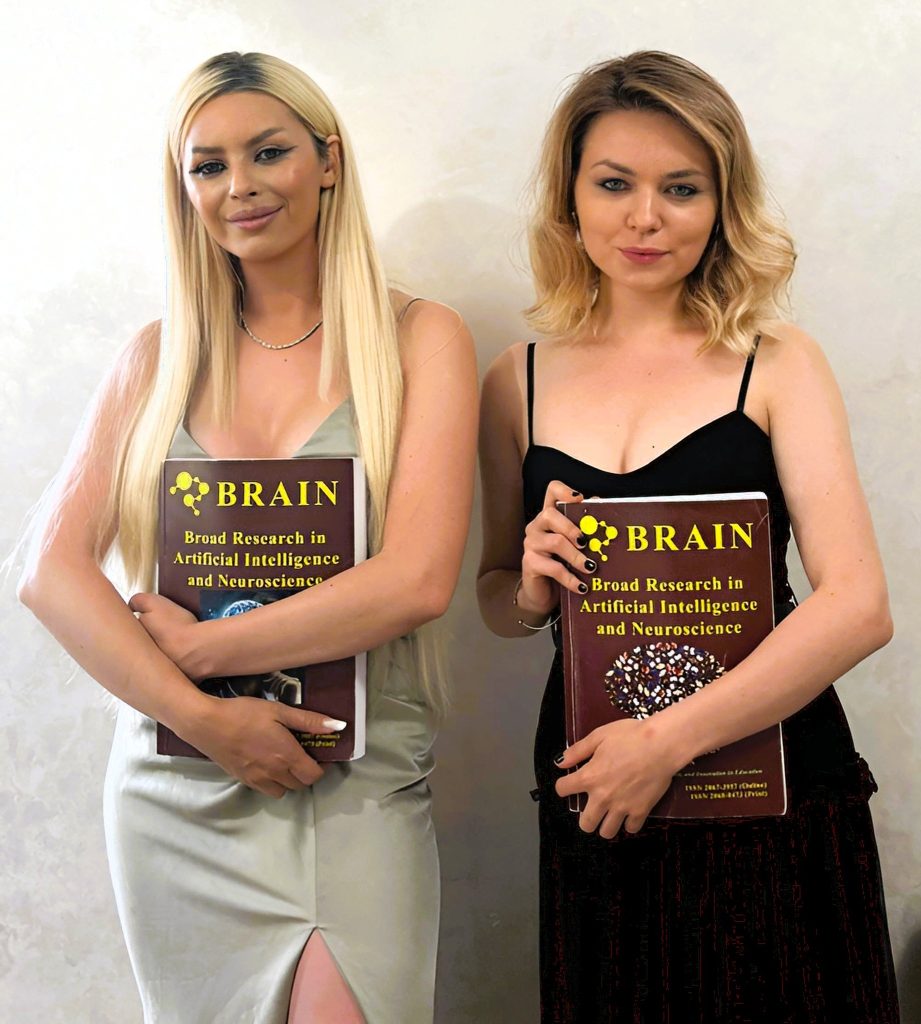
    Meet the Team Behind BRAIN Journal

    We are pleased to introduce part of the dedicated team behind BRAIN – Broad Research in Artificial Intelligence and Neuroscience.

    In this photo, you can see Dr. Claudia Tugulea (left) and Dr. Diana Ciubotaru (right), two of the passionate and committed colleagues who bring their expertise, creativity, and vision to our editorial mission.


    Together with Editor-in-Chief Dr. Bogdan Pătruț and Associate Editors Dr. Jude Hemanth and Dr. Utku Kose, our young and dynamic team works continuously to strengthen the quality of the editorial process and to position BRAIN Journal as a global platform for innovative and interdisciplinary research.

    We look forward to continuing this journey of collaboration, excellence, and scientific advancement — shaping the future of knowledge together.