Modern Web Design and Blog Design: Virtual Reality and Augmented Reality
This multidisciplinary study explores the intersection of web design, art, and neuroscience — highlighting how virtual and augmented reality technologies reshape digital aesthetics, perception, and creative education. Conducted by scholars from leading Ukrainian universities of design and art, the paper analyzes how modern web and blog design contribute to visual culture, artistic self-expression, and human interaction within the digital environment.
Authors:
Rada Mykhailova – Doctor of Art Criticism, Full Professor, Interior Design and Furniture Design Department, Kyiv National University of Technologies and Design, Ukraine
Oksana Abramova – Candidate of Pedagogical Sciences, Associate Professor, Department of Technology and Professional Education, Volodymyr Vynnychenko Central Ukrainian State University, Ukraine
Nataliia Kravchenko – PhD in Fine Arts, Associate Professor, Head of the Department of Graphic Design, National University of Technologies and Design, Ukraine
Inna Petrova – Doctor of Historical Sciences, Associate Professor, Professor at the Department of Graphic Design, Mykhailo Boichuk Kyiv State Academy of Decorative Applied Arts and Design, Ukraine
Ivan Nebesnyk – Candidate of Science in Art Criticism, Associate Professor, Head of the Department of Design, Faculty of Decorative Arts and Design, Transcarpathian Academy of Arts, Ukraine
Maryna Sofilkanych – Doctor of Philosophy, Associate Professor, Dean of the Faculty of Decorative Arts and Design, Transcarpathian Academy of Arts, Ukraine
Introduction
The rapid evolution of information and communication technologies (ICTs) has transformed both the visual and perceptual dimensions of human experience.
Web design — once a primarily functional craft — has become a form of digital art that models space, mediates identity, and projects virtual worlds.
The article “Modern Web Design and Blog Design: Virtual Reality and Augmented Reality” reflects on how aesthetic principles, neuropsychological mechanisms, and immersive technologies interact in shaping the modern digital environment.
The Role of Web Design in Contemporary Culture
Web design and blog design are viewed as aesthetic, communicative, and cognitive phenomena.
They represent:
- A creative interface between human consciousness and digital technology;
- A means of constructing virtual spaces of interaction and identity;
- A reflection of broader cultural transformations brought by the digital era.
The authors argue that web design is not only about visual composition and usability — it is also about the emotional and neuropsychological engagement of the viewer. The design process influences how users perceive, navigate, and internalize digital content.
Educational Relevance and Art Pedagogy
The study emphasizes the importance of teaching web design fundamentals in art and design education.
Students must develop both technical skills and aesthetic sensitivity, learning to integrate artistic principles with modern ICT tools.
Key stages in web design education include:
- Understanding the structure and logic of digital interfaces;
- Applying visual composition and color theory to screen-based media;
- Exploring user experience (UX) and interaction design;
- Engaging with virtual and augmented reality to expand creative expression.
In this way, web and blog design become part of the broader process of forming digital literacy and aesthetic culture among future professionals.
Virtual and Augmented Reality: Neuropsychological Perspectives
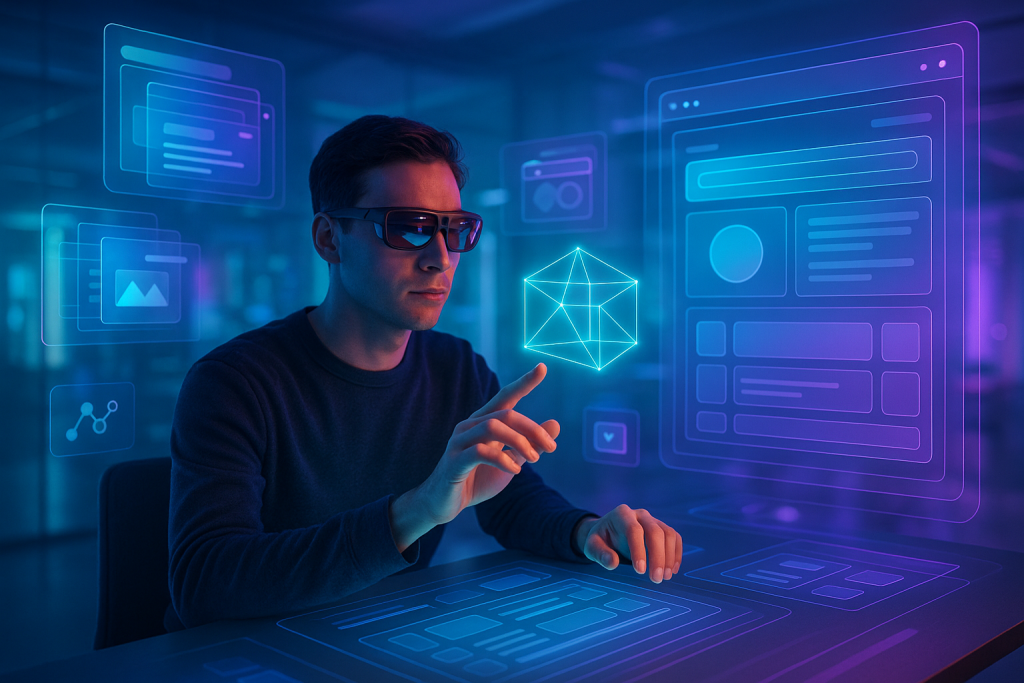
The article investigates how virtual reality (VR) and augmented reality (AR) affect human cognition and perception.
By stimulating multiple sensory systems, VR and AR engage spatial awareness, memory, and visual imagination, leading to new ways of experiencing and interpreting digital environments.
From a neuropsychological standpoint, perception of virtual environments involves:
- The activation of visual and motor cortices, simulating real-world interactions;
- The creation of embodied experiences, where users feel “present” within digital space;
- The modulation of emotional responses through immersive aesthetics and interactive design.
The authors conclude that web design incorporating VR and AR elements extends the boundaries of traditional aesthetics and redefines the relationship between the user and the virtual world.
Artistic and Cultural Dimensions
In the context of art and design, web aesthetics contribute to the formation of a new worldview, where:
- The digital environment becomes an artistic medium;
- The designer assumes the role of both artist and cognitive architect;
- The user participates in co-creation, blurring the line between creator and observer.
As the Internet becomes a global stage for creativity, web design and blogging serve as tools for self-expression, identity construction, and social commentary.
These platforms merge artistic sensibility with technological innovation, reflecting the dynamic interplay between humanity, information, and imagination.
Conclusions
The study concludes that modern web and blog design, especially through the integration of VR and AR technologies, represent a new synthesis of art, science, and technology.
They model virtual spaces that expand human perception, stimulate creativity, and reshape aesthetic experience.
The neuropsychological mechanisms of digital perception highlight the active role of the brain in interpreting and emotionally engaging with virtual content.
Thus, web design is both a technological discipline and an artistic endeavor, vital for understanding the evolving culture of the information age.
Read the full article here: https://doi.org/10.18662/brain/14.3/481.