• Research Publications

    Video Game Addiction Among Adolescents

    This post discusses a multidisciplinary study exploring both the positive and negative psychological effects of video gaming, with a particular focus on addiction among teenagers. Conducted by researchers from “Elisabeta Doamna” Psychiatry Hospital, the University of Medicine and Pharmacy “Grigore T. Popa” Iași, and “Dunărea de Jos” University of Galați, the study provides a balanced, evidence-based perspective on one of the most debated behavioral phenomena of our time.


    Authors:
    Cezara Crucianu – “Elisabeta Doamna” Psychiatry Hospital, Galați, Romania (RO)
    Vladimir Poroch – University of Medicine and Pharmacy “Grigore T. Popa” Iași, Romania (RO)
    Lucian Ștefan Burlea – University of Medicine and Pharmacy “Grigore T. Popa” Iași, Romania (RO)
    Ovidiu Mihai Ștefănescu – University of Medicine and Pharmacy “Grigore T. Popa” Iași, Romania (RO)
    Anamaria Ciubara – “Dunărea de Jos” University of Galați, Romania (RO)


    Introduction

    Over the past decade, the video game industry has expanded at an unprecedented pace, attracting over two billion users worldwide, with adolescents making up a significant portion of this population.
    While video gaming is now a dominant form of entertainment and social interaction, researchers have increasingly turned their attention to its potential risks and rewards for mental and physical health.

    The study titled “Video Game Addiction Among Adolescents” seeks to identify both the beneficial and harmful consequences of excessive gaming and to clarify widespread misconceptions about its impact.


    The Dual Nature of Gaming

    The authors note that video gaming cannot be viewed simply as “good” or “bad” — its effects depend on duration, context, and individual vulnerability.

    Potential Negative Effects

    Excessive or compulsive gaming has been linked to several health and behavioral challenges, including:

    • Reduced physical activity and sedentary lifestyle;
    • Vision strain and postural issues;
    • Decreased attention span and patience;
    • Sleep disturbances;
    • Increased irritability, anxiety, or aggression;
    • Depressive symptoms and social withdrawal.

    In its most severe form, gaming disorder—recognized by the World Health Organization (WHO) in 2019—is characterized by impaired control over gaming, prioritization of gaming over other activities, and continuation of play despite negative consequences.

    Recognized Positive Effects

    However, the study also emphasizes the constructive potential of video games when used in moderation and with purpose:

    • Enhanced cognitive flexibility and problem-solving abilities;
    • Improved hand–eye coordination and spatial reasoning;
    • Development of teamwork and communication skills in multiplayer contexts;
    • Mood enhancement and stress relief;
    • Increased self-confidence and sense of achievement.

    These outcomes illustrate that gaming can foster personal and social development, particularly when games are designed with educational or cooperative goals in mind.


    Discussion

    The researchers advocate for a balanced, evidence-informed approach to understanding video game use among adolescents.
    While some individuals are more susceptible to addiction — often due to psychological vulnerability, emotional distress, or lack of offline social support — most adolescents engage in gaming as a normative and manageable leisure activity.

    Therefore, prevention and intervention strategies should focus on:

    • Early identification of at-risk players;
    • Parental and educational guidance in setting healthy limits;
    • Psychological counseling for those exhibiting dependency patterns;
    • Public awareness campaigns that destigmatize gaming while promoting responsible use.

    Conclusion

    The study concludes that video gaming represents both a risk and a resource for adolescent development.
    The challenge lies not in condemning gaming itself but in understanding when and why it becomes excessive or harmful.

    Continued interdisciplinary research and collaboration between mental health professionals, educators, and game developers are essential for improving prevention, diagnosis, and treatment outcomes for those affected by gaming-related problems.


    See full paper here: https://brain.edusoft.ro/index.php/brain/article/view/1487.
  • Research Publications

    War — Psychological Skills for Coping with Traumatic Events: Helping Ukraine

    This post presents an important study on developing psychological skills and interventions to help Ukrainians cope with trauma caused by the ongoing war. Conducted by researchers from Kyiv National University of Culture and Arts, Kyiv Polytechnic Institute, and Berdiansk State Pedagogical University, the paper explores how individuals and society can build resilience, recover psychological health, and overcome the long-term consequences of war-related stress.


    Authors:
    Yuliia Rybinska – Doctor of Science (Dr. Hab.) in Education, Professor, Head of the Foreign Philology Department, Kyiv National University of Culture and Arts, Kyiv, Ukraine (UA)
    Maryna Antonivska – Lecturer, Foreign Philology Department, Kyiv National University of Culture and Arts, Kyiv, Ukraine (UA)
    Olha Serbova – PhD in Psychology, Associate Professor, Department of Psychology and Pedagogy, National Technical University of Ukraine “Ihor Sikorsky Kyiv Polytechnic Institute,” Kyiv, Ukraine (UA)
    Maryna Mykolaenko – Assistant, Foreign Philology Department, Kyiv National University of Culture and Arts, Kyiv, Ukraine (UA)
    Olha Frolova – Associate Professor, Department of Psychology, Berdiansk State Pedagogical University, Berdiansk, Ukraine (UA)
    Olena Kolpakchy – Senior Lecturer, Department of Psychology, Berdiansk State Pedagogical University, Berdiansk, Ukraine (UA)


    Psychological Context and Purpose

    The full-scale invasion of Ukraine became one of the most profound traumatic events in modern European history. Millions of people have experienced loss, displacement, and prolonged uncertainty, leading to widespread psychological consequences.

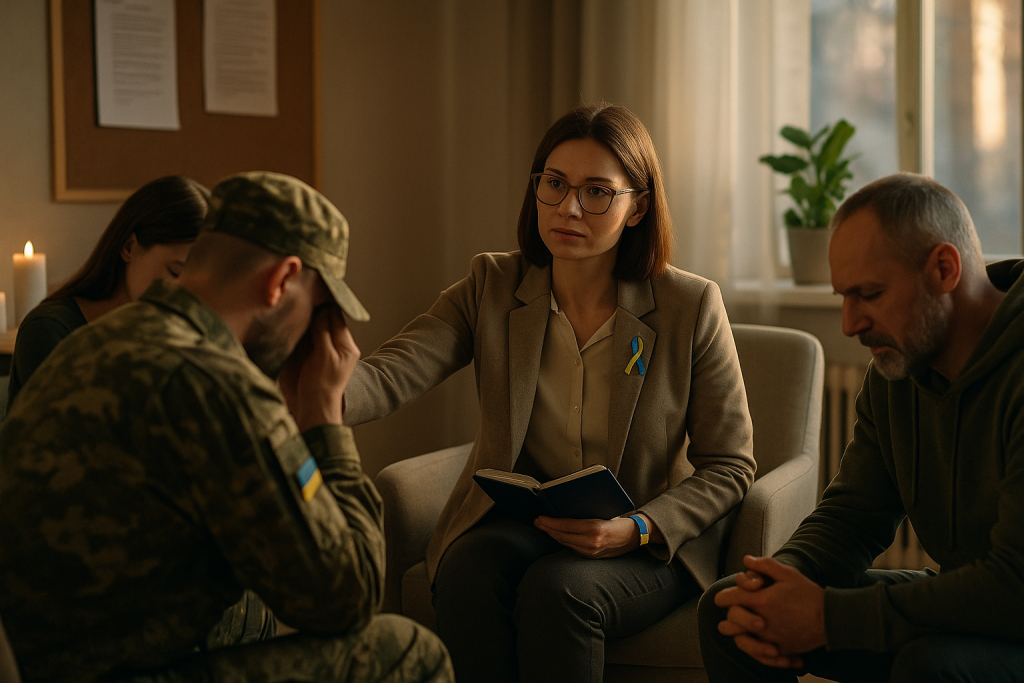
    The article “War — Psychological Skills for Coping with Traumatic Events: Helping Ukraine” emphasizes the urgent need for comprehensive psychological support systems, capable of helping citizens adapt, recover, and rebuild emotional stability in the face of war-related trauma.

    Objectives of the Study

    The authors set out to:

    • Develop theoretical and methodological foundations for restoring psychological health;
    • Study technologies of social and psychological rehabilitation for combatants, internally displaced persons, and civilians;
    • Identify methods of mobilizing personal resources that enhance adaptation and recovery;
    • Promote public awareness of trauma and post-traumatic stress as vital aspects of national resilience.

    War Trauma and Its Psychological Effects

    War deeply affects both individual and collective psychology. The study reveals that exposure to violence, fear, and displacement disrupts personal stability, erodes trust, and challenges people’s sense of identity and purpose.

    Common emotional and behavioral outcomes include:

    • Chronic anxiety and hypervigilance;
    • Sleep disturbances and depression;
    • Emotional numbness or loss of motivation;
    • Post-traumatic stress disorder (PTSD);
    • Difficulties in social reintegration for veterans and displaced persons.

    However, the researchers also underline that trauma does not always lead to dysfunction — with appropriate psychological support and community engagement, individuals can experience post-traumatic growth, developing new strengths, empathy, and resilience.

    Psychological Skills for Coping and Recovery

    The article presents a framework of psychological skills and interventions essential for coping with traumatic experiences:

    1. Self-regulation techniques – breathing, mindfulness, and grounding exercises to manage stress responses.
    2. Cognitive restructuring – reframing negative thoughts and re-establishing a sense of meaning.
    3. Social support building – strengthening interpersonal connections and community belonging.
    4. Trauma-informed counseling and psychoeducation – helping individuals understand their reactions and normalize their experiences.
    5. Empowerment and resilience training – mobilizing inner resources, self-efficacy, and hope.

    These skills can be taught not only by trained psychologists but also through educational programs, community workshops, and peer support networks.

    Institutional and Societal Challenges

    The authors stress that addressing psychological trauma requires a multi-level approach:

    • Expanding the national mental health infrastructure;
    • Training more specialists in diagnosis, counseling, and trauma therapy;
    • Promoting public education campaigns to dismantle stigma surrounding mental health;
    • Encouraging collaboration between psychologists, educators, and policymakers.

    They emphasize that healing war trauma is not just a medical or psychological issue — it is a societal transformation process requiring empathy, unity, and shared responsibility.

    Conclusion

    The study concludes that the path to psychological recovery in wartime Ukraine lies in developing not only professional rehabilitation systems but also a culture of psychological literacy and emotional resilience.

    Through education, awareness, and collective support, Ukrainians can learn to cope, adapt, and rebuild in the aftermath of trauma — transforming pain into purpose and vulnerability into strength.


    Read the full article here: https://brain.edusoft.ro/index.php/brain/article/view/1359.

  • Research Publications

    The Social Media Addiction: What Have We Learned So Far? — A Review

    This post presents a comprehensive review of research on social media addiction, examining whether excessive use of social networks qualifies as a true behavioral disorder. The study, conducted by researchers from “Alexandru Ioan Cuza” University of Iași and the “Socola” Institute of Psychiatry, explores the psychological, demographic, and therapeutic dimensions of this modern phenomenon.


    Authors:
    Marius Dumitrescu – “Alexandru Ioan Cuza” University of Iași, Romania (RO)
    Nicoleta Dumitrescu – “Socola” Institute of Psychiatry, Iași, Romania (RO)
    Șerban Turliuc – “Socola” Institute of Psychiatry, Iași, Romania; Department of Psychiatry, “Grigore T. Popa” University of Medicine and Pharmacy, Iași, Romania (RO)


    Introduction: From Communication to Compulsion

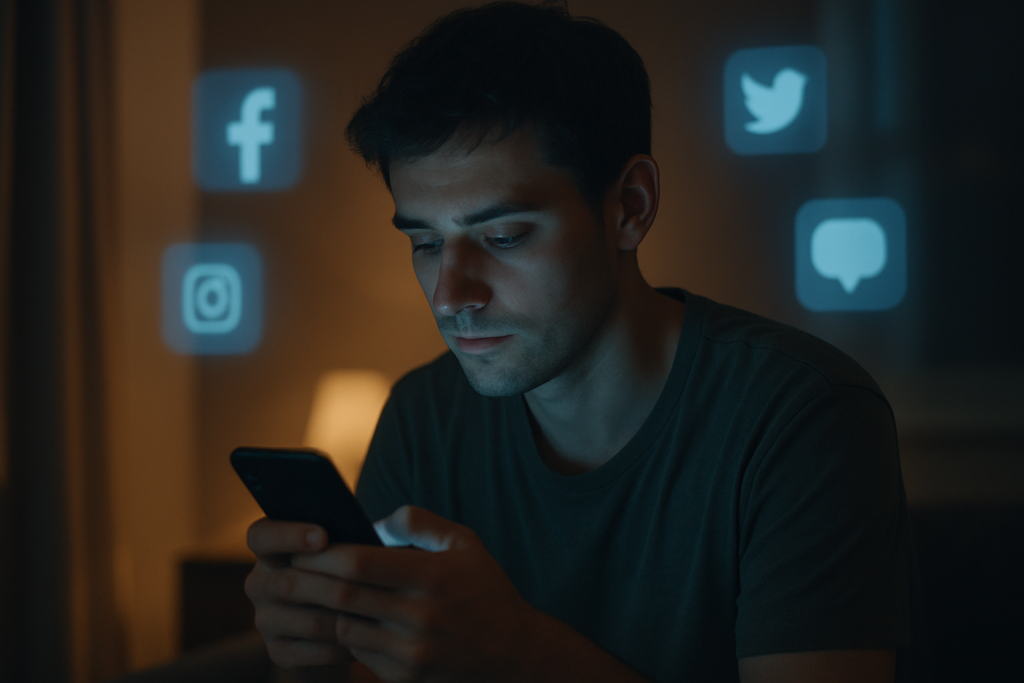
    Over the last two decades, social media platforms like Facebook, Instagram, Twitter, and WeChat have revolutionized how people connect, share, and communicate. However, this digital expansion has also brought new psychological challenges.

    The concept of social media addiction (SMA) has emerged to describe patterns of compulsive and excessive engagement with online platforms — behaviors that mimic those seen in other forms of addiction.

    This review seeks to determine:

    • whether social media addiction can be considered a distinct behavioral disorder,
    • its demographic and psychological characteristics,
    • the health consequences it may cause,
    • and therapeutic interventions that can help individuals regain control.

    Is Social Media Use Really an Addiction?

    Currently, social media addiction is not formally recognized as a disorder in the Diagnostic and Statistical Manual of Mental Disorders (DSM-5). Instead, it is classified by many scholars as a behavioral addiction or a subtype of Internet addiction.

    The authors discuss that, beyond neurobiological mechanisms, the roots of this dependency can be viewed through anthropological and philosophical perspectives — as a symptom of the human condition in a hyperconnected, performance-driven world where online identity often replaces authentic social interaction.


    Psychological and Health Consequences

    Excessive and compulsive use of social media can lead to a range of negative psychological and physical outcomes, including:

    • Reduced concentration and academic underperformance
    • Sleep disturbances (insomnia) due to late-night scrolling
    • Altered self-image and decreased self-esteem
    • Increased anxiety and depressive symptoms
    • Emotional instability and dependence on external validation

    The constant feedback loop of likes, comments, and notifications activates dopaminergic reward circuits, similar to those involved in substance use disorders, reinforcing repetitive checking and posting behavior.


    Demographic and Behavioral Factors

    Research suggests that younger users, particularly adolescents and young adults, are at higher risk of developing problematic social media habits.

    Key risk factors include:

    • High levels of boredom or loneliness;
    • Low self-esteem and social comparison tendencies;
    • Fear of missing out (FOMO);
    • Personality traits like neuroticism or impulsivity.

    The study emphasizes that these patterns are not limited by geography — SMA is a global behavioral trend shaped by digital accessibility and cultural attitudes toward technology.


    Prevention and Intervention

    Unlike substance addictions, where abstinence is the therapeutic goal, the objective in treating social media addiction is controlled, mindful use.

    The review highlights several effective therapeutic and preventive strategies:

    1. Cognitive-behavioral therapy (CBT) – helps individuals identify and reframe distorted thoughts related to social media use and replace compulsive behaviors with healthier routines.
    2. Digital detox programs – structured breaks from social media to restore focus and emotional balance.
    3. Self-monitoring tools – using screen-time trackers or app-limiters to create awareness of usage patterns.
    4. Psychoeducation and prevention campaigns – targeting young people to promote balanced digital habits.
    5. Family and school involvement – reinforcing real-world communication, emotional intelligence, and self-regulation.

    Conclusion

    Social media addiction reflects one of the paradoxes of the digital age: a technology designed to connect people has also fostered dependence, distraction, and emotional fragility.

    This review concludes that while SMA is not yet a recognized clinical disorder, its psychological impact and public health implications are undeniable. The focus should therefore shift toward awareness, education, and adaptive coping strategies, rather than strict prohibition.

    Controlled and conscious use — not abstinence — remains the key to preserving mental health and digital balance in a world increasingly defined by connectivity.


    Read the full article here: https://brain.edusoft.ro/index.php/brain/article/view/1361.