• Varia

    Meet the Team Behind BRAIN Journal

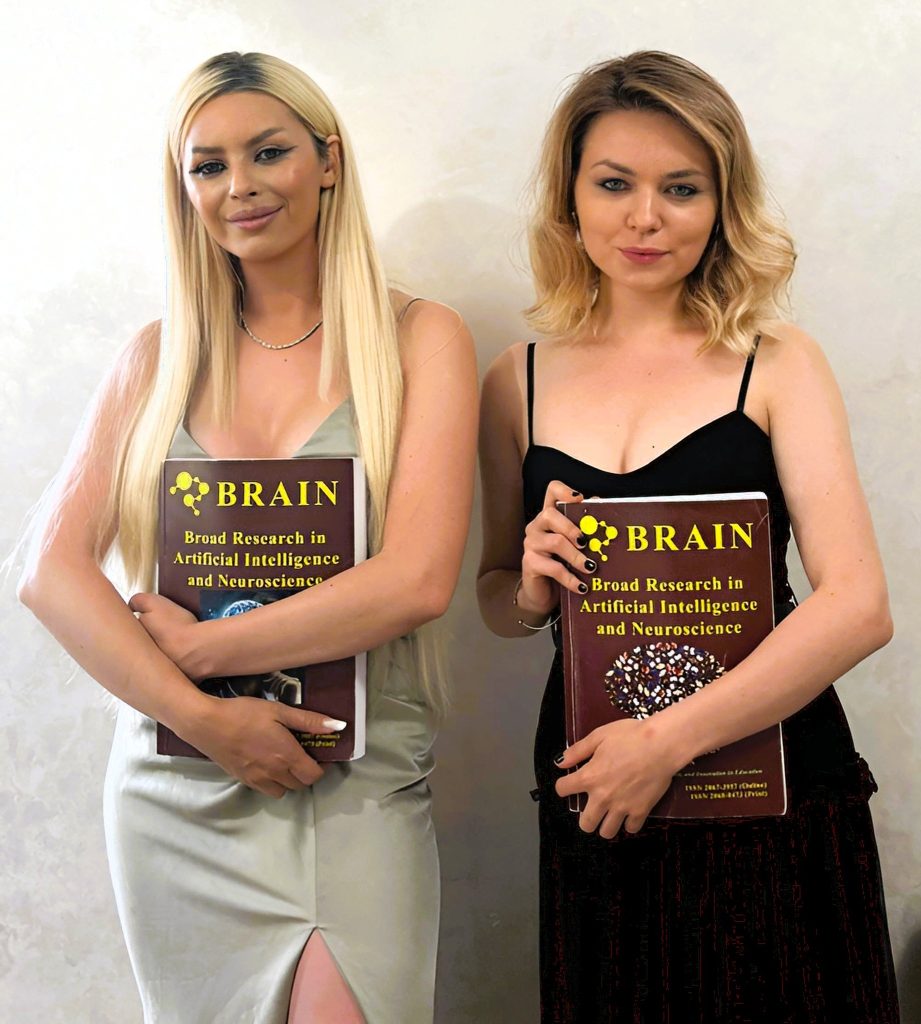
    We are pleased to introduce part of the dedicated team behind BRAIN – Broad Research in Artificial Intelligence and Neuroscience.

    In this photo, you can see Dr. Claudia Tugulea (left) and Dr. Diana Ciubotaru (right), two of the passionate and committed colleagues who bring their expertise, creativity, and vision to our editorial mission.


    Together with Editor-in-Chief Dr. Bogdan Pătruț and Associate Editors Dr. Jude Hemanth and Dr. Utku Kose, our young and dynamic team works continuously to strengthen the quality of the editorial process and to position BRAIN Journal as a global platform for innovative and interdisciplinary research.

    We look forward to continuing this journey of collaboration, excellence, and scientific advancement — shaping the future of knowledge together.

  • Research Publications

    The Evolutionary Principles of the Attractiveness of Symmetry and Their Possible Sustainability in the Context of Research Ambiguities

    This article investigates the evolutionary and neuropsychological mechanisms underlying human preference for symmetry — a principle long associated with beauty in both natural and artistic contexts. Conducted by researchers from the University of Ss. Cyril and Methodius in Trnava, Slovakia, the study explores why symmetry continues to captivate human perception and how modern research, despite its contradictions, still supports its evolutionary relevance.


    Authors:
    Slavka Demuthova – University of Ss. Cyril and Methodius in Trnava, Slovakia (SK)
    Dominika Minarova – University of Ss. Cyril and Methodius in Trnava, Slovakia (SK)


    Introduction

    Since ancient times, symmetry has been regarded as one of the foundational principles of beauty. From Greek sculpture and Renaissance art to modern design and neuroscience, it has symbolized harmony, proportion, and balance.

    However, contemporary research presents a paradox: while many studies confirm symmetry’s role in perceived attractiveness, others challenge its universality. The paper “The Evolutionary Principles of the Attractiveness of Symmetry and Their Possible Sustainability in the Context of Research Ambiguities” seeks to clarify this tension by identifying the evolutionary and neurophysiological bases for symmetry preference and explaining the ambiguities found in current findings.


    Evolutionary Foundations of Symmetry Preference

    Drawing upon evolutionary psychology and neuroscience, the authors propose five key principles that explain why symmetry has remained an enduring marker of beauty and desirability throughout human evolution:

    1. Symmetry as an Honest Signal of Health
      Symmetry is viewed as a visible indicator of genetic quality and physiological health. Minor asymmetries often result from developmental instability or environmental stress, making symmetrical traits reliable cues for reproductive fitness.
    2. Symmetry as Proof of Developmental Stability
      Organisms that maintain symmetry despite genetic mutations or environmental challenges demonstrate resilience and biological integrity, making symmetry evolutionarily advantageous.
    3. Effectiveness
      Symmetrical structures tend to function more efficiently — in movement, perception, and reproduction — which supports survival and reproduction, reinforcing a subconscious attraction to symmetry.
    4. Comprehensibility
      Symmetry reduces cognitive load. The human brain processes symmetrical forms more easily, finding them predictable and aesthetically pleasing due to lower perceptual effort.
    5. Predictability
      Evolution favored organisms capable of detecting patterns and regularity in their environment. Symmetry thus evokes a sense of order, stability, and control, which the mind instinctively associates with safety and beauty.

    Contradictory Findings and Research Ambiguities

    Despite robust evidence supporting these principles, empirical studies have yielded contradictory results. Some research suggests that people do not always prefer perfect symmetry and that context, individual differences, and cultural factors may moderate its perceived attractiveness.

    For instance:

    • Slight asymmetries in facial features or natural forms may enhance distinctiveness and increase perceived authenticity.
    • Aesthetic preferences can shift based on environmental cues, cultural exposure, or emotional states.
    • In some contexts, asymmetry adds character or expressiveness, making it more appealing than rigid perfection.

    These observations led the authors to develop three integrative hypotheses to reconcile traditional and modern interpretations.


    Three Integrative Hypotheses

    1. The Naturalness Hypothesis
      Symmetry is attractive only to the extent that it occurs naturally within the subject. Excessive or artificial symmetry may appear unnatural, evoking discomfort rather than admiration.
    2. The Accent Hypothesis
      Minor asymmetries do not contradict the principles of symmetry; rather, they highlight and emphasize symmetry, making it more noticeable and aesthetically engaging.
    3. The Ecology Hypothesis
      The attractiveness of symmetry is context-dependent — influenced by environmental and situational factors, as well as by the type of subject being evaluated (e.g., human faces, natural objects, or abstract designs).

    These hypotheses offer a framework for understanding the continuity of symmetry’s evolutionary role, while acknowledging the complexity and variability of human aesthetic experience.


    Neuroscientific Perspective

    Recent findings in neuroaesthetics reveal that symmetrical stimuli activate brain regions linked to reward, pattern recognition, and emotional regulation — including the orbitofrontal cortex and ventral striatum.
    However, deviations from perfect symmetry can also trigger positive emotional responses when they enhance visual interest or individuality, suggesting that beauty arises from an optimal balance between order and variation.


    Conclusion

    The study concludes that symmetry continues to serve as an evolutionary and neurophysiological foundation of attractiveness, even amidst research ambiguities. Rather than being an absolute criterion of beauty, symmetry operates as a dynamic principle shaped by biological adaptation, cognitive efficiency, and aesthetic context.

    The proposed hypotheses — naturalness, accent, and ecology — bridge classical theories and contemporary empirical findings, offering a nuanced understanding of how human beings perceive harmony in both nature and art.

    The authors recommend future interdisciplinary research combining evolutionary biology, neuroscience, and aesthetic psychology to further test and refine these models of perception.


    Read the full article here: https://doi.org/10.18662/brain/14.1/433.

  • News

    Academic Pride and Global Collaboration

    We are pleased to announce an outstanding international academic achievement involving three editors of BRAIN. Broad Research in Artificial Intelligence and Neuroscience:

    Dr. Bogdan Pătruț – Editor-in-Chief, Romania
    Dr. Jude Hemanth – Associate Editor, India
    Dr. Utku Kose – Associate Editor, Turkey


    They have served as editors of the volume:
    Smart Applications with Advanced Machine Learning and Human-Centred Problem Design, published by Springer (2023).
    Read more on SpringerLink


    About the Volume

    This publication gathers research presented at the 3rd International Conference on Artificial Intelligence and Applied Mathematics in Engineering (ICAIAME).

    The volume explores current developments and applications in:

    • Advanced Machine Learning
    • Human-Centered AI Problem Design
    • Intelligent IoT and Cyber-Physical Systems
    • Engineering Innovation for a Sustainable Future

    It is published as part of the Engineering Cyber-Physical Systems and Critical Infrastructures book series by Springer.


    A Remarkable Collaboration

    Through this collective effort, the editors have strengthened academic cooperation between Romania, India, and Turkey, contributing to the global advancement of research in Artificial Intelligence, Applied Mathematics, and Neuroscience.

    We extend our sincere congratulations to our editors for their dedication, professionalism, and continued commitment to promoting interdisciplinary excellence in science and technology.

  • Research Publications

    Detection of Intellectual Giftedness in Children of Different Ages and Methods of Its Development as an Aspect of Neurophysiological Development

    This article presents a comprehensive study on how intellectual giftedness manifests across different childhood stages and how neurophysiological mechanisms contribute to its identification and development. Authored by an interdisciplinary team of Ukrainian researchers, the study bridges educational psychology, neuroscience, and pedagogy to establish more effective methods for diagnosing and nurturing gifted children.


    Authors:
    Iryna Pidlypniak – Candidate of Pedagogical Sciences, Associate Professor, Senior Lecturer, Department of Psychology and Pedagogy of Child Development, Pavlo Tychyna Uman State Pedagogical University, Ukraine (UA)
    Oksana Marchuk – Doctor of Science in Pedagogy, Associate Professor, Professor, Department of General Pedagogy and Preschool Education, Academician Stepan Demianchuk International University of Economics and Humanities, Ukraine (UA)
    Victoriia Naichuk – Doctoral Student, Department of Psychology, Candidate of Psychological Sciences, H.S. Skovoroda Kharkiv National Pedagogical University, Ukraine (UA)
    Olena Tryfonova – Doctor of Science in Pedagogy, Full Professor, Department of Primary and Preschool Education, V.O. Sukhomlynskyi Mykolaiv National University, Ukraine (UA)
    Inokentii Korniienko – Doctor of Science in Psychology, Full Professor, Department of Psychology, Mukachevo State University, Ukraine (UA)
    Svitlana Mashchak – Associate Professor of Psychology, Candidate of Psychological Sciences, Lviv Polytechnic National University, Ukraine (UA)


    Introduction

    The concept of giftedness—its origins, definitions, and practical implications—has fascinated educators and philosophers for centuries. From the reflections of Plato and Confucius to the frameworks of modern cognitive science, the question remains: What makes a child gifted, and how can we nurture such potential effectively?

    This study, “Detection of Intellectual Giftedness in Children of Different Ages and Methods of Its Development as an Aspect of Neurophysiological Development,” explores giftedness not only as a set of observable traits but as a neurophysiological phenomenon—a product of complex interactions between brain development, environment, and educational influence.


    Purpose of the Study

    The research aims to:

    • Identify the neurophysiological and psychological foundations of intellectual giftedness in children of various ages;
    • Clarify the types and characteristics of giftedness and its developmental dynamics;
    • Develop effective diagnostic tools for recognizing intellectual giftedness;
    • Propose methods for supporting and cultivating these abilities through neurophysiological and pedagogical approaches.

    Theoretical Foundations

    Giftedness is conceptualized as a unique combination of cognitive, creative, and neurobiological traits that allows an individual to achieve exceptional results in a specific field.
    According to the authors, intellectual giftedness arises from:

    • Genetic predispositions influencing neural connectivity and brain plasticity;
    • Environmental stimulation that strengthens neural pathways related to problem-solving and creativity;
    • Motivational and emotional regulation, which sustain learning curiosity and cognitive engagement.

    Historically, thinkers such as Plato viewed giftedness as a divine quality, while Confucius emphasized discipline and moral cultivation. Modern neuroscience, however, explains giftedness as a synergy of cognitive processing speed, synaptic efficiency, and hemispheric balance, making it a measurable and developable quality.


    Methods

    The study employed:

    • Theoretical analysis and synthesis of educational, psychological, and neurophysiological literature;
    • Comparative evaluation of diagnostic frameworks used internationally for identifying giftedness;
    • Development of an integrated model linking pedagogical assessment with neurophysiological indicators (attention, memory, problem-solving speed, emotional regulation).

    Through this multi-method approach, the researchers sought to unify psychological theory with biological evidence, aligning giftedness research with current findings in neuroeducation.


    Key Findings

    1. Giftedness as a Neurophysiological Process
      Intellectual giftedness stems from the brain’s enhanced ability to process, integrate, and apply information. It involves efficient activation of prefrontal and parietal regions, superior working memory capacity, and heightened creative association patterns.
    2. Types of Giftedness
      • Cognitive giftedness – high analytical and logical reasoning abilities;
      • Creative giftedness – originality, divergent thinking, and imagination;
      • Academic giftedness – mastery of complex information in specific domains;
      • Social-emotional giftedness – empathy, leadership, and advanced interpersonal understanding.
    3. Diagnosis and Evaluation
      Effective detection of giftedness requires multidimensional assessment, combining:
      • Neuropsychological observation (attention span, response time, emotional control);
      • Behavioral indicators (curiosity, persistence, independence);
      • Pedagogical evaluation (learning pace, adaptability, innovative thinking).
    4. Methods for Development
      • Differentiated instruction and enrichment programs tailored to cognitive strengths;
      • Neurodevelopmental exercises improving memory, executive function, and focus;
      • Creative problem-solving workshops encouraging flexible thought;
      • Emotional intelligence training for balanced self-regulation and motivation.

    Discussion

    The authors emphasize that giftedness should not be treated as elitism, but as a responsibility — both for educators and society. Early recognition and appropriate support can prevent underachievement and social isolation often observed in gifted children.

    By adopting a neurophysiological approach, education systems can move beyond surface-level academic metrics toward a deeper understanding of how gifted minds learn, think, and feel.

    This perspective highlights that giftedness is not static — it can be nurtured and strengthened through targeted cognitive and emotional development.


    Conclusion

    The study concludes that intellectual giftedness represents a unique neurophysiological configuration — an integration of biological predispositions, cognitive processes, and psychosocial conditions.

    Identifying and developing giftedness requires a holistic model that unites neuroscience, pedagogy, and psychology. The proposed diagnostic and developmental methods offer a pathway for educators to recognize potential early, guide it effectively, and ensure that gifted children reach both their intellectual and emotional maturity.

    Such an approach contributes not only to individual fulfillment but also to societal innovation and progress, making the study of giftedness a key concern in contemporary education and neuropsychology.


    See full article here: https://doi.org/10.18662/brain/14.1/418.
  • News

    Important Announcement for BRAIN Journal Readers and Contributors

    Dear authors, readers, and partners,

    We are pleased to announce that the website of BRAIN. Broad Research in Artificial Intelligence and Neuroscience will soon undergo a process of modernization and optimization.


    What’s Coming Next

    In the upcoming months, our online platform will move from
    brain.edusoft.ro
    to
    brain.editora.ro

    The new version will feature a modern, fully responsive design, ensuring an improved browsing experience, including seamless access from mobile and tablet devices.


    What Remains Unchanged

    • All DOI codes assigned to published articles will be preserved and will automatically redirect to the new website.
    • The journal’s archive will continue to be accessible via edusoft.ro.
    • The editorial process, peer review, and article visibility will remain fully unaffected during the transition.

    Why This Change Matters

    This transformation is part of our ongoing effort to:

    • Enhance the user experience for readers, authors, and reviewers;
    • Ensure faster navigation and improved system stability;
    • Align our infrastructure with current technological standards and open-access publishing practices.

    Looking Ahead

    BRAIN Journal continues to evolve, maintaining its academic excellence and global accessibility while adopting a more dynamic, user-friendly platform that supports the growing research community in artificial intelligence, cognitive sciences, and neuroscience.

    We sincerely thank all our collaborators and readers for their trust, support, and engagement.
    We look forward to welcoming you soon to our upgraded digital home.

  • Research Publications

    Foreign Language Competence Development of University Students and Its Evaluation in the Context of Modern Neuroscience

    This post highlights an innovative interdisciplinary study exploring how neuroscience can enhance the development and evaluation of foreign language competence among university students. Conducted by researchers from several leading Ukrainian universities, the paper proposes a neurocognitive framework for assessing linguistic and communicative skills through associative methods.


    Authors:
    Ruslana Dovhanchyna – Taras Shevchenko National University of Kyiv, Educational and Scientific Institute of Philology, Kyiv, Ukraine (UA)
    Roksolana Povoroznyuk – Taras Shevchenko National University of Kyiv, Educational and Scientific Institute of Philology, Kyiv, Ukraine (UA)
    Svitlana Kyrychenko – Admiral Makarov National University of Shipbuilding, Mykolaiv, Ukraine (UA)
    Anastasiia Petrova – Vinnytsia Mykhailo Kotsiubynskyi State Pedagogical University, Vinnytsia, Ukraine (UA)
    Nataliia Bailiuk – Odessa Polytechnic State University, Odessa, Ukraine (UA)
    Bogdana Kolodii – Taras Shevchenko National University of Kyiv, Educational and Scientific Institute of Philology, Kyiv, Ukraine (UA)


    Introduction

    In the era of globalization and digital learning, foreign language competence (FLC) is a vital component of academic success and professional development. Traditional language teaching methods—focused primarily on grammar, vocabulary, and communication practice—are increasingly being complemented by insights from neuroscience, which offers new ways to understand how the human brain acquires, processes, and evaluates language.

    The study “Foreign Language Competence Development of University Students and Its Evaluation in the Context of Modern Neuroscience” bridges linguodidactics and neuropsychology, emphasizing how neurocognitive principles can improve both language learning and assessment strategies.


    Research Focus

    The research examines:

    • How neuroscientific approaches can inform the evaluation of foreign language competence in higher education;
    • The potential of associative methods as a neuro-based tool for developing and assessing linguistic skills;
    • The logical and cognitive mechanisms involved in connecting words, meanings, and emotions during language acquisition.

    Neuroscientific Approach to Language Competence

    Modern neuroscience has shown that language learning is a multi-sensory and associative process, involving complex neural networks that integrate:

    • Cognitive functions (attention, memory, reasoning),
    • Emotional regulation,
    • Sensory-motor coordination, and
    • Social communication patterns.

    By aligning teaching and evaluation methods with these neural processes, educators can better activate associative pathways, enhancing both retention and creative language use.


    The Associative Method: A Neuro-Oriented Tool

    The authors identify the associative method as one of the most effective and accessible neuro-based approaches to language evaluation.

    This method encourages students to build semantic networks—linking words through personal meaning, imagery, and emotion—thus engaging the brain’s logical-associative and paradigmatic systems.

    Key features of the associative method include:

    • Stimulating free associations that reflect individual understanding of linguistic units;
    • Encouraging creative expression and semantic flexibility;
    • Assessing depth of comprehension and speed of cognitive processing;
    • Allowing teachers without specialized neurotraining to integrate brain-based principles into classroom practice.

    Findings and Theoretical Insights

    The study concludes that:

    • A neurocognitive approach to language education enhances both learning outcomes and assessment precision.
    • The logical-associative activation of linguistic meaning allows students to internalize language structures more naturally and effectively.
    • The associative method provides a universal and low-cost tool for higher education institutions to adopt neuroscience-informed teaching strategies.
    • Teachers can apply neurodidactic principles even without laboratory technologies, making neuroscience accessible in everyday pedagogy.

    Discussion

    The integration of neuroscience into language education marks a paradigm shift — from mechanical repetition and testing toward understanding how language functions within the brain.

    By viewing language learning as both a cognitive and emotional process, educators can foster:

    • Deeper motivation,
    • Stronger memory retention,
    • Greater creative use of language, and
    • Improved evaluation accuracy.

    Moreover, the study positions the associative method as a bridge between science and pedagogy, connecting the latest discoveries in neuroeducation with practical classroom application.


    Conclusion

    The article demonstrates that applying modern neuroscientific principles to the development and assessment of foreign language competence leads to more holistic, adaptive, and learner-centered education.

    By using associative, neuro-oriented methods, teachers can evaluate students’ linguistic and communicative skills in ways that reflect real cognitive processes, not just memorized knowledge.

    This approach not only enhances language learning but also advances the integration of neuroscience and education as a key direction for 21st-century linguodidactics.


    See full paper here: https://doi.org/10.18662/brain/13.1/266.

  • News

    Collaboration Between BRAIN Journal and Resident Doctors

    At BRAIN – Broad Research in Artificial Intelligence and Neuroscience (indexed in Web of Science), we are proud to collaborate with resident doctors from various medical fields.


    This partnership serves a dual purpose: it ensures that the scientific articles we publish are reviewed by specialists with relevant expertise, and it provides young doctors with an academic environment where they can further develop their research and critical analysis skills.

    One of these valuable collaborations is with Dr. Andrada Paula Mucea, Neurology Resident at the Clinical Rehabilitation Hospital in Cluj-Napoca, Romania.

    She is one of the dedicated professionals working behind the scenes, carefully reviewing the scientific accuracy of neuroscience articles and ensuring the quality of English used in them, always paying close attention to detail.

    We are deeply grateful for her professionalism and her contribution to maintaining the high standards of our journal.

  • News

    A Note of Appreciation and Gratitude

    Between January 2019 and August 2024, the BRAIN. Broad Research in Artificial Intelligence and Neuroscience journal was proudly coordinated by Professor Antonio Sandu, PhD, and his dedicated team from LUMEN Publishing House, Iași, Romania.

    Under the leadership of Prof. univ. dr. Antonio Sandu, together with Mrs. Bianca Sandu, Executive Editor-in-Chief, BRAIN Journal has evolved into a distinguished international platform for academic dialogue and interdisciplinary research — at the crossroads of artificial intelligence, cognitive sciences, and neuroscience.

    We express our deepest gratitude and respect to Professor Sandu for his remarkable vision, commitment, and scholarly contribution to the journal’s development and global visibility.


    About Professor Antonio Sandu

    Professor Antonio Sandu is a tenured professor at “Ștefan cel Mare” University of Suceava, Senior Researcher at the LUMEN Research Center in Social and Humanistic Sciences, PhD supervisor at the University of Oradea, and *CEO of LUMEN Publishing House.

    His research spans ethics, bioethics, sociology, social philosophy, and public administration, with original contributions to the theory of the social construction of reality and communicative action.

    He is the author of over 20 books and more than 100 scientific papers — including 45 indexed in the Web of Science (WoS) — holding an H-index of 10, a testament to his dedication to academic excellence and intellectual leadership.


    We sincerely thank Professor Antonio Sandu and Mrs. Bianca Sandu for their years of devoted service and inspiring leadership.
    Their vision, ethical guidance, and commitment to quality scholarship have left a lasting legacy in the history of BRAIN Journal and within the broader academic community.