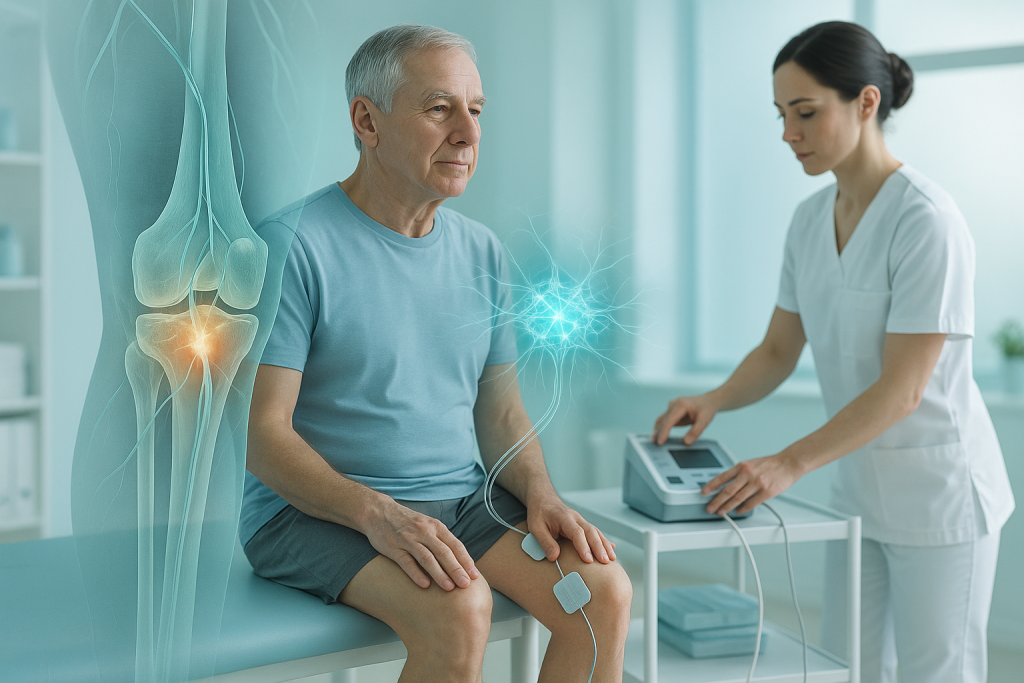
The Endocannabinoid System — A Turning Point in Optimizing Physiotherapy Procedures in Knee Osteoarthritis
This post presents a comprehensive review exploring the role of the endocannabinoid system (ECS) in improving physiotherapy approaches for managing knee osteoarthritis (KOA). Conducted by an interdisciplinary team of Romanian researchers from leading medical universities, the study analyzes how physiotherapeutic methods such as electrotherapy, LASER biostimulation, and physical exercise can modulate the ECS to relieve pain, reduce inflammation, and enhance patient outcomes.
Authors:
Ilie Onu – Department of Biomedical Sciences, Faculty of Medical Bioengineering, University of Medicine and Pharmacy “Grigore T. Popa” Iași, Romania; Doctoral School, Faculty of Chemical Engineering and Environmental Protection “Cristofor Simionescu,” Technical University “Gheorghe Asachi” Iași, Romania; Department of Physiotherapy, Micromedica Clinic, Piatra Neamț, Romania (RO)
Ioana Buculei – Department of Biomedical Sciences, Faculty of Medical Bioengineering, University of Medicine and Pharmacy “Grigore T. Popa” Iași, Romania (RO)
Claudiu Gabriel Ionescu – Department of Medical Psychology, Faculty of General Medicine, “Carol Davila” University of Medicine and Pharmacy, Bucharest, Romania (RO)
Daniela Nicoleta Stanca – Kineto Dema Training, Bucharest, Romania (RO)
Bogdan Voicu – OKF Medical Center, Târgu Mureș, Romania (RO)
Daniel-Andrei Iordan – Department of Individual Sports and Kinetotherapy, Faculty of Physical Education and Sport, and Center of Physical Therapy and Rehabilitation, “Dunărea de Jos” University of Galați, Romania (RO)
Introduction
Knee Osteoarthritis (KOA) is one of the most common degenerative joint disorders worldwide, leading to chronic pain, inflammation, and functional impairment. Affecting millions of people, KOA often progresses slowly but inevitably, diminishing mobility and quality of life.
While conventional management focuses on pharmacological pain control and physical rehabilitation, the study introduces an emerging perspective — the involvement of the endocannabinoid system (ECS) as a non-pharmacological therapeutic target in physiotherapy.
Objectives of the Study
The research aims to:
- Examine how ECS modulation can enhance physiotherapy outcomes in KOA;
- Identify physiotherapeutic techniques that stimulate endocannabinoid activity;
- Highlight a paradigm shift in pain management from purely mechanical treatment to neurochemical modulation through physical methods.
Methodology
The study conducted a systematic literature review of 82 sources related to:
knee osteoarthritis, endocannabinoid system, cannabidiol, inflammatory pain, analgesia, neuropathic pain, physiotherapy, electrotherapy, and LASER therapy.
Seven major international medical databases were searched using well-defined inclusion and exclusion criteria, ensuring a comprehensive overview of interdisciplinary findings across rheumatology, neurology, and rehabilitation sciences.
Key Findings
The results demonstrate that physiotherapeutic interventions can activate or enhance the endocannabinoid system, providing analgesic and anti-inflammatory effects:
- TENS (Transcutaneous Electrical Nerve Stimulation)
- Specific frequencies and intensities stimulate endocannabinoid production;
- Reduces pain perception through ECS activation and modulation of nociceptive pathways.
- LASER Biostimulation
- Enhances cellular metabolism, increases circulation, and promotes endocannabinoid signaling;
- Supports tissue regeneration and pain relief without pharmacological side effects.
- Physical Exercise
- Stimulates endogenous opioids and endocannabinoids;
- Provides antioxidant and anti-inflammatory benefits;
- Improves joint stability, muscle strength, and overall functional mobility.
These mechanisms highlight that pain control in KOA can be achieved not only by targeting joint structures but also by regulating neurochemical processes that govern pain and inflammation.
Discussion
The findings support a holistic, neurophysiological model of physiotherapy in osteoarthritis management. By engaging the ECS and related neuroimmune pathways, therapists can optimize treatment protocols to achieve more effective, long-lasting pain relief.
Moreover, the integration of ECS-targeted physiotherapy techniques aligns with personalized medicine approaches, addressing both the physiological and psychological dimensions of chronic pain.
Conclusions
This review positions the endocannabinoid system as a potential turning point in the physiotherapeutic management of knee osteoarthritis. Techniques such as TENS, LASER biostimulation, and physical exercise represent valuable, evidence-based tools for pain modulation and inflammation control through ECS activation.
The study concludes that more clinical and experimental research is needed to fully elucidate the mechanisms linking physiotherapy and endocannabinoid function, paving the way for innovative rehabilitation strategies that bridge biomechanics, neurophysiology, and molecular science.
See full paper here: https://brain.edusoft.ro/index.php/brain/article/view/1407.