










 ▲
▲




 Email this article
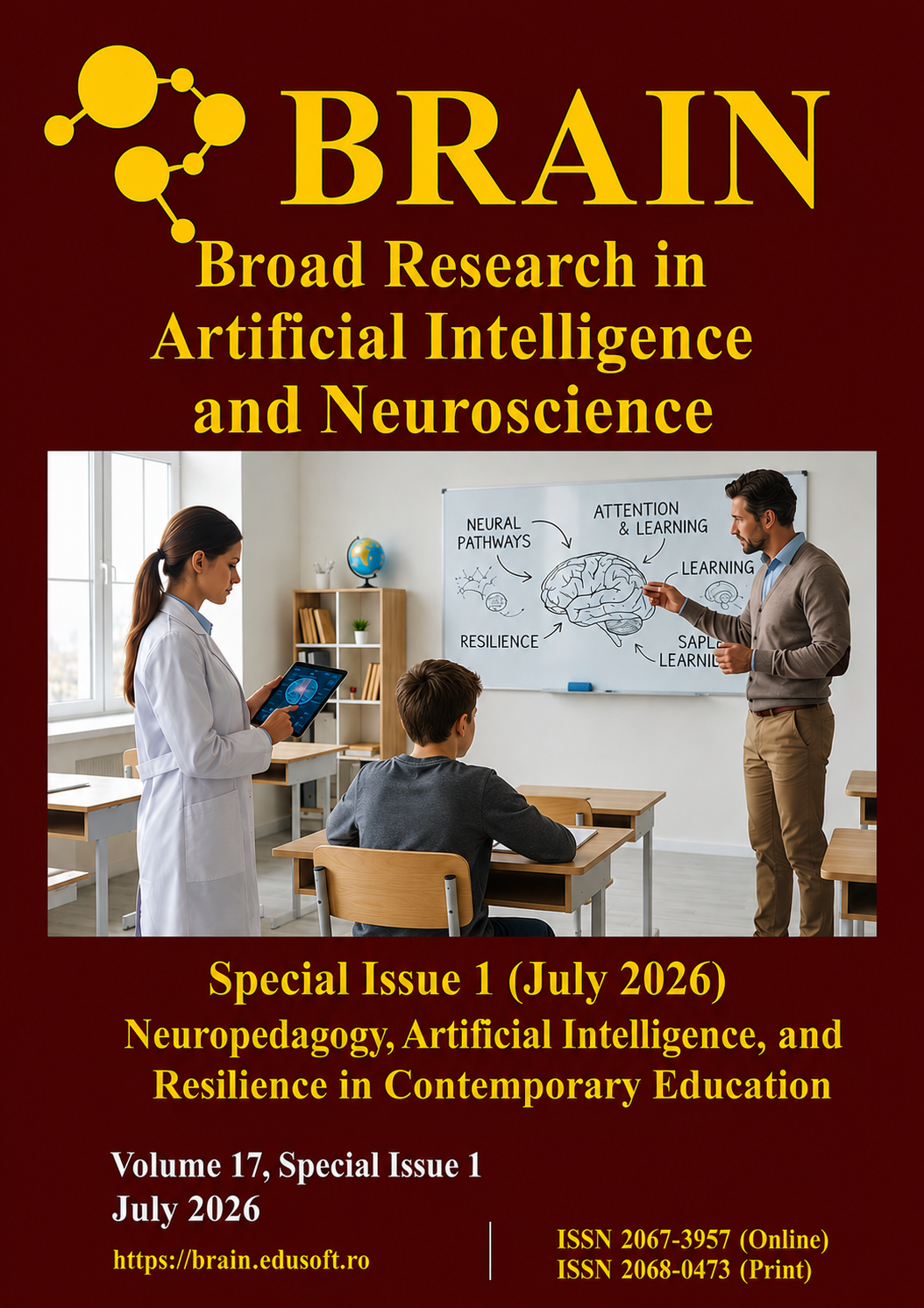


BRAIN. Broad Research in Artificial Intelligence and Neuroscience
Volume: 17 | Issue: 1S |
The Efficiency of Emotional Intelligence in Acquiring Foreign Languages
Published July 20, 2026
❝
Cite

Abstract
The level of emotional intelligence is a key factor in the development of communication skills. The ability to understand one’s own emotions and the feelings of an interlocutor plays a crucial role in effective interpersonal communication. This article analyses the process of developing students’ emotional intelligence through the framework of its main components (emotional awareness, self-regulation of emotions, self-motivation, empathy, and managing others’ emotions). Moreover, it examines their influence on foreign language acquisition by combining findings from theoretical and empirical research. The obtained results indicate that students with a high level of emotional intelligence tend to demonstrate superior outcomes in terms of learning motivation and engagement. They strive to cultivate those abilities and skills that increase the effectiveness of intercultural communication. It follows that a high level of emotional intelligence is necessary for students not only in personal communication but also in their future professional roles. Therefore, particular attention should be paid to fostering emotional competence across all subjects, including foreign languages. As part of the research, a set of exercises was developed to support the growth of students’ emotional intelligence during English language learning. The ability to recognise and articulate one’s emotions, to understand the feelings of others, express and justify personal viewpoints, respect different opinions, agree or disagree appropriately, and sustain friendly communication in English is fundamental to building professional foreign language competence.
Academic discipline and sub-disciplines:
Psychology; Pedagogy; Cognitive Sciences
Keywords
DOI: http://dx.doi.org/10.70594/brain/17.S1/21