










 ▲
▲




Bogdan
Patrut
Abstract:In this issue, we include works originating from Europe, Asia, Africa, and North America. The authors represent academic institutions and research centers from Romania, Italy, Spain, Czech Republic, Bulgaria, Turkey, Saudi Arabia, Pakistan, Algeria, Finland, the United Arab Emirates, Ukraine, Hungary, Slovakia, Israel, Switzerland, and the United States.
The structure of the journal, organized into four major categories, reflects the breadth and emerging directions of contemporary research.
𝑨. 𝑨𝒓𝒕𝒊𝒇𝒊𝒄𝒊𝒂𝒍 𝑰𝒏𝒕𝒆𝒍𝒍𝒊𝒈𝒆𝒏𝒄𝒆, 𝑺𝒐𝒄𝒊𝒆𝒕𝒚 & 𝑫𝒊𝒈𝒊𝒕𝒂𝒍 𝑰𝒏𝒏𝒐𝒗𝒂𝒕𝒊𝒐𝒏
𝑩. 𝑵𝒆𝒖𝒓𝒐𝒔𝒄𝒊𝒆𝒏𝒄𝒆𝒔 𝒊𝒏 𝒕𝒉𝒆 𝑨𝒈𝒆 𝒐𝒇 𝑨𝑰
𝑪. 𝑩𝒊𝒐𝒎𝒆𝒅𝒊𝒄𝒂𝒍 & 𝑪𝒍𝒊𝒏𝒊𝒄𝒂𝒍 𝑨𝑰 𝑨𝒑𝒑𝒍𝒊𝒄𝒂𝒕𝒊𝒐𝒏𝒔
𝑫. 𝑷𝒔𝒚𝒄𝒉𝒐𝒍𝒐𝒈𝒚, 𝑷𝒔𝒚𝒄𝒉𝒐𝒕𝒉𝒆𝒓𝒂𝒑𝒚, 𝑪𝒍𝒊𝒏𝒊𝒄𝒂𝒍 𝑵𝒆𝒖𝒓𝒐𝒔𝒄𝒊𝒆𝒏𝒄𝒆 & 𝑴𝒆𝒏𝒕𝒂𝒍 𝑯𝒆𝒂𝒍𝒕𝒉
Table of Contents
Disclaimer: These images were generated using artificial intelligence and may contain inaccuracies or inconsistencies. They are provided solely as a visual aid to facilitate the rapid understanding of the key ideas presented in these article. Our editorial team conducts ongoing reviews of AI-generated images and will correct or replace them whenever an error or discrepancy is identified or reported.
Artificial Intelligence, Society & Digital Innovation
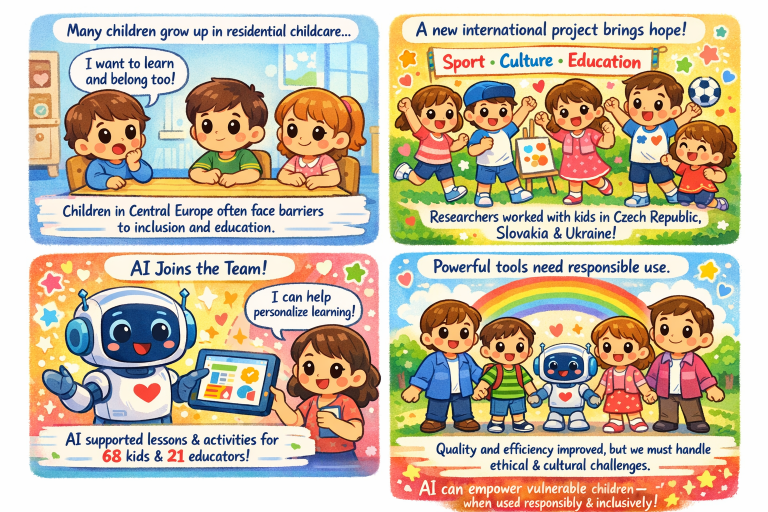
Disclaimer: This image was generated using artificial intelligence and may contain inaccuracies or inconsistencies. It is provided solely as a visual aid to facilitate the rapid understanding of the key ideas presented in this article. Our editorial team conducts ongoing reviews of AI-generated images and will correct or replace them whenever an error or discrepancy is identified or reported.
Authors:
Alois
Daněk
, Jarmila
Klugerová
, František
Vlach
Abstract:Children living in residential childcare institutions worldwide face significant barriers to social inclusion, personal development, and educational equity. This article reports findings from the international project Sport, Culture, and Education: Empowering Visegrad's Children for a Brighter Future, which integrating non-formal education, cultural expression, and sports to foster inclusion and 21st-century competencies among children in residential childcare. An important innovation of the project was the integrative use of artificial intelligence (AI) to support pedagogical planning, adaptive content creation, and participatory evaluation processes. Employing a participatory action research design and mixed methods, the study involved 68 children from residential childcare institutions in the Czech Republic, Slovakia, and Ukraine, accompanied by 21 childcare professionals. Results show that AI has significantly enhanced the quality and individualisation of educational and cultural interventions, while also improving the efficiency of data collection and analysis. At the same time, our study highlights critical ethical, linguistic, and contextual challenges to the deployment of AI in these vulnerable populations. The article discusses the broader implications of AI in the context of residential childcare. It presents evidence-based recommendations for educators, not only in residential childcare settings but also those seeking to employ AI responsibly and effectively in the fields of child welfare and inclusive education.
Disclaimer: This image was generated using artificial intelligence and may contain inaccuracies or inconsistencies. It is provided solely as a visual aid to facilitate the rapid understanding of the key ideas presented in this article. Our editorial team conducts ongoing reviews of AI-generated images and will correct or replace them whenever an error or discrepancy is identified or reported.
Authors:
Ana
Todorova
, Irina
Kostadinova
, Svetlana
Stefanova
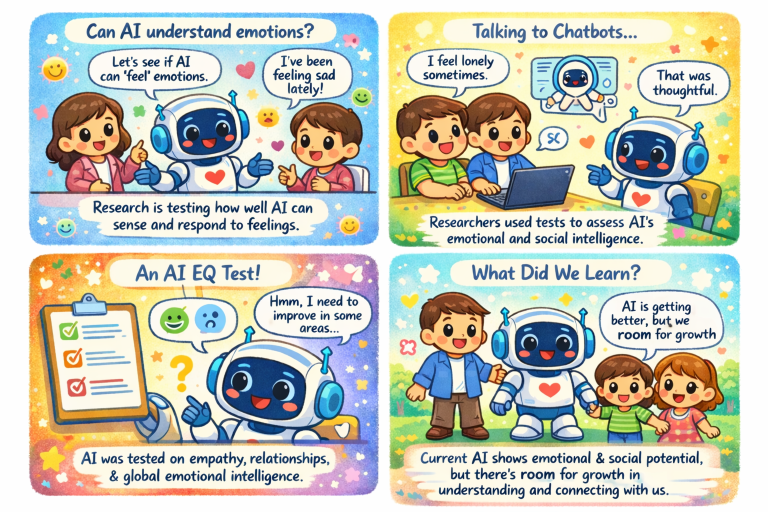
Abstract:In recent years, interest in developing emotional and social skills in artificial intelligence has grown significantly. The present study aims to explore the options for measuring the emotional and social aspects of artificial intelligence, as well as to analyse the generated results and the formulated conclusions and generalisations. An analysis of existing and widely used chatbots with artificial intelligence was conducted, and the emotional and social intelligence of AI was assessed using a non-standardised test questionnaire. The findings provide essential conclusions, not about the possibilities for measuring the intrapersonal and social skills of AI, but rather about the current state of its development and its ability to generate emotional and social insights. The authors also establish a correlation between the affective and interpersonal intelligence demonstrated by AI and collective (global) emotional intelligence as a concept. In conclusion, the article discusses the potential applications of these results in various fields, including enhancing communication capabilities between humans and machines, among humans themselves, and even between machines. This study provides essential data and directions for future research and applications in the field of human emotional and social intelligence, as well as AI, acknowledging the use of free chatbot versions and a non-standardised questionnaire. In this sense, the insights obtained enrich both the theoretical and applied knowledge in the fields of information, communication technologies, and social sciences, including management and human resources.
Disclaimer: This image was generated using artificial intelligence and may contain inaccuracies or inconsistencies. It is provided solely as a visual aid to facilitate the rapid understanding of the key ideas presented in this article. Our editorial team conducts ongoing reviews of AI-generated images and will correct or replace them whenever an error or discrepancy is identified or reported.
Authors:
Simona
Maria Glaveanu
, Roxana
Maier
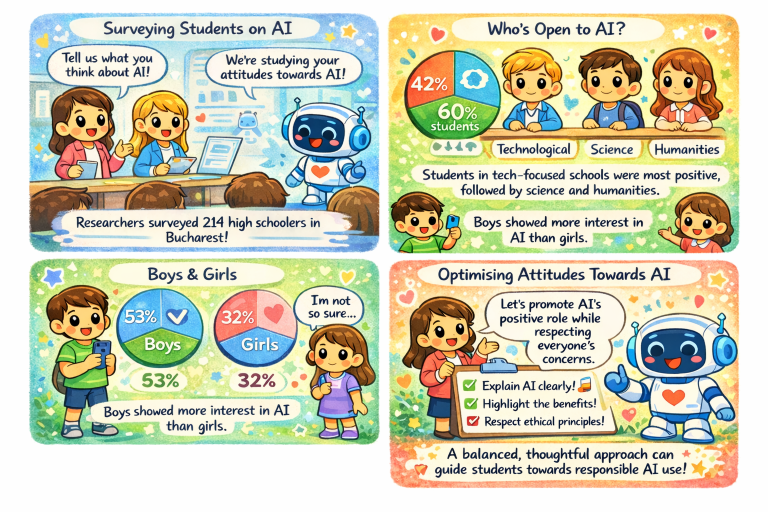
Abstract:The present research was grounded in the principles of the National Strategy in the Field of Artificial Intelligence (AI) 2024-2027 and in the need identified by the Ministry of Education and Research to assess teachers' attitudes towards the implementation of AI solutions (Cononenco, 2025), complementing these national efforts by investigating the way students report. As a result, the general objective of the research was to investigate the attitude of high school students towards AI in relation to a series of socio-demographic data (such as age, gender and profile followed in high school) in order to understand their characteristics and outline directions for optimisation. The results obtained by applying the ATTARI-12 scale (Stein et al., 2024) on a group of 214 students from high schools in Bucharest, processed using IBM SPSS Statistics 23, showed that there are statistically significant correlations between the attitude towards AI (at a general level and by components - cognitive, affective and behavioural) and age, gender and the specialisation profile in high school and that, at the same time, 42% of students have an open attitude towards AI. A more detailed analysis of the results revealed that male students have a more open attitude towards AI compared to female students, but also that students following the technological profile have the most open attitude towards AI, followed by those from the science-oriented profiles (who manifest an open but cautious attitude) and those from the humanities-oriented profiles (who have an attitude of reluctance and distrust). At the same time, the data showed that the attitude towards AI does not vary statistically significantly depending on the age of the subjects. The objective of the research was achieved, but since the number of subjects was reduced and they came from students from only a few high schools in Bucharest, the research represents a pilot study and has, as a limitation associated with this format, the fact that its conclusions cannot be extrapolated to the entire student population in Romania. However, these findings contribute to the development of practical steps to optimise students' attitudes towards AI, avoiding extremes and respecting ethical principles.
Disclaimer: This image was generated using artificial intelligence and may contain inaccuracies or inconsistencies. It is provided solely as a visual aid to facilitate the rapid understanding of the key ideas presented in this article. Our editorial team conducts ongoing reviews of AI-generated images and will correct or replace them whenever an error or discrepancy is identified or reported.
Authors:
Daniel
Damyanov
, Ivaylo
Donchev
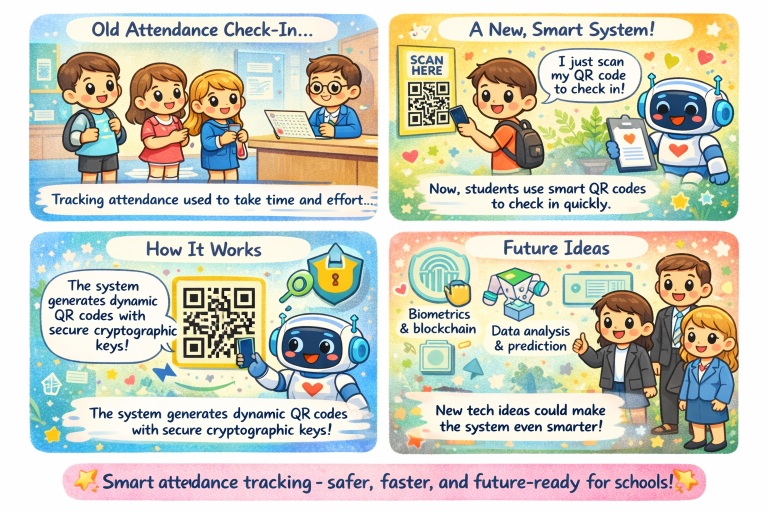
Abstract:The article presents a conceptual design for an intelligent system for access control and attendance reporting, generation of study schedules, and authentication using dynamically generated QR codes. A distinctive feature of the system is that each user receives a dynamically generated cryptographic key that integrates into the generation of a QR code and does not allow malicious actions on the part of users, serving for secure identification when entering and exiting buildings and premises. Software and hardware requirements for efficient and secure operation of the system are discussed, as well as applicability within educational institutions, offices, events,and other environments where strict access control is needed. Ideas for future development are also presented, including integration with biometrics, blockchain technologies and analytical tools for predicting presence, which makes the system sustainable, scalable and aligned with modern digital requirements.
5
Disclaimer: This image was generated using artificial intelligence and may contain inaccuracies or inconsistencies. It is provided solely as a visual aid to facilitate the rapid understanding of the key ideas presented in this article. Our editorial team conducts ongoing reviews of AI-generated images and will correct or replace them whenever an error or discrepancy is identified or reported.
Authors:
Yevgeny
Patarakin
, Anna
Korchak
, Vasiliy
Burov
, Jamie
Costley
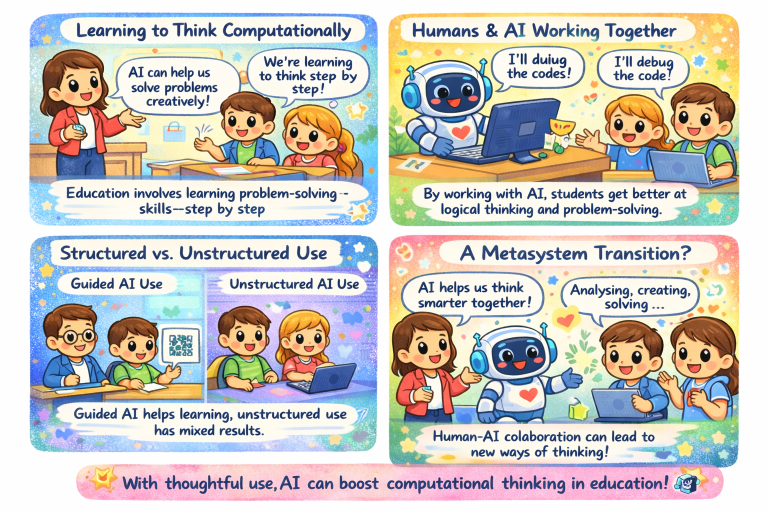
Abstract:The paper explores how human–AI interactions, particularly with generative artificial intelligence (Gen-AI), serve as catalysts for developing computational thinking (CT) as a creative meta-competence. Grounded in a theoretical framework that synthesises Vygotsky’s mediated learning, Lotman’s Semiosphere, and Turchin’s Metasystem Transition theory, the study conceptualises education as a process of collaborative meaning-making within human–machine teams. Two case studies conducted in Russian middle schools provide empirical grounding: one involving scaffolded Gen-AI use in project-based learning, and the other involving unstructured Gen-AI use during programming tasks. Results indicate that structured, reflective engagement with Gen-AI enhances students’ CT skills and supports self-regulation, while not scaffolded use yields mixed outcomes. The findings suggest that Gen-AI can function as a semiotic and cognitive scaffold when meaningfully integrated into educational activities. The study contributes to the understanding of computational thinking as a form of cultural and cognitive mediation, and positions Gen-AI as a driver of metasystem transitions in education.
Disclaimer: This image was generated using artificial intelligence and may contain inaccuracies or inconsistencies. It is provided solely as a visual aid to facilitate the rapid understanding of the key ideas presented in this article. Our editorial team conducts ongoing reviews of AI-generated images and will correct or replace them whenever an error or discrepancy is identified or reported.
Authors:
Gamze
Köse
, Osman
Eralp Çolakoğlu
Abstract:This study introduces a data mining approach to estimate dental tourists’ satisfaction. In detail, the study combines statistical techniques and a decision tree model to ensure a complete estimation pipeline. The study was conducted using survey feedback from a total 314 dental tourists, who visited a private dental clinic in Kuşadası, in the Aydın province of Turkey. The collected data were analysed by using Pearson coefficient, Kolmogorov-Smirnov test, Mann-Whitney U test, and Kruskal-Wallis test. Next, factor analysis was used to identify various factors that established the input parameters of the decision tree model. In terms of statistical findings, it was found that there was no significant relationship between age and the satisfaction of the dental tourists. It was also found that there was a significant difference in satisfaction by gender, and dental tourists’ satisfaction levels differed significantly based on citizenship, education level, and income status as these differences varied across relevant demographic classes. At the data mining application stage, a total of four factors determined through factor analysis were used to train a decision tree model and the model achieved respectively 96%, and 80% accuracy rates for during training and testing data. The study concludes that various demographic data and factors influence dental tourists’ service satisfaction, and data mining can help in effectively estimating satisfaction levels for potential dental tourists.
Disclaimer: This image was generated using artificial intelligence and may contain inaccuracies or inconsistencies. It is provided solely as a visual aid to facilitate the rapid understanding of the key ideas presented in this article. Our editorial team conducts ongoing reviews of AI-generated images and will correct or replace them whenever an error or discrepancy is identified or reported.
Authors:
Soufien
Jaffali
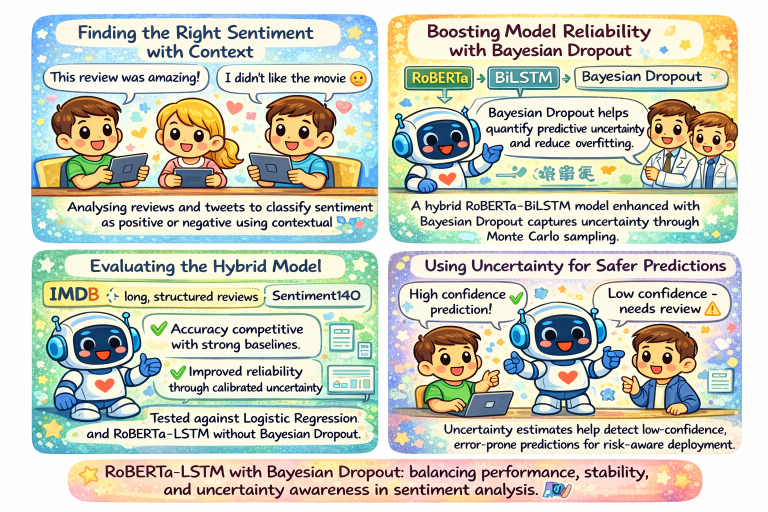
Abstract:Transformer models such as RoBERTa provide strong contextualised embeddings for sentiment analysis but lack inherent mechanisms to quantify predictive uncertainty and are prone to overfitting, particularly on noisy or imbalanced text data. This paper introduces RoBERTa-LSTM-Drop, a hybrid architecture that combines RoBERTa embeddings with bidirectional LSTM layers and integrates Bayesian Dropout to capture uncertainty through Monte Carlo sampling while acting as an effective regulariser. The model is evaluated on two complementary benchmark datasets: IMDb, representing long and structured reviews, and Sentiment140, representing short and informal tweets. Comparisons are made against traditional baselines such as Logistic Regression as well as a RoBERTa-LSTM without Bayesian Dropout. Results demonstrate that RoBERTa-LSTM-B.Drop achieves accuracy competitive with strong baselines while offering calibrated uncertainty estimates that enhance model reliability. The findings highlight a stability–performance trade-off: Bayesian Dropout can yield modest accuracy improvements but introduces variance across optimisers and learning rates. Practical mitigation strategies, including dropout-rate adjustment and gradient clipping, are discussed. Beyond raw performance, uncertainty estimates enable identification of low-confidence, error-prone predictions, supporting risk-aware deployment in real-world scenarios. The analysis further clarifies when uncertainty-aware hybrids are most advantageous—such as in longer, context-rich inputs—and where their gains are limited. The work contributes both an empirical study of uncertainty-aware sentiment analysis and reproducible design choices to inform future research.
Disclaimer: This image was generated using artificial intelligence and may contain inaccuracies or inconsistencies. It is provided solely as a visual aid to facilitate the rapid understanding of the key ideas presented in this article. Our editorial team conducts ongoing reviews of AI-generated images and will correct or replace them whenever an error or discrepancy is identified or reported.
Authors:
Husnain
Saleem
, Muhammad
Javed
, Junaid
Khan
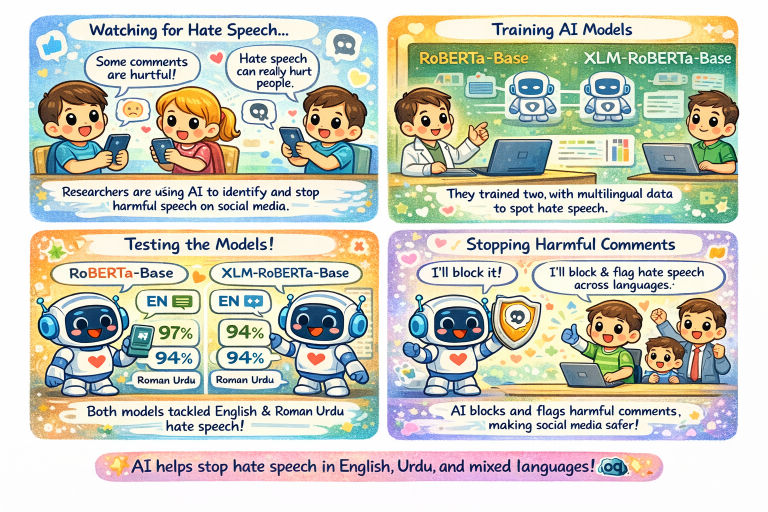
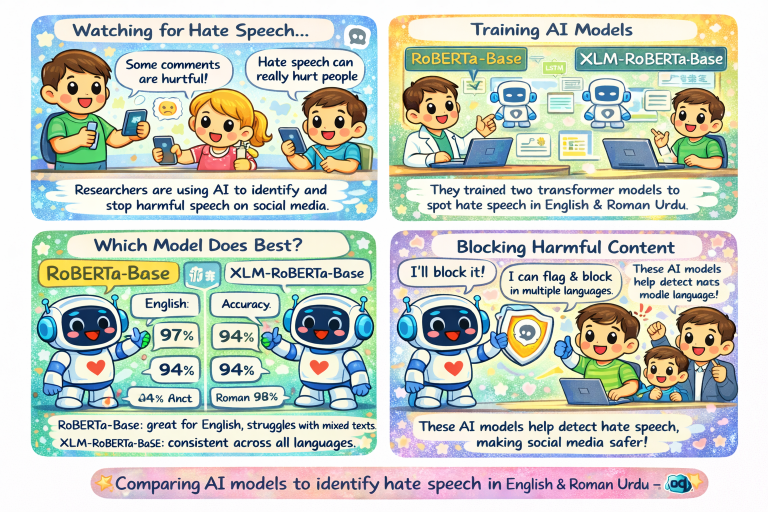
Abstract:Social media platforms enable users to interact and share content through text, images, videos, and links. Sentiment analysis, a key method in Natural Language Processing (NLP), evaluates the emotional tone of social media content. It helps to identify hate speech, which includes harmful, offensive language directed at individuals or groups. In this study, we present the performance comparison of two transformer-based models, RoBERTa-Base and XLM-RoBERTa-Base, for hate speech identification in formal (English) and informal (Roman Urdu and mixed English-Roman Urdu) text. We fine-tune both models on multilingual datasets and evaluate the model's performance. XLM-RoBERTa-Base achieved (94.46%) accuracy for English, (93.77%) for Roman Urdu, and (88.32%) for mixed English-Roman Urdu text, while RoBERTa-Base performed better in English (97.24%) and Roman Urdu (94.28%), but dropped slightly to (88%) for mixed English-Roman Urdu text. These results show RoBERTa-Base excels in English, but struggles with Roman Urdu and code-switched mixed languages, while XLM-RoBERTa-Base performs consistently across all languages.
Disclaimer: This image was generated using artificial intelligence and may contain inaccuracies or inconsistencies. It is provided solely as a visual aid to facilitate the rapid understanding of the key ideas presented in this article. Our editorial team conducts ongoing reviews of AI-generated images and will correct or replace them whenever an error or discrepancy is identified or reported.
Authors:
Cezar
Marian Papara
, Valer
Niminet
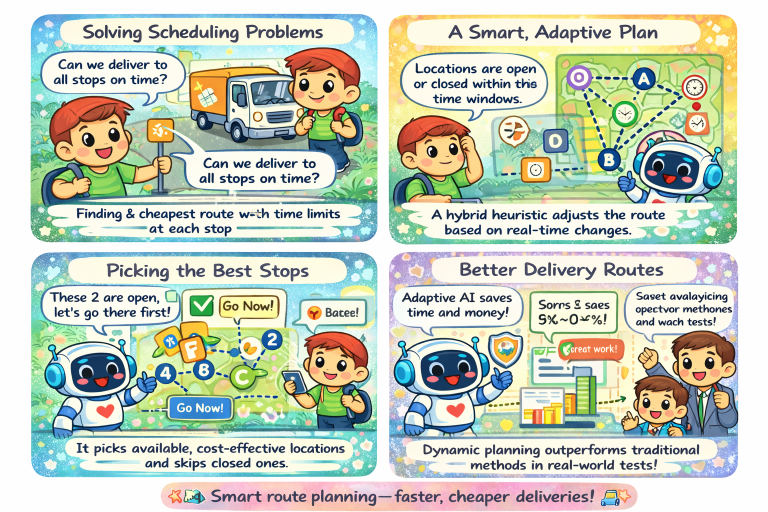
Abstract:This paper presents a hybrid heuristic for optimising transportation networks, combining elements of the TSP and Interval Scheduling. Starting from an initial heuristic route, the algorithm adapts dynamically to time, resource, and capacity constraints—modelled as node availability within time windows. It prioritises immediately available, cost-effective nodes over closer but unavailable ones, aiming to minimise route cost while avoiding delays. Designed for large-scale, real-world networks, the method integrates adaptability with efficiency. Tests on TSP datasets with frequent node unavailability—specifically, 20 % of nodes unavailable at their estimated arrival times for classical TSP solutions—show that our approach consistently outperforms existing methods in terms of monetary cost, achieving improvements ranging from approximately 9 % to 31 % across all tested instances.
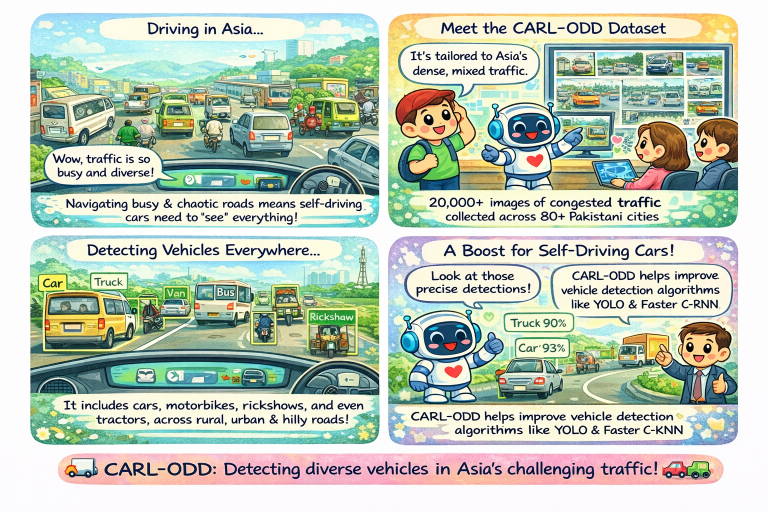
Disclaimer: This image was generated using artificial intelligence and may contain inaccuracies or inconsistencies. It is provided solely as a visual aid to facilitate the rapid understanding of the key ideas presented in this article. Our editorial team conducts ongoing reviews of AI-generated images and will correct or replace them whenever an error or discrepancy is identified or reported.
Authors:
Sarmad
Shafique
, Samia
Abid
, Faisal
Riaz
, Bilal
Ahmed
, Mubeen
Javaid Khan
, Usama
Younis
, Ameer
Hamza
Abstract:The advancement of self-driving vehicles' ability to perceive their environment is highly dependent on computer vision-based object detection and recognition. Over the past few decades, many substantial object detection and recognition datasets have been proposed, including the Karlsruhe Institute of Technology and Toyota Technological (KITTI) dataset, the Beijing Institute of Technology (BIT) vehicle dataset, etc. However, these datasets consist of smooth and organised urban road traffic of Western nations, ignoring the congested and disordered traffic of Asian nations (i.e., Pakistan, India, etc.). To overcome the above-mentioned issues, a substantial dataset named Control Automotive and Robotics Lab- Object Detection Dataset (CARL-ODD) has been proposed for self-driving vehicles to navigate safely while having a detailed perception of their surroundings in an Asian environment. CARL-ODD dataset was collected from over eighty cities of Pakistan containing highways, motorways, and congested as well as diverse traffic scenarios of urban, rural, and hilly areas. The use of both mono and stereo-vision-based driving videos in the dataset provided a considerable advantage over the state-of-the-art datasets. The collected data were then labelled, and 20,000 representative images were selected for the perception module. Moreover, to establish a baseline for CARL-ODD, we have also compared the various pre-trained single-stage and multistage object detection and recognition algorithms with the dataset. These pre-trained object detection algorithms, such as YOLO and Faster R-CNN, have been implemented to detect and classify various on-road vehicles present in the Asian environment. This approach can save time and resources compared to training a model from scratch. The major findings as a result of the analysis showed that the CARL-ODD dataset demonstrated strong performance in detecting and recognising surrounding vehicles, while achieving 91% average precision for single-stage detectors and 93% average precision for multistage object detectors. This work outperforms the state-of-the-art datasets in terms of vehicle classes and diverse traffic scenarios.
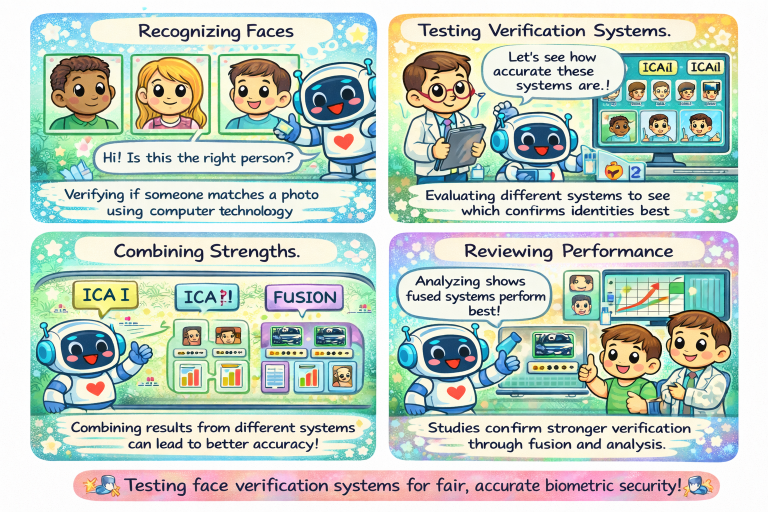
Disclaimer: This image was generated using artificial intelligence and may contain inaccuracies or inconsistencies. It is provided solely as a visual aid to facilitate the rapid understanding of the key ideas presented in this article. Our editorial team conducts ongoing reviews of AI-generated images and will correct or replace them whenever an error or discrepancy is identified or reported.
Authors:
Mohamed
Soltane
, Mourad
Oussalah
, Aissa
Belmeguenai
Abstract:Computer vision is a promoted field of artificial intelligence (AI) that uses machine learning algorithms to teach computers and systems to derive meaningful information from digital images. Pattern recognition has long been a goal of computer vision, but recently reliable automated face recognition has become a realistic target of biometrics development research. In this paper pattern recognition versus verification systems has been diagnosed, the contribution of classifier analysis to Biometrics Face Verification performance is examined. The discussion covers classification paradigms, the use of multiple observations, and their judicious fusion at the data; it should improve the correct decision performance at the different decision fusions levels. The fusion tasks reported in this development work were carried through fusion of two well-known face recognisers, ICA I and ICA II. Novel strategy based on Likelihood Ratio Fusion within scores is employed, in which face recognition accuracy is optimised and limitations of single recogniser have been reduced. The performance of the analysis studies were tested based on three different face databases and the Dynamic Still Face Databases eNTERFACE2005 (Stylianou et al., 2005), with simulation results demonstrating significant performance achievements.
Neuroscience in the Age of Artificial Intelligence
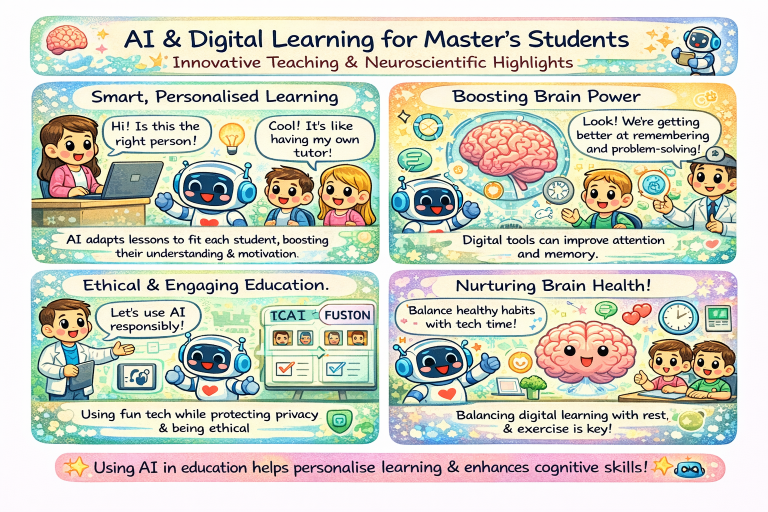
Disclaimer: This image was generated using artificial intelligence and may contain inaccuracies or inconsistencies. It is provided solely as a visual aid to facilitate the rapid understanding of the key ideas presented in this article. Our editorial team conducts ongoing reviews of AI-generated images and will correct or replace them whenever an error or discrepancy is identified or reported.
Authors:
Serhii
Yashchuk
, Yuliia
Kolisnyk-Humeniuk
, Tetiana
Shvets
, Vasyl
Shunkov
, Dmytro
Kuiavets
, Svitlana
Gvozdii
, Borys
Maksymchuk
Abstract:The importance of this article lies in its focus on a rapidly changing world shaped by technological innovation. In this context, artificial intelligence (AI) and digital learning tools play an increasingly important role in education. Their use is particularly relevant in professional education of postgraduate students, where high standards of quality are combined with the need to develop cognitive flexibility and practical skills. Integrating AI into educational processes supports personalised learning, boosts student motivation, and helps optimise teaching strategies. It also enhances the effectiveness of learning outcome assessments. Intelligent technologies make it possible to create adaptive learning environments that respond to students’ needs, characteristics, and learning styles. At the same time, new challenges are emerging. These include neurobiological concerns about how digital environments affect cognitive processes such as attention, memory, thinking, and motivation. This article aims to provide a comprehensive analysis of the opportunities and risks associated with using AI in the professional education of postgraduate students. Finally, it seeks to explore the neuropsychological effects of digital learning and outline future directions for developing innovative educational practices.
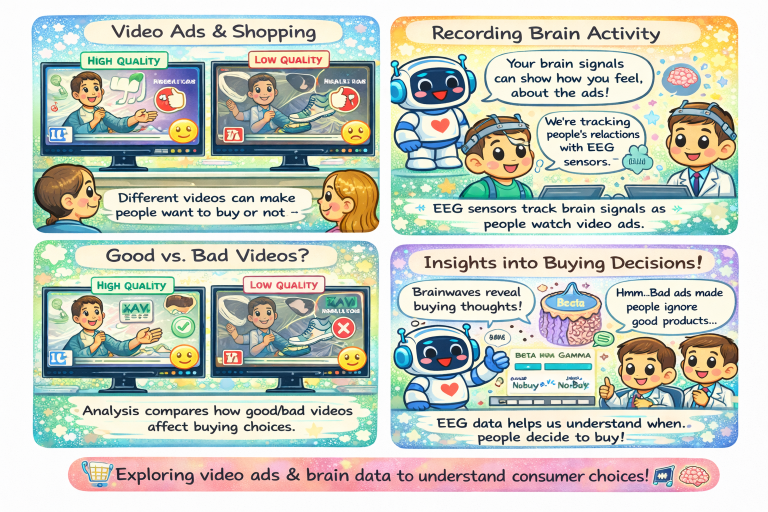
Disclaimer: This image was generated using artificial intelligence and may contain inaccuracies or inconsistencies. It is provided solely as a visual aid to facilitate the rapid understanding of the key ideas presented in this article. Our editorial team conducts ongoing reviews of AI-generated images and will correct or replace them whenever an error or discrepancy is identified or reported.
Authors:
Sakthi
R. Velammal
, A.
Leo
, Ruchit
Kumar Kuncha
, Ruthvik
Kumar Kuncha
, Martina
Rani
Abstract:
In recent years, video advertising has become one of the most powerful tools for influencing consumer decisions, often using visuals, music, and celebrities to attract buyers. However, this creates a problem: even low-quality products are sometimes promoted through high-quality visual media, leading consumers to purchase them, while good-quality products may be ignored when presented in poor-quality videos. The amount of research in this area is quite limited,, specifically addressing this mismatch between video presentation and product quality. This study investigates consumer purchasing interest under two conditions: good-quality video and poor-quality video. Particular focus is given to the mismatched cases, where attractive advertisements may lead to the purchase of poor-quality products, and poor advertisements may reduce interest in good-quality products. EEG signals were recorded from participants while they viewed advertisements, and neurophysiological features such as Mean Absolute Value (MAV) and Shannon Entropy were extracted a total of 35 participants took part in the experiment,viewing two advertising videos (High- and low-quality). Extracted EEG features (Mean Absolute Value and Shannon Entropy) from beta and gamma bands achieved near-perfect classification performance (AUC ≈ 1.0) in discriminating buy vs not-buy decisions from beta (β) and gamma (γ) frequency bands. The results reveal how attractive advertisements can sometimes mislead consumers, while EEG analysis helps identify when purchasing decisions align with or deviate from actual product quality.
Disclaimer: This image was generated using artificial intelligence and may contain inaccuracies or inconsistencies. It is provided solely as a visual aid to facilitate the rapid understanding of the key ideas presented in this article. Our editorial team conducts ongoing reviews of AI-generated images and will correct or replace them whenever an error or discrepancy is identified or reported.
Authors:
Borys
Maksymchuk
, Olena
Pavliuk
, Viktor
Romanenko
, Vita
Vorona
, Volodimir
Yakovliv
, Roman
Fedoryschak
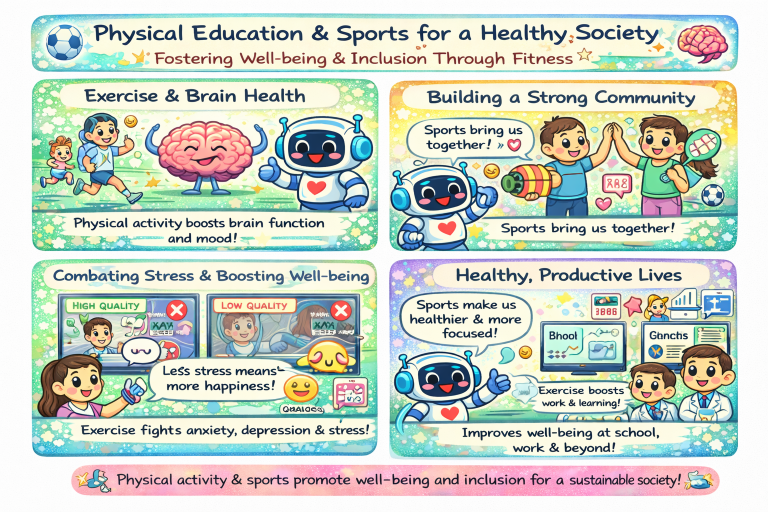
Abstract:The article examines the importance of physical education and sports as priorities of the future and their role in the realisation of the strategy of sustainable development of society. In particular, the neuropsychological aspect of the impact of physical activity on the individual and society is reflected. The positive influence of sport on cognitive functions, emotional state, socialisation and development of volitional qualities is emphasised. Special attention is paid to the integration of physical education into education and work environment as a tool to promote physical and mental health, increase productivity and harmonise interpersonal relations. Physical education is considered as a key element in the formation of a healthy, socially active and sustainable society. Physical activity and sports play a key role in the development of today's society, promoting healthy lifestyles, fostering social inclusion and supporting global efforts towards sustainable development. In the context of the Sustainable Development Goals (SDGs) defined by the United Nations, physical activity and sport initiatives are tools that influence different aspects of life: health, education, economy, and environment.The article demonstrates that physical education and sport are important components of a healthy lifestyle and have a significant impact on human physical and mental health; sports programs can be used to solve social problems and promote sustainable development of society. Neuropsychological research provides new perspectives on the use of physical education and sport in health and education. The article also underscores the growing importance of artificial intelligence in sports science, alongside the neurocognitive effects of physical activity on mental health. The role of exercise in human life cannot be overstated. Beyond its widely acknowledged health benefits, physical activity helps shape character and provides valuable psychological relief.
15
Disclaimer: This image was generated using artificial intelligence and may contain inaccuracies or inconsistencies. It is provided solely as a visual aid to facilitate the rapid understanding of the key ideas presented in this article. Our editorial team conducts ongoing reviews of AI-generated images and will correct or replace them whenever an error or discrepancy is identified or reported.
Authors:
Andrei
Teodor Bratu
, Florin
Zamfirache
, Gabriela
Narcisa Prundaru
, Cristina
Dumitru
, Beatrice
Mihaela Radu
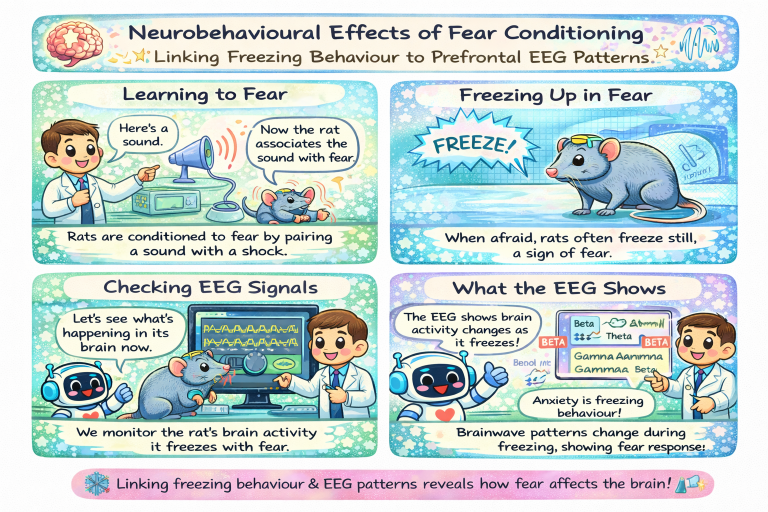
Abstract:Stress has become an unavoidable part of daily life, shaping both behavioural and neural responses. This study investigated how fear conditioning influences defensive behaviour in rats, integrating standardiszed behavioural paradigms with prefrontal EEG monitoring. Twenty male Sprague Dawley rats were evaluated pre- and post-conditioning using Open Field, Elevated Plus Maze, Forced Swim, and Novel Object Recognition tasks. Fear conditioning produced a significant increase in anxiety and depression indicators, with conditioned rats spending less time in the open arms of the maze and more time immobile during forced swim testing. No significant differences emerged in exploratory or cognitive performance. EEG analyses revealed no global differences in prefrontal cortical activity between pre- and post-conditioning states. However, significant increases across all frequency bands were observed during freezing episodes, indicating a state-dependent modulation of prefrontal activity linked to defensive mechanisms. These findings suggest that aversive conditioning selectively impacts emotional and defensive domains rather than cognitive performance, with freezing behaviour reflecting a neurophysiological signature of adaptive coping strategies.
Disclaimer: This image was generated using artificial intelligence and may contain inaccuracies or inconsistencies. It is provided solely as a visual aid to facilitate the rapid understanding of the key ideas presented in this article. Our editorial team conducts ongoing reviews of AI-generated images and will correct or replace them whenever an error or discrepancy is identified or reported.
Authors:
José
Luis Díaz Palencia
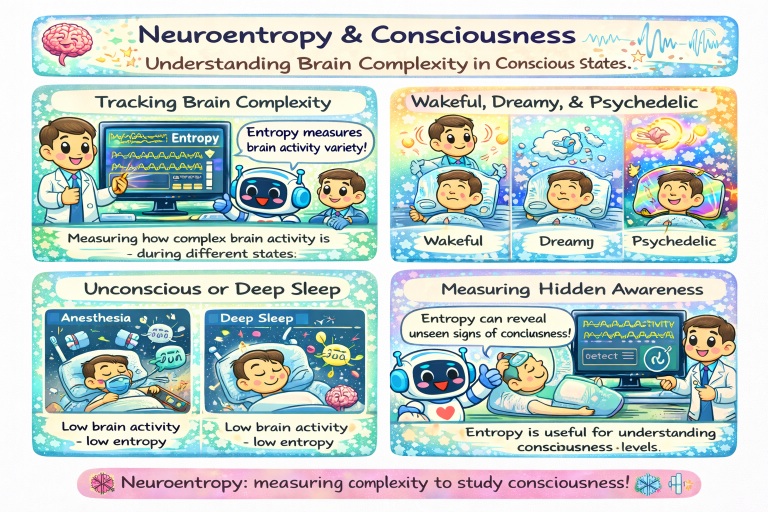
Abstract:Neuroentropy (understood as the complexity or diversity of brain activity) has emerged as a possible quantitative marker of consciousness. This meta-analytic review synthesizes evidence from EEG, MEG, fMRI, intracranial recordings, and perturbation-based approaches (e.g., Perturbational Complexity Index) across 2013–2023. Findings show higher entropy during wakefulness, REM sleep, and psychedelic states, and reduced entropy in anesthesia, deep NREM sleep, and disorders of consciousness. Psychedelic states pharmacologically elevate entropy, correlating with vivid, diverse phenomenology, while unconscious states exhibit low-complexity dynamics. Entropy measures have demonstrated clinical value, particularly in anesthesia monitoring and detecting covert awareness. It is important to note that challenges remain regarding metric selection, distinguishing meaningful complexity from noise, and mapping entropy to consciousness content. Overall, the concept of neuroentropy can be understood as a powerful, physiologically grounded index for consciousness level and its possible alterations.
Biomedical and Clinical Artificial Intelligence Applications
Disclaimer: This image was generated using artificial intelligence and may contain inaccuracies or inconsistencies. It is provided solely as a visual aid to facilitate the rapid understanding of the key ideas presented in this article. Our editorial team conducts ongoing reviews of AI-generated images and will correct or replace them whenever an error or discrepancy is identified or reported.
Authors:
Ana
Maria Dumitrescu
, Simona
Alice Partene Vicoleanu
, Ana
Maria Slănină
, Nicoleta
Loredana Hilițanu
, Ana
Maria Haliciu
, Crînguța
Mariana Paraschiv
, Roxana
Gabriela Cobzaru
, Ruxandra
Teodora Stan
, Claudia
Florida Costea
, Lucia
Corina Dima Cozma
, Ana
Marina Rădulescu
, Raoul
Vasile Lupușoru
, Carmen
Valerica Rîpă
Abstract:
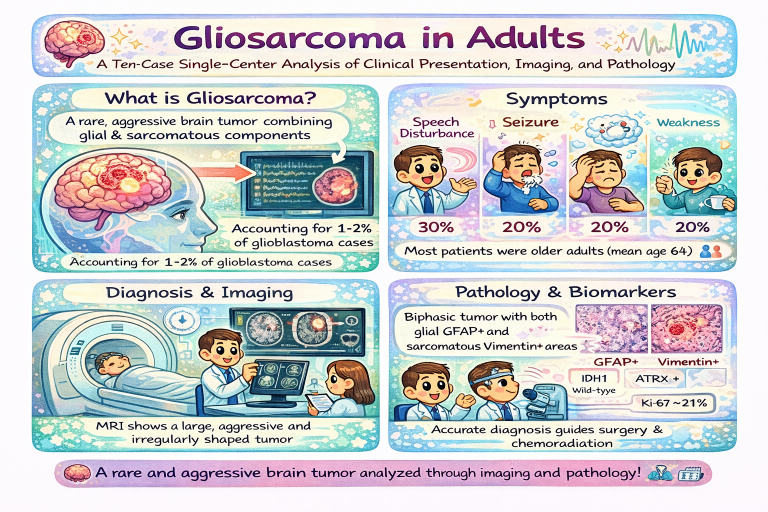
Background and Objective: Gliosarcoma (GS) is a rare and aggressive variant of glioblastoma (GB), accounting for 1–2% of GB cases. Our objective is to analyse the clinical, radiological, histopathological, and immunohistochemical characteristics of primary gliosarcoma in a single-center cohort and compare findings with existing literature. Material and Methods: We retrospectively reviewed ten adult patients with histologically confirmed primary gliosarcoma (GS) diagnosed between 2012–2021 at “Prof. Dr. N. Oblu” Emergency Clinical Hospital, Iași, Romania. Data extracted included demographics, clinical presentation, magnetic resonance imaging (MRI) features, surgical management, pathology, and immunohistochemistry. Results: Mean age at diagnosis was 64.1 years (range 47–79), with male predominance (male:female ratio = 6:4). Common symptoms included speech disturbances (30%), seizures (20%), and headache (20%), with a median symptom duration of 7 days. Tumours were supratentorial, primarily frontal (40%) or temporal (10%), with 50% involving multiple lobes. Histologically, all cases demonstrated biphasic glial-sarcomatous architecture; 40% showed giant-cell glioblastoma features. Immunohistochemistry revealed glial fibrillary acidic protein (GFAP) and oligodendrocyte transcription factor 2 (Olig2) positivity in glial areas, vimentin positivity in both components, isocitrate dehydrogenase 1 (IDH1) wild-type status, alpha thalassemia/mental retardation syndrome X-linked (ATRX) positivity, intermediate Ki-67 (~21%), and variable p53 expression. Conclusion: Primary gliosarcoma is an aggressive central nervous system (CNS) tumour with characteristic biphasic morphology, frequent dural contact, and meningioma-mimic imaging. Accurate diagnosis relies on histopathology, guiding maximal safe resection and adjuvant chemoradiation.
Disclaimer: This image was generated using artificial intelligence and may contain inaccuracies or inconsistencies. It is provided solely as a visual aid to facilitate the rapid understanding of the key ideas presented in this article. Our editorial team conducts ongoing reviews of AI-generated images and will correct or replace them whenever an error or discrepancy is identified or reported.
Authors:
Ana
Maria Dumitrescu
, Irina
Florentina Bușilă
, Alexandru
Misailoaie
, Ana
Marina Rădulescu
, Carmen
Valerica Rîpă
, Luminița
Smaranda Iancu
, Claudia
Florida Costea
, Crînguța
Mariana Paraschiv
, Lucia
Corina Dima Cozma
, Roxana
Mihaela Barbu
, Valeriu
Aurelian Chirica
, Roxana
Gabriela Cobzaru
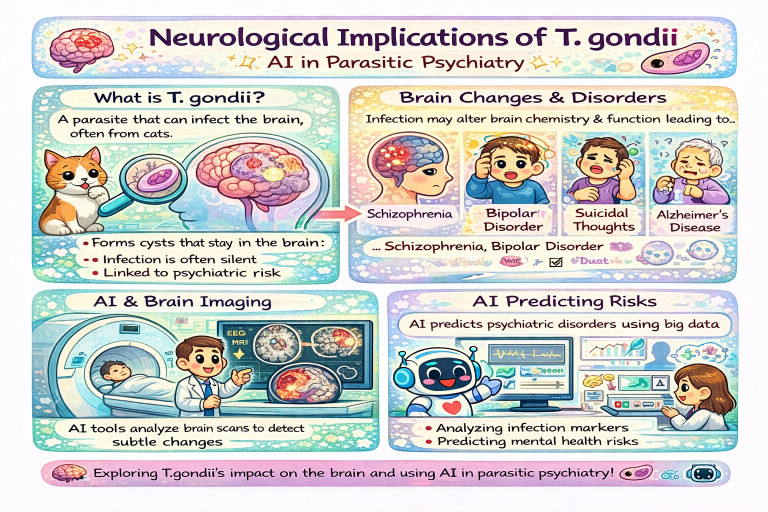
Abstract:Toxoplasma gondii (T.gondii), a protozoan parasite with global prevalence, shows a unique neurotropism that allows it to persist chronically within the central nervous system (CNS). While often clinically silent, chronic toxoplasmosis has been increasingly associated with a range of psychiatric conditions, including schizophrenia, bipolar disorder, suicidal behaviour, and potentially Alzheimer’s disease. The underlying mechanisms are multifactorial,involving direct cyst localization, neuroinflammation, altered neurotransmission, and immunomodulation. In parallel, artificial intelligence (AI) and machine learning (ML) tools are transforming the landscape of biomedical research. In the context of T. gondii, these tools are being employed in neuroimaging analysis, behavioural prediction models, and systems-level simulation of brain-parasite interactions. AI has the potential to enhance early detection of neuroanatomical changes, predict psychiatric outcomes based on infection markers, and uncover latent patterns in large-scale datasets. This descriptive review aims to synthesize the current knowledge on the neurological effects of T. gondii infection while highlighting the emerging integration of AI methodologies in parasitic neuroscience. We discuss pathophysiological mechanisms, psychiatric implications, and how computational tools may bridge gaps in understanding this enigmatic pathogen’s impact on the human brain.
Disclaimer: This image was generated using artificial intelligence and may contain inaccuracies or inconsistencies. It is provided solely as a visual aid to facilitate the rapid understanding of the key ideas presented in this article. Our editorial team conducts ongoing reviews of AI-generated images and will correct or replace them whenever an error or discrepancy is identified or reported.
Authors:
Ecaterina
Tomaziu Todosia (Anton)
, Gabriel
Dăscălescu
, Alin
Ciobica
, Cristina
Albert
, Mihaela
Tomaziu Todosia
, Ioana
Sadiye Scripcariu
, Mihaela
Poroch
, Gabriel
Ioan Anton
, Cristian
Bucsineanu
, Demetra
Gabriela Socolov
Abstract:
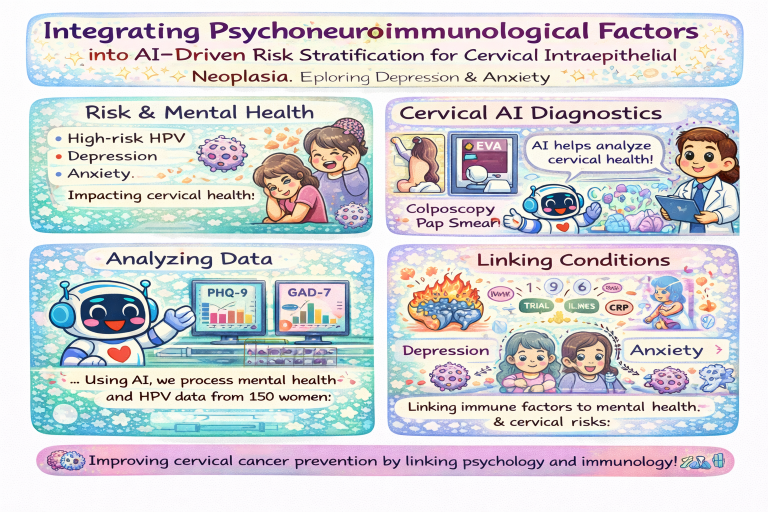
Cervical intraepithelial neoplasia (CIN) is a multifactorial pathology mainly determined by persistent infection with high-risk human papillomavirus (HPV) genotypes and modulated by both immunological and psychological factors. This mixed bibliometric and empirical study integrates psychoneuroimmunological concepts with clinical data from a cohort of 150 patients (aged 18–55 years) from northern Romania. Seventy percent tested positive for high-risk HPV by self-sampling and all completed the PHQ-9 and GAD-7 scales that were subsequently assessed. Symptoms of depression and anxiety were prevalent, with anxiety being reported by 43% of participants who performed self-sampling at home.Fifty women with cytologically diagnosed HSIL underwent a comparative evaluation using both, classical colposcopy and the artificial intelligence-assisted EVA system (MobileODT, Israel). Artificial intelligence-based colposcopy demonstrated higher sensitivity (92% versus 82%) and higher diagnostic concordance (88%) with histopathological confirmation, suggesting superior accuracy and clinical feasibility.These results support the integration of psychoneuroimmunological and artificial intelligence-assisted diagnostic parameters into cervical cancer prevention frameworks, highlighting the importance through which artificial intelligence could complement neoplasia prevention, addressing psychological profile and biological markers to improve personalised risk stratification.
Disclaimer: This image was generated using artificial intelligence and may contain inaccuracies or inconsistencies. It is provided solely as a visual aid to facilitate the rapid understanding of the key ideas presented in this article. Our editorial team conducts ongoing reviews of AI-generated images and will correct or replace them whenever an error or discrepancy is identified or reported.
Authors:
Catalina
Georgiana Tudor
, Daniel
Vasile Timofte
, Oana
Viola Badulescu
, Alin
Ciobica
, Tudor
Ciobotariu
, Anastasia
Melania Mihalache
, Iustina
Petra Solomon-Condriuc
, Razvan
Cosmin Tudor
, Bogdan
Doroftei
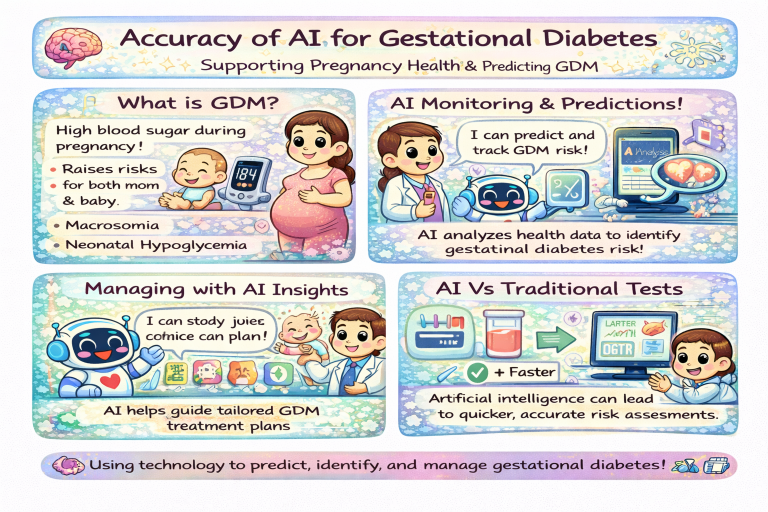
Abstract:Gestational Diabetes Mellitus (GDM) is characterized as any degree of glucose intolerance that manifests during pregnancy and typically resolves postpartum. Diagnosis is commonly made through an Oral Glucose Tolerance Test (OGTT); however, there are notable inconsistencies in diagnostic criteria and treatment thresholds both nationally and internationally. The onset of GDM generally occurs in the late second or early third trimester, with potential complications including fetal macrosomia, which may lead to difficult labor, and neonatal hypoglycemia due to excess insulin production in the infant’s pancreas. Furthermore, certain studies suggest that GDM may delay fetal brain development, resulting in long-term neurological impairments. Although artificial intelligence (AI) models have only recently emerged as a potential solution in various medical fields, their application continues to raise concerns, particularly regarding the use and storage of personal data. Machine Learning (ML), a subset of AI, utilizes multivariate classification methods, also known as supervised pattern recognition approaches, which are designed to identify patterns and correlations among multiple variables to categorize them into specific groups or classes. In this context, we are describing here .Thus, artificial intelligence has not yet demonstrated its full clinical potential in the management of gestational diabetes mellitus (GDM). Current applications remain limited in their impact on improving patient outcomes, largely due to methodological heterogeneity and the early stage of implementation. Still, AI has shown considerable promise in the domain of predictive modeling, particularly through its ability to process large volumes of clinical and biochemical data. This analytical capacity enables the identification of complex patterns and correlations that can support the accurate early prediction of GDM, potentially allowing for earlier intervention and personalized care strategies. Future research should focus on validating these predictive models in larger, diverse populations and integrating them into clinical workflows under appropriate regulatory and ethical frameworks.
Disclaimer: This image was generated using artificial intelligence and may contain inaccuracies or inconsistencies. It is provided solely as a visual aid to facilitate the rapid understanding of the key ideas presented in this article. Our editorial team conducts ongoing reviews of AI-generated images and will correct or replace them whenever an error or discrepancy is identified or reported.
Authors:
Cristian
Niky Cumpătă
, Cristina
Maria Munteanu
, Anca
Mihaela Predescu
, Ciprian
Laurențiu Pătru
, Alexandru
Dan Popescu
, Cătălina
Alexandra Iacov
, Cristina
Jana Busuioc
, Oprea
Valentin Bușu
, Elena
Cristina Andrei
, Eugen
Georgescu
, Marina
Amărăscu
, Ilona
Mihaela Liliac
Abstract:
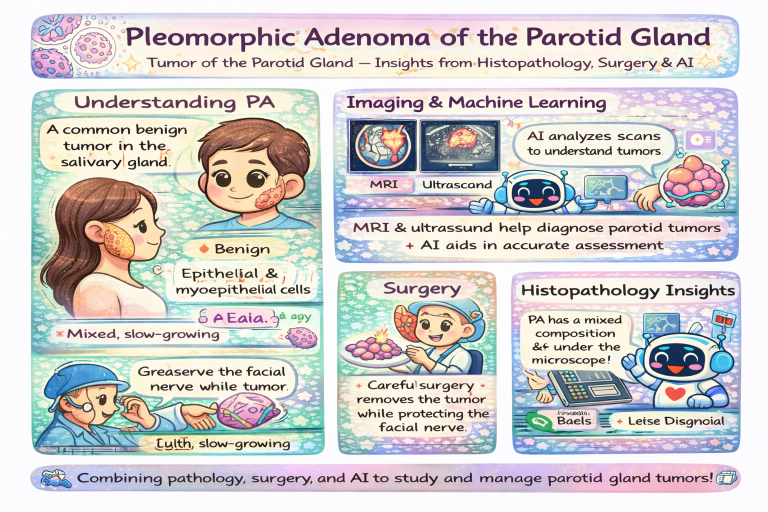
Pleomorphic adenoma (PA) is the most common benign tumour of the salivary glands, accounting for up to two-thirds of all salivary gland tumors. It most frequently occurs in the parotid gland and typically presents as a slow-growing, asymptomatic mass, predominantly affecting females between the third and sixth decades of life. Histologically, PA exhibits a mixed composition of epithelial, myoepithelial, and mesenchymal components embedded in a myxoid or chondroid stroma, with eosinophilic cytoplasm in polygonal myoepithelial cells. Although often well-circumscribed and localized in the superficial lobe of the parotid, PA can extend into deeper regions, including the parapharyngeal space, which complicates surgical management due to the proximity of critical neurovascular structures. This study aims to highlight the histopathological features of pleomorphic adenoma and correlate them with intraoperative findings. Advanced imaging techniques, particularly MRI, are crucial for accurate preoperative assessment, as delayed surgical intervention increases the risk of malignant transformation into carcinoma ex-pleomorphic adenoma, a more aggressive entity associated with recurrence and metastasis. In recent years, machine learning and deep learning models applied to MRI and ultrasound imaging have demonstrated significant potential in differentiating pleomorphic adenoma from other benign and malignant parotid tumours, improving diagnostic accuracy and supporting earlier clinical decision-making. Microscopic findings confirmed characteristic features of PA, including epithelial proliferation, myoepithelial components, haemorrhagic zones, eosinophilic stroma, and incomplete tumour capsules. Additionally, recent AI-assisted radiomic and convolutional neural network approaches have been shown to complement classical histopathology by extracting high-dimensional imaging features that enhance tumour subtype classification and prognostic assessment. When integrated with clinical and imaging data, these machine learning techniques offer promising avenues for reducing diagnostic uncertainty, optimising surgical planning—particularly in relation to facial nerve preservation—and contributing to more personalised management strategies in parotid gland pathology.
Disclaimer: This image was generated using artificial intelligence and may contain inaccuracies or inconsistencies. It is provided solely as a visual aid to facilitate the rapid understanding of the key ideas presented in this article. Our editorial team conducts ongoing reviews of AI-generated images and will correct or replace them whenever an error or discrepancy is identified or reported.
Authors:
Cristian
Niky Cumpătă
, Anca
Mihaela Predescu
, Larisa
Pătru
, Maria
Totan
, Cristina
Maria Munteanu
, Oprea
Valentin Bușu
, Ilona
Mihaela Liliac
, Elena
Cristina Andrei
, Marina
Amarascu
, Ciprian
Laurențiu Pătru
Abstract:
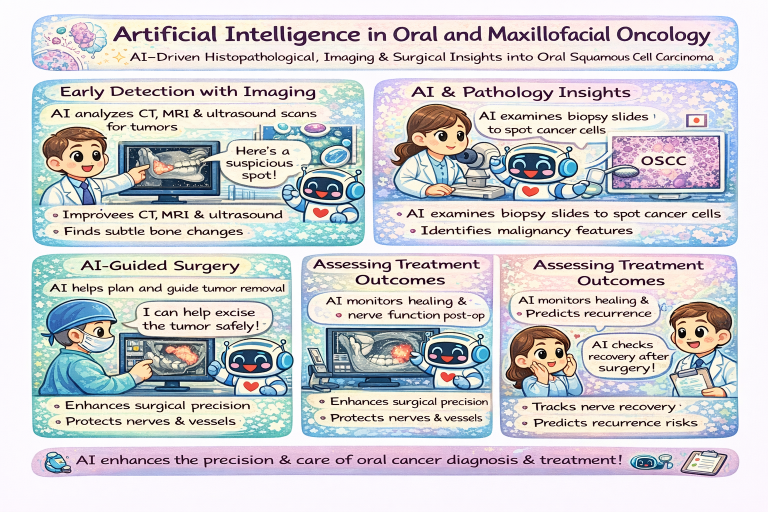
Artificial intelligence (AI) is rapidly transforming the medical oncology, by providing new tools for early diagnosis and personalized treatment planning. In mandibular oncology, where malignant transformation and metastatic progression can drastically alter prognosis, AI-driven systems show great promise in enhancing clinical decision-making. Convolutional neural networks and deep learning algorithms have already demonstrated high accuracy in analyzing imaging datasets, including CT scans and histopathological slides, for the detection of subtle changes that may indicate malignant transformation of initially benign lesions. These tools also aid in identifying early metastatic spread, allowing for timely intervention. One of the most aggressive head and neck cancers, oral squamous cell carcinoma (OSCC) usually affects the mandible and causes extensive anatomical disruption, neurological impairments, and functional deficits in speech, mastication, and facial symmetry. This article presents clinical and histopathological data on malignant lesions of the mandibular bone, primarily oral squamous cell carcinoma (OSCC). Tumours primarily affected the mandibular body and ramus, often causing facial asymmetry, tooth mobility, and bone loss. Histologically, keratin pearls and spindle-shaped atypical cells were typical characteristics. Neurological involvement from perineural invasion frequently led to pain, numbness, and impaired oral function. In addition to the complex consequences of mandibular cancers, such as their anatomical, functional, and psychological effects, the study underscores the importance of multidisciplinary treatment and rehabilitation. Our paper presents how new methods for improving the precision and effectiveness of oral oncology diagnosis have been made possible by developments in artificial intelligence (AI), especially deep learning approaches. By recognising both cellular and structural atypia, convolutional neural networks (CNNs) have shown excellent performance in the classification of histopathological images. The distinction between benign, dysplastic, and malignant oral lesions is further enhanced by hybrid techniques that blend deep and texture-based features. AI-assisted radiomics has shown promise in diagnostic imaging by detecting high-dimensional, subtle characteristics in CT, MRI, and ultrasound scans that are frequently impossible to interpret visually. According to analysed studies, these techniques can improve the identification of lymph node metastases and offer accurate risk assessment for oral malignancies. Further encouraging their inclusion into the oral oncology workflow, machine learning models have attained diagnostic accuracies that surpass standard radiological assessments by merging image texture analysis with clinical data. A triadic viewpoint is provided by integrating AI into mandibular oncology: (1) imaging-based tumour growth and metastasis detection, (2) histopathological evaluation of malignant potential, and (3) assessment of neurological outcomes following surgery. Also, this article presents a case study from the University of Craiova, guide surgical excision, and assess both histological progression and postoperative functional impact. AI technologies' ability to support individualized treatment plans, enable earlier diagnoses, and enhance clinical judgment is becoming more and more clear as they develop—especially in anatomically and neurologically complex areas like the mandible. In conclusion, AI represents a powerful ally in mandibular oncology, bridging imaging, histopathology, and neurological evaluation, and paving the way for more precise, patient-centered care.
Disclaimer: This image was generated using artificial intelligence and may contain inaccuracies or inconsistencies. It is provided solely as a visual aid to facilitate the rapid understanding of the key ideas presented in this article. Our editorial team conducts ongoing reviews of AI-generated images and will correct or replace them whenever an error or discrepancy is identified or reported.
Authors:
Ecaterina
Burlui
, Cristina
Albert
, Vasile
Burlui
, Alin
Ciobica
, Gabriel
Dascalescu
, Malina
Visternicu
, Ioana
Miruna Balmus
Abstract:
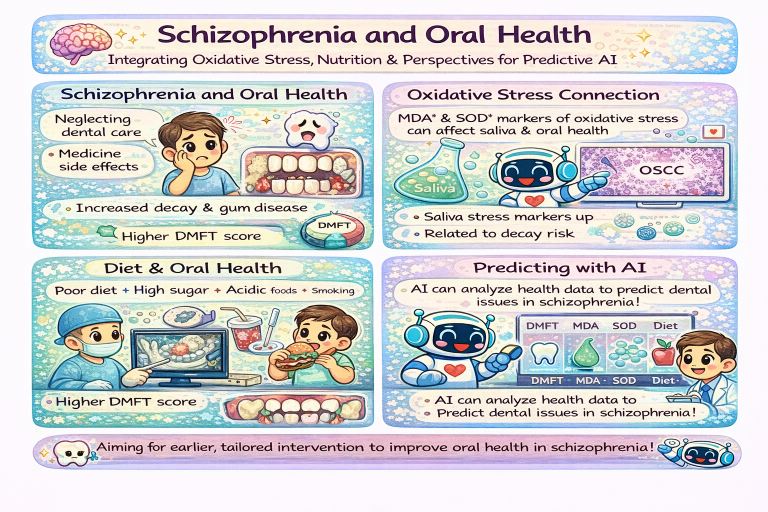
Schizophrenia is a severe psychiatric disorder characterized by profound cognitive, emotional and behavioral impairments, frequently accompanied by somatic comorbidities that remain underrecognized. Among these, oral health deterioration emerges as a significant concern. This pilot study compares male patients with schizophrenia (n = 20) and a matched control group without psychiatric or systemic disorders, examining the interplay between salivary oxidative stress biomarkers, dietary habits and oral health indicators, with the aim of constructing a schizophrenia-centred comorbidity model. Oral health was assessed using the DMFT index (Decayed, Missing and Filled Teeth), a standard measure reflecting cumulative dental caries experience. Oxidative stress was evaluated through malondialdehyde (MDA) levels, a marker of lipid peroxidation and superoxide dismutase (SOD) activity, an antioxidant enzyme reflecting the body’s defence against free radicals. Nutritional habits were recorded to explore lifestyle contributions to oral pathology. Moderate correlations between oxidative stress biomarkers and oral health parameters suggest that schizophrenia-related lifestyle and metabolic factors contribute to dental deterioration. No artificial intelligence (AI) methods were implemented in this study; however, the findings highlight the conceptual potential for future AI-based predictive models that integrate biochemical, behavioural and clinical data to identify oral health risks specifically in populations with schizophrenia. This pilot study highlights the interplay between oxidative stress, nutrition and oral health in schizophrenia. Overall, this pilot work provides a preliminary dataset and conceptual framework that may inform future computational and AI-driven predictive studies in larger, gender-balanced and more diverse cohorts.
Disclaimer: This image was generated using artificial intelligence and may contain inaccuracies or inconsistencies. It is provided solely as a visual aid to facilitate the rapid understanding of the key ideas presented in this article. Our editorial team conducts ongoing reviews of AI-generated images and will correct or replace them whenever an error or discrepancy is identified or reported.
Authors:
Utku
Köse
, Gözde
Özkan Tükel
, İlhan
Uysal
, Emine
Betül Sürücü
, Osman
Ceylan
, Muhammet
Enes Karataş
, Ahmet
Koca
, Ömer
Faruk Yılmaz
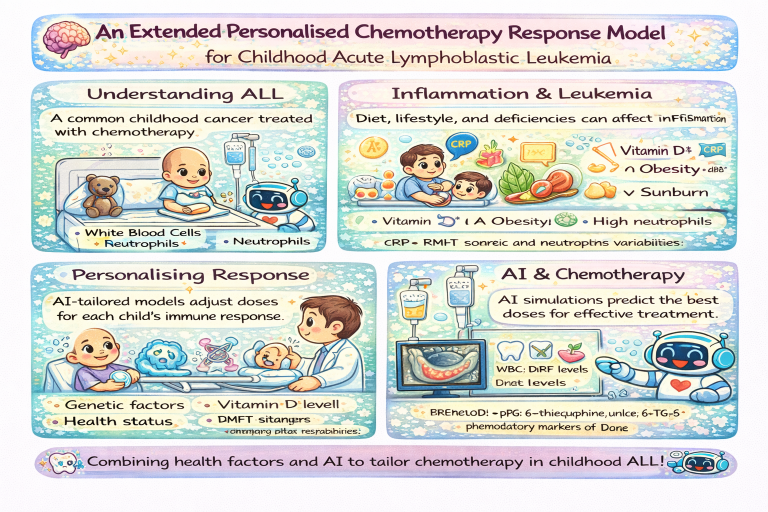
Abstract:This study aims to develop a personalised pharmacokinetic / pharmacodynamic model for 6-mercaptopurine (6-MP) used in the treatment of childhood acute lymphoblastic leukemia (ALL). The developed model considers both neutrophil count and white blood cells in the context of lifestyle-related inflammatory responses (affected by nutrition, diet, and the vitamin D), genetic variations (e.g., TPMT), and also age-related pharmacokinetic values. In detail, the model is structured by equations corresponding absorption of 6-MP in the body, its metabolites (6-TGN, 6-mMPN, 6-TU), and also suppressive effects of the metabolites over the hematopoietic system. One unique aspect of the study is that the inflammatory response is integrated into the system as an additional component evaluating the lifestyle impact on hematopoietic production. The study confirms the model by running simulations for the patient profiles with different ages, genetic factors, and inflammatory conditions. The findings reveal leukocyte responses and ensure a basis for personalised dose optimisation.
Disclaimer: This image was generated using artificial intelligence and may contain inaccuracies or inconsistencies. It is provided solely as a visual aid to facilitate the rapid understanding of the key ideas presented in this article. Our editorial team conducts ongoing reviews of AI-generated images and will correct or replace them whenever an error or discrepancy is identified or reported.
Authors:
Bogdan
Novac
, Alin
Ciobica
, Radu
Zara
, Ion
Chiriac
, Marcel
Agachi
, Otilia
Novac
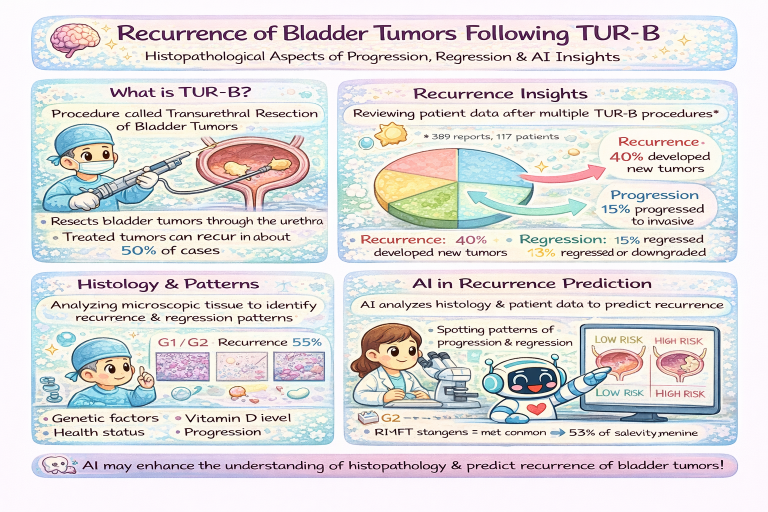
Abstract:Background: Bladder cancer is one of the most common urological malignancies worldwide, often requiring multiple transurethral resections of the bladder (TUR-B) due to high recurrence rates. This retrospective study analyses 389 histopathological (HP) reports from 117 patients to evaluate the evolution of tumour grade (G1, G2, G3) and invasion level (non-invasive vs. invasive) in recurrent bladder tumors. Methods: We included patients who underwent two or more TUR-B interventions between 2009 and 2024, had complete HP data for each resection, and were followed to assess recurrence, progression, and regression. Descriptive statistics and chi-square tests were used to examine differences in tumour behaviour among subgroups. Endpoints included recurrence (any new tumour), progression (increase in grade or stage to ≥T2), stagnation (no change in grade or stage), and regression (downgrade or downstage from invasive to non-invasive). Results: Nearly 15% of non-invasive tumours progressed to invasive disease, whereas over 30% of tumours initially classified as invasive showed partial or complete regression during subsequent resections. G2 tumours were most prevalent (around 55%), with more than half exhibiting stagnation. Some high-grade (G3) lesions demonstrated notable regression rates, highlighting possible responsiveness to intravesical therapy. Conclusions: These findings underscore the heterogeneity of bladder tumour evolution following TUR-B and the importance of vigilant surveillance and adjuvant therapies. While a subset of invasive tumours may regress, others progress despite initial low-grade presentation. Future prospective or multivariate analyses are needed to identify precise predictors of progression and regression in non-muscle-invasive bladder cancer (NMIBC). Also considering our previous expertise in the connections with AI and both urology and cancer, this could open further discussions and relevance in this growing area of research.
Psychology, Psychotherapy, Clinical Neuroscience & Mental Health
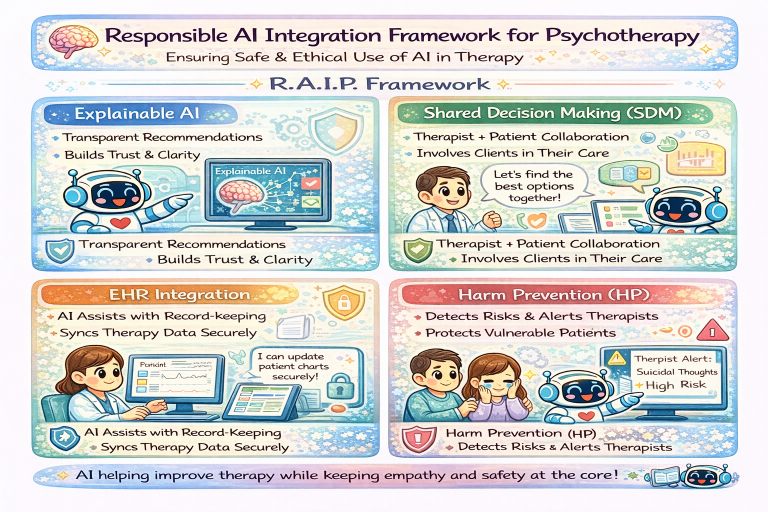
Disclaimer: This image was generated using artificial intelligence and may contain inaccuracies or inconsistencies. It is provided solely as a visual aid to facilitate the rapid understanding of the key ideas presented in this article. Our editorial team conducts ongoing reviews of AI-generated images and will correct or replace them whenever an error or discrepancy is identified or reported.
Authors:
Shlomo
Mendlovic
Abstract:The article explores the opportunities and risks associated with the integration of artificial intelligence (AI) into psychotherapy. AI can expand access to care, provide clinical decision support, enable continuous monitoring, and increase system efficiency. At the same time, significant challenges remain, including technological immaturity, data privacy and ethical concerns, and the potential erosion of the therapeutic alliance. To ensure safe and responsible adoption, the article introduces the Responsible AI Integration Framework for Psychotherapy, which identifies four essential capabilities: Explainable AI (XAI), Shared Decision Making (SDM), Electronic Health Record (EHR) integration, and Harm Prevention (HP). Together, these components form a practical, workflow-embedded formula that addresses both technical and ethical requirements. A roadmap for implementation is also proposed, emphasizing phased adoption within public health systems through preparation and vision, controlled pilots, gradual scaling, and full integration with ongoing improvement. The framework underscores that AI should function as a supportive tool, enhancing rather than replacing the empathic human presence that remains central to psychotherapy.
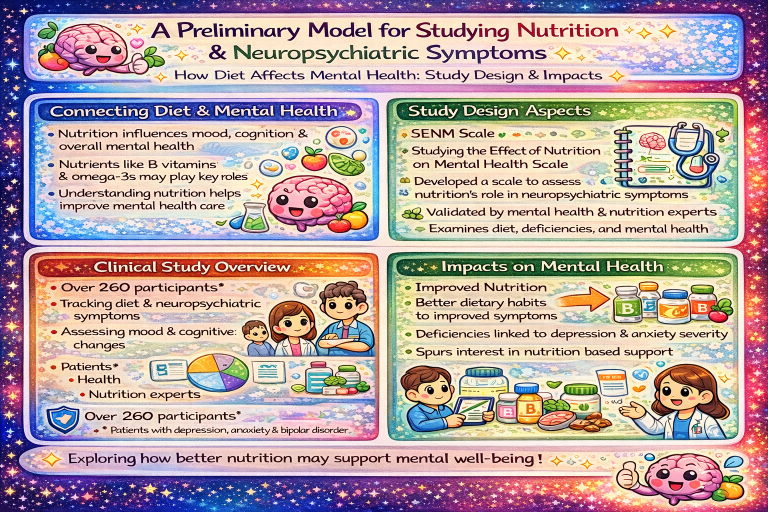
Disclaimer: This image was generated using artificial intelligence and may contain inaccuracies or inconsistencies. It is provided solely as a visual aid to facilitate the rapid understanding of the key ideas presented in this article. Our editorial team conducts ongoing reviews of AI-generated images and will correct or replace them whenever an error or discrepancy is identified or reported.
Authors:
Lucia
Blendea
, Ancuta
Andreea Miler
, Malina
Visternicu
, Ioan
Gotca
, Judit
Csabai
, Bogdan
Novac
, Otilia
Novac
, Anca
Trifan
, Daniel
Vasile Timofte
Abstract:Mental, neurological, and substance use disorders represent a major global problem. In this context, nutrition is crucial as it affects both the severity and incidence of neuropsychiatric symptoms. In addition to drug treatments, lifestyle modifications, including dietary interventions and targeted supplementation with specific nutrients, could have a beneficial effect on various neuropsychiatric disorders. This study introduces a preliminary framework for assessing the link between nutrition and neuropsychiatric symptoms. Thus, the Evaluating the Importance of Nutrition in Neuropsychiatric Manifestations (SENM) Scale provides a structured approach to examine how diet affects mental health. The study sample of 264 participants, including patients diagnosed with depression, anxiety, and bipolar disorder, as well as mental health and nutrition specialists. Preliminary results indicate a significant correlation between nutritional deficiencies (e.g., B vitamins, omega-3) and worsening of symptoms. Also, most participants emphasised integrating nutritional education into neuropsychiatric treatments. The conclusions suggest that nutrition can be an effective adjunct in mental health treatments, with practical applications and promising future directions.
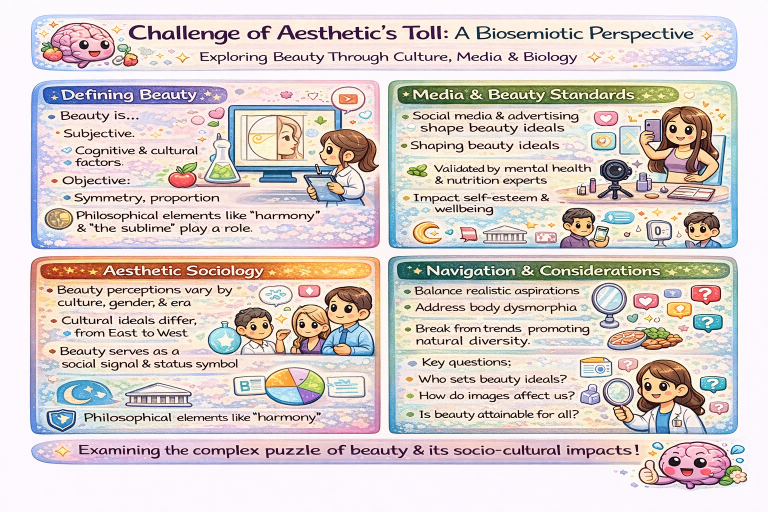
Disclaimer: This image was generated using artificial intelligence and may contain inaccuracies or inconsistencies. It is provided solely as a visual aid to facilitate the rapid understanding of the key ideas presented in this article. Our editorial team conducts ongoing reviews of AI-generated images and will correct or replace them whenever an error or discrepancy is identified or reported.
Authors:
Cristina
Stanescu
, Camelia
Tamas
, Anamaria
Ciubara
Abstract:The concept of beauty has been analysed from various perspectives, including biosemiotics, cultural standards, media influence, historical contexts, and philosophical theories. While some studies emphasise the subjective nature of beauty as a cognitive construct or product of cultural and media influences, others point to the possibility of objective standards such as symmetry and proportion, which may underlie our perceptions of beauty. This study aims to explore the concept of beauty from multidisciplinary perspectives, highlighting the complexity and multidimensionality of aesthetic experiences. Beauty is a fundamental aspect of human life that influences behaviour and societal expectations. Cultural standards of beauty are complex constructs influenced by a variety of sociocultural and digital factors. To comprehensively understand the cultural standards of beauty, it is essential to examine the interplay of these factors and their influence on perceptions of beauty. These standards are not static and can vary significantly across different cultural and ethnic backgrounds, as well as between genders and age groups. The social impact of beauty standards, including their role in advertising and their potential to break these standards, is a significant area of discussion. Social media platforms are widely recognised as powerful influencers in shaping beauty ideals, often promoting unattainable standards. These platforms not only distribute but also create beauty trends, with content creators playing a crucial role in their dissemination. Further research is needed to investigate the psychological and emotional alterations in patients who remain perpetually dissatisfied with their physical appearance, regardless of the number of aesthetic interventions they undergo.
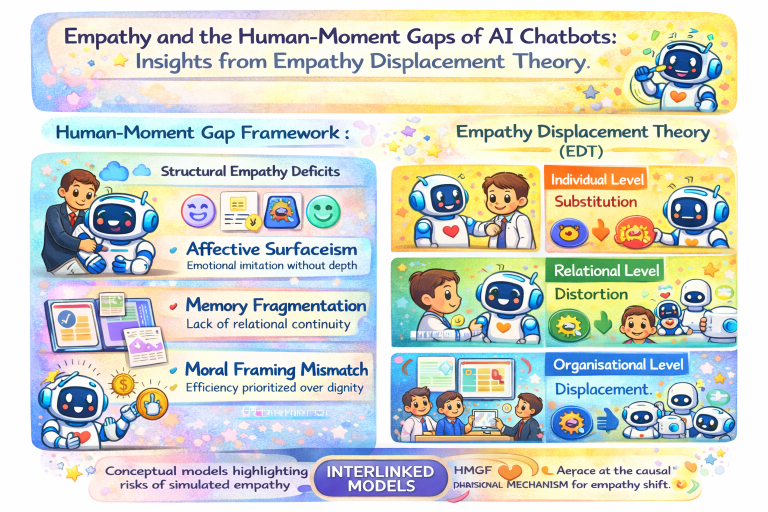
Disclaimer: This image was generated using artificial intelligence and may contain inaccuracies or inconsistencies. It is provided solely as a visual aid to facilitate the rapid understanding of the key ideas presented in this article. Our editorial team conducts ongoing reviews of AI-generated images and will correct or replace them whenever an error or discrepancy is identified or reported.
Authors:
Victor
Frimpong
Abstract:AI chatbots are increasingly deployed in domains where empathy is essential, such as healthcare, education, and customer service, yet their ability to sustain genuinely authentic “human moments” remains limited. This paper introduces two interlinked conceptual models to explain and address this limitation. The Human-Moment Gap Framework (HMGF) identifies three structural empathy deficits—affective surfaceism (emotional imitation without depth), memory fragmentation (lack of relational continuity), and moral framing mismatch (efficiency prioritised over dignity). Building on these mechanisms, the Empathy Displacement Theory (EDT) explains how AI-simulated empathy can progressively substitute, distort, and displace genuine human empathy at the individual, relational, and organisational levels. HMGF serves as the causal foundation of EDT, illustrating how technical and moral deficiencies in chatbot design evolve into broader social and institutional consequences. The paper is conceptual and exploratory, aiming to develop an integrative theoretical framework rather than to provide empirical validation. Together, the models provide a unified theoretical framework for understanding AI-mediated empathy, offering testable propositions and practical guidance for the ethically responsible development of chatbots. The paper closes with ethical and policy implications, arguing that the real challenge of empathetic AI lies not in whether machines can “care,” but in how simulated care reshapes human affective expectations and institutional norms.
Disclaimer: This image was generated using artificial intelligence and may contain inaccuracies or inconsistencies. It is provided solely as a visual aid to facilitate the rapid understanding of the key ideas presented in this article. Our editorial team conducts ongoing reviews of AI-generated images and will correct or replace them whenever an error or discrepancy is identified or reported.
Authors:
Cristina
Dumitru
, Mariana
Anagnoste
, Beatrice
Mihaela Radu
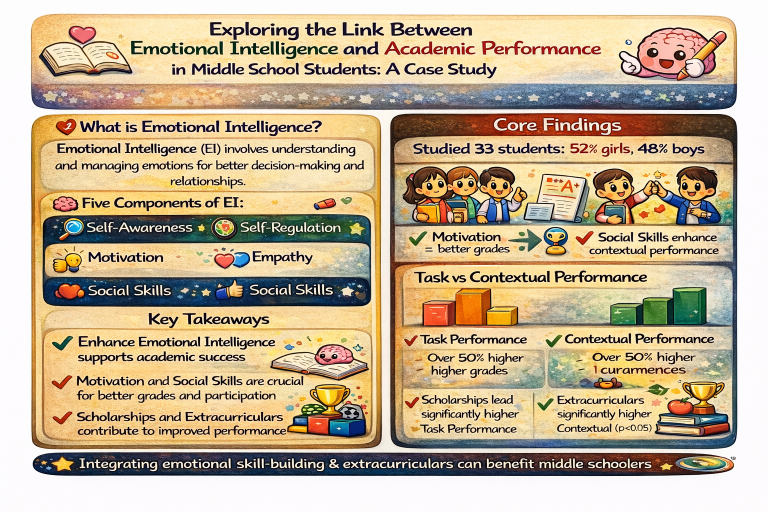
Abstract:This study examined the relationship between emotional intelligence (EI) and academic performance among 33 middle school students, while also exploring differences based on gender, grade level, scholarship status, and extracurricular participation. Participants completed validated self-report measures assessing five EI components, and academic performance was evaluated through task and contextual performance scores. Spearman’s rank-order correlations indicated significant positive associations between motivation, social skills, and both academic performance measures. Kruskal–Wallis tests revealed no significant differences in EI or academic performance by gender or grade level. However, students receiving scholarships achieved significantly higher task performance, and those participating in extracurricular activities demonstrated significantly higher contextual performance, with near-significant differences in task performance and social skills. These results provide limited support for the study’s hypotheses, suggesting that specific EI components—particularly motivation and social skills—are linked to academic success, and that contextual factors such as financial support and extracurricular engagement can enhance performance outcomes. The findings highlight the value of integrating emotional skills training and extracurricular opportunities into school programs to promote both academic and socio-emotional development during early adolescence. Owing to the limited sample size and the single-school context, the findings should be regarded as exploratory and context-specific.

Disclaimer: This image was generated using artificial intelligence and may contain inaccuracies or inconsistencies. It is provided solely as a visual aid to facilitate the rapid understanding of the key ideas presented in this article. Our editorial team conducts ongoing reviews of AI-generated images and will correct or replace them whenever an error or discrepancy is identified or reported.
Authors:
Dumitru
Daniel Ionașcu
, Maria
Diana Piele
, Ion
Ovidiu Panisoara
, Iuliana
Mihaela Lazăr
Abstract:
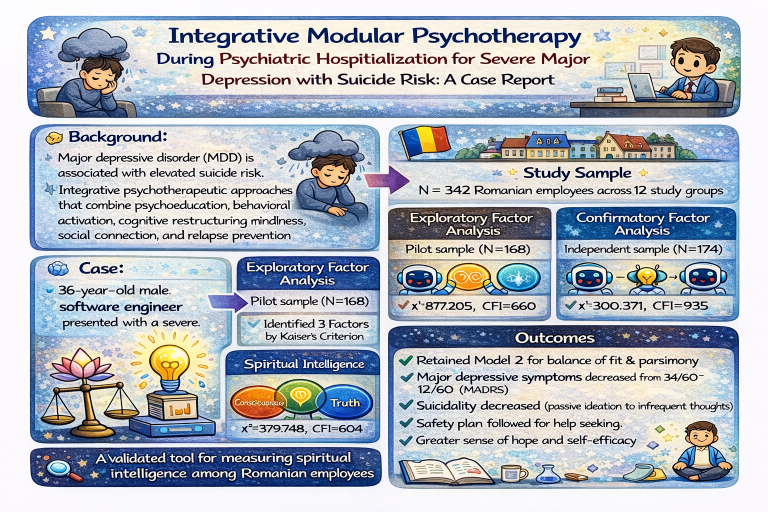
The 83-item Integrated Spiritual Intelligence Scale (ISIS) is one of the most widely used psychological tools for measuring spiritual intelligence in academic studies and real-world settings. However, its factor structure has been subject to some debate. To date, no study has been carried out using a sample of Romanian employees to test the reliability and validity of the ISIS or its factorial structure. Data were collected from twelve different study groups, involving a total of 342 Romanian employees. Using a one-stage sampling process, exploratory factor analysis (EFA) was conducted on a randomly selected pilot sample (N=168), followed by confirmatory factor analysis (CFA) on an independent group (N=174). The EFA identified three factors by Kaiser's criterion, accounting for 58.4% of the total variance across all items. Three competing measurement models were tested with CFA. Model 1, a unidimensional solution with all 21 items loading on a single factor, fit poorly, χ²=877.205, df=189, χ²/df=4.641, CFI=.660, TLI=.622, RMSEA=.145, SRMR=.127. Model 2, a correlated three-factor model that distinguishes Consciousness, Transcendence, and Truth, showed substantially better fit, χ²=379.748, df=186, χ²/df=2.042, CFI=.904, TLI=.892, RMSEA=.077, SRMR=.067. Model 3, a bifactor specification with one general factor plus three orthogonal specific factors, yielded the best global fit indices, χ²=300.371, df=168, χ²/df=1.788, CFI=.935, TLI=.918, RMSEA=.067, SRMR=.061, but at higher complexity. However, near-null specific loadings, a Heywood anomaly, and weak general loadings render the bifactor model invalid. Balancing fit and parsimony, we retained the correlated three-factor structure as the final measurement model and interpreted scores at the level of the three dimensions. Multiple-group CFA evaluated the three-factor ISIS-21 across gender, residence, and professional domain. Using ΔCFI≤.01 and ΔRMSEA≤ .015 as decision rules, configural, metric, and scalar invariance were supported for all three grouping variables; strict invariance was met only for residence, and equality constraints on latent means did not degrade fit in that comparison. These results justify comparisons of latent means across gender, residence, and professional domain, while comparisons of observed scores should be limited to residence. The findings indicate that the validated instrument meets the necessary psychometric standards and may serve as a useful tool for evaluating spiritual intelligence among Romanian employees.
Disclaimer: This image was generated using artificial intelligence and may contain inaccuracies or inconsistencies. It is provided solely as a visual aid to facilitate the rapid understanding of the key ideas presented in this article. Our editorial team conducts ongoing reviews of AI-generated images and will correct or replace them whenever an error or discrepancy is identified or reported.
Authors:
Sebastian
Mihai Armean
, Romulus
Dan Nicoară
, Codruța
Alina Popescu
Abstract:Background: Major depressive disorder (MDD) is associated with elevated suicide risk. Integrative psychotherapeutic approaches that combine psychoeducation, behavioural activation, cognitive restructuring, mindfulness, social connection, and relapse prevention may be effective and feasible in routine care. Case: A 36-year-old male software engineer presented with a severe major depressive episode without psychotic features, precipitated by occupational stressors. Assessment indicated high depressive severity (e.g., MADRS), high stress and anxiety (DASS 21), elevated dysfunctional attitudes (DAS A), and moderate suicide risk without plan (C SSRS). Intervention: A four week, six module program included: (1) psychoeducation about depression and personalised triggers; (2) behavioural activation and daily routine; (3) problem solving and cognitive restructuring to address catastrophising and self-blame; (4) mindfulness practices to reduce rumination; (5) social connection skills and structured re- engagement in valued relationships; and (6) relapse prevention planning and values based goals. Sessions were accompanied by homework and symptom monitoring. Outcomes: Over the course of four weeks, the patient reported reduced rumination and anxiety,an improved sleep routine and energy levels, greater engagement in work and family activities, and increased self-efficacy. Suicidality decreased from recurrent passive ideation to infrequent, brief thoughts without plan or intent, along with enhanced safety planning and help seeking. Conclusion: A brief, structured integrative psychotherapeutic intervention may reduce suicide risk and improve functioning in severe depression. The modular format and emphasis on activation, cognitive change, mindfulness, social reconnection, and relapse prevention suggest practical utility for similar cases.
Disclaimer: This image was generated using artificial intelligence and may contain inaccuracies or inconsistencies. It is provided solely as a visual aid to facilitate the rapid understanding of the key ideas presented in this article. Our editorial team conducts ongoing reviews of AI-generated images and will correct or replace them whenever an error or discrepancy is identified or reported.
Authors:
Loredana
Ileana Vîșcu
, Ioana
Eva Cădariu
, Edward
Watkins Jr. Clifton
, Alina
Cristina Constantin
, Cristian
Delcea
, Costel
Vasile Siserman
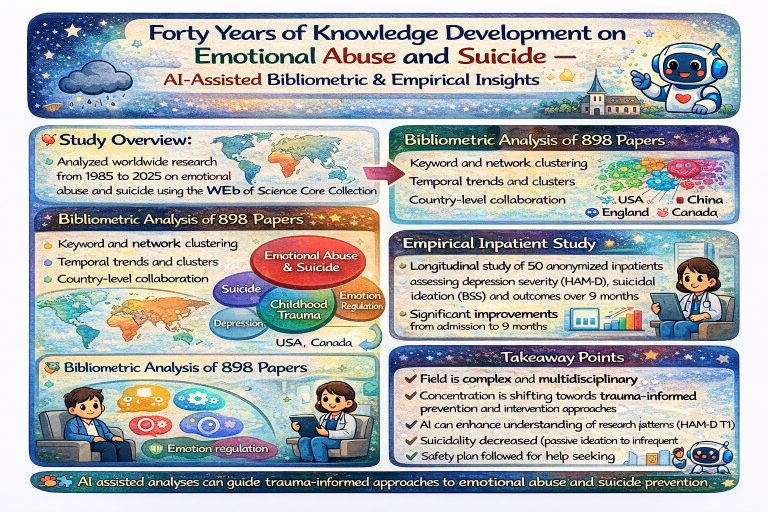
Abstract:This bibliometric study investigates worldwide research patterns on emotional abuse and suicide in 898 papers from 1985 to 2025 using data from the Web of Science Core Collection analysed with VOSviewer to study keyword co-occurrence, thematic clusters, temporal development, and country-level collaboration. Five primary research clusters focusing on suicide, childhood trauma, depression, risk factors among adolescents, and emotion regulation were revealed by the analysis. The USA, Canada, China, and England were found to be core contributors in worldwide co-authorship networks.Additionally, an empirical observational analysis was performed on 50 anonymised inpatients from the Socola Institute of Psychiatry in Iasi, assessing the severity of depression (HAM-D), suicidal ideation (BSS) and clinical follow-up results over a period of nine months.In the empirical arm of this study, which involved 50 anonymised inpatients, depression severity scores (HAM-D) and suicidal ideation (BSS) showed significant reductions from admission to nine-month follow-up (p < 0.001), while residual depressive symptoms at discharge (HAM-D T1) independently predicted persistent suicidality (OR = 1.12, 95% CI 1.02–1.23, p = 0.014). Results point toward the intricate, multidisciplinary nature of the field and the increasing concentration on trauma-informed prevention approaches.
Disclaimer: This image was generated using artificial intelligence and may contain inaccuracies or inconsistencies. It is provided solely as a visual aid to facilitate the rapid understanding of the key ideas presented in this article. Our editorial team conducts ongoing reviews of AI-generated images and will correct or replace them whenever an error or discrepancy is identified or reported.
Authors:
Inha
Poliluieva
, Tetiana
Marchak
, Victoriia
Naichuk
, Nina
Liesnichenko
, Yevheniia
Kocherha
, Pavlo
Kuts
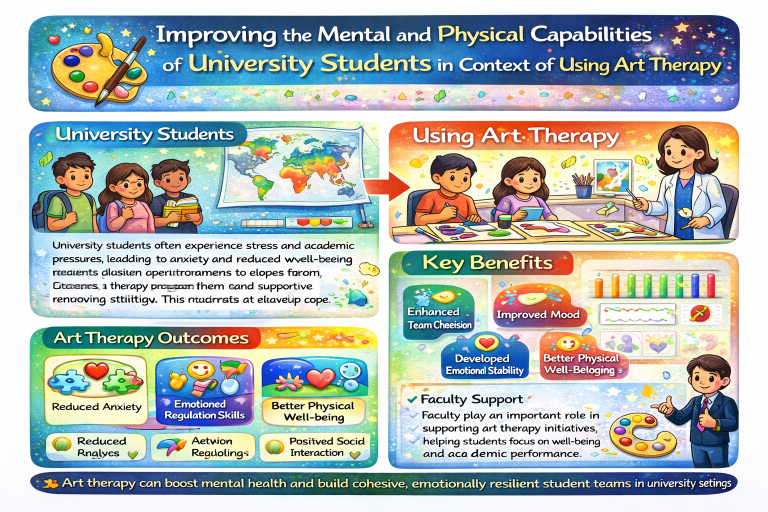
Abstract:The article discusses the effectiveness of using art-therapeutic techniques in work with students, aimed at improving the mental, physical capabilities of university students, building a student team and developing emotional stability. The concepts of "social group" and "student body" are considered. The author of the article proves that the implementation of such a pedagogical condition as involving students in art therapy programmes leads to positive outcomes ,which indicates its effectiveness. Faculty members are expected to play an important role in enhancing students' positive moods by keeping them away from bad moods and encouraging them to focus only on good academic performance to achieve optimal academic results. Art therapy classes can help students to better understand themselves, their emotions and reactions to stress, and to develop skills of emotion regulation. The article establishes that art therapy can be an effective intervention for university students, fostering emotional stability and improving mental well-being through a structured, safe, and creative setting for the exploration of emotions and thoughts.
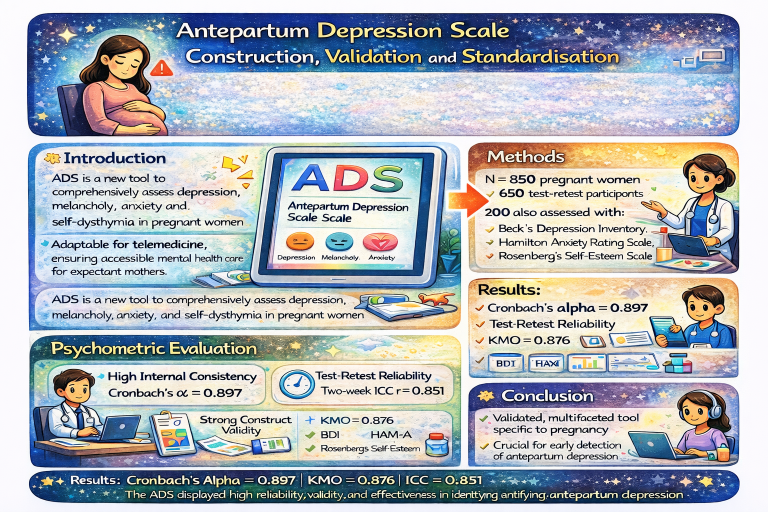
Disclaimer: This image was generated using artificial intelligence and may contain inaccuracies or inconsistencies. It is provided solely as a visual aid to facilitate the rapid understanding of the key ideas presented in this article. Our editorial team conducts ongoing reviews of AI-generated images and will correct or replace them whenever an error or discrepancy is identified or reported.
Authors:
Gheorghe
Mihail Banariu
, George
Neagoe
, Mihaela
Rus
, Cristian
Delcea
, Adriana
Campeanu
, Silvia
(Izvoranu) Onuc
, Vlad
Tica
Abstract:
The Antepartum Depression Scale (ADS) is an innovative tool designed to comprehensively assess the psychological states of pregnant women, specifically targeting depression, melancholy, anxiety, and self-dysthymia. Unlike the existing scales, ADS integrates a multidimensional approach tailored to the unique psychological profile of pregnancy. Additionally, its adaptability to telemedicine ensures accessibility to psychological assessments via digital platforms, addressing the growing need for remote mental health care. Despite the critical importance of maternal mental health, there remains a gap in standardised pregnancy-specific depression assessments that are both clinically robust and telemedicine-compatible. The ADS was rigorously developed and validated to ensure its accuracy and reliability, making it a critical tool for the early detection and management of antepartum depression, even in resource-limited settings. Methods: A total of 850 pregnant women participated in the ADS validation study, with 650 completing a test-retest reliability analysis over a 14-day interval. The diverse Romanian sample ensured the demographic variability. Additionally, 200 participants completed the ADS along with Beck’s Depression Inventory, Hamilton Anxiety Rating Scale, and Rosenberg’s Self-Esteem Scale to assess construct validity. Psychometric properties were evaluated using internal consistency, test-retest reliability, and factor analysis. Results: The ADS demonstrated excellent internal consistency (Cronbach’s alpha=0.897), strong validity (The Kaiser-Meyer-Olkin=0.876), and robust correlations with the established scales. Notably, the mean depression scores increased significantly between tests, underscoring the scale’s sensitivity to psychological changes during pregnancy. Conclusions: The ADS is a validated multidimensional tool that fills a critical gap in maternal mental health assessment by offering a pregnancy-specific, psychometrically sound instrument. Its applicability in both clinical and telemedicine settings supports early intervention, ultimately enhancing maternal mental health care and improving outcomes for pregnant women.
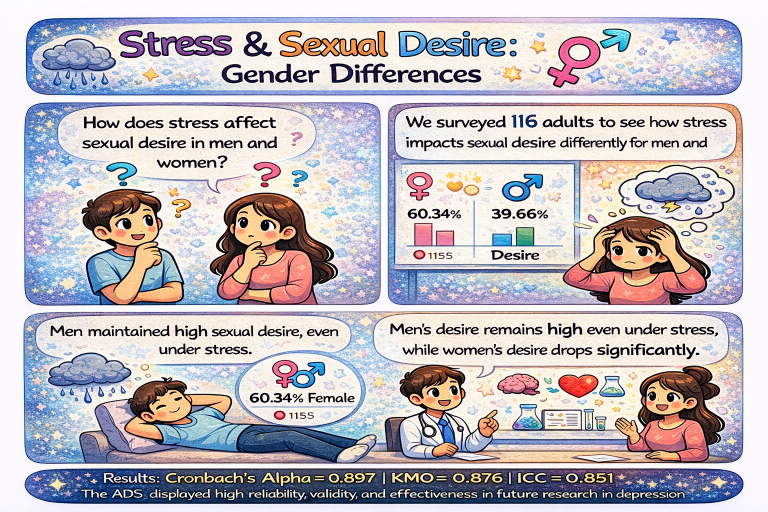
Disclaimer: This image was generated using artificial intelligence and may contain inaccuracies or inconsistencies. It is provided solely as a visual aid to facilitate the rapid understanding of the key ideas presented in this article. Our editorial team conducts ongoing reviews of AI-generated images and will correct or replace them whenever an error or discrepancy is identified or reported.
Authors:
Andrea
Müller-Fabian
, Cristian
Delcea
Abstract:
Objectives: This study investigates the association between perceived stress and sexual desire, emphasizing gender-specific patterns. We examined how stress influences sexual desire in men and women, exploring potential psychological, neuroendocrine, and psychosocial mechanisms. Methodology: A cross-sectional survey was conducted with 116 participants (60.34% female, 39.66% male), who completed an online questionnaire assessing perceived stress and sexual desire using Likert scales. Statistical analyses included Spearman correlations and independent-samples t-tests. Results: Men reported significantly higher sexual desire than women (p < 0.001). Under stress, men’s sexual desire remained more stable compared to women’s (p < 0.001). Prolonged stress negatively correlated with sexual desire (r = -0.191, p = 0.040), while general daily stress did not significantly affect sexual desire (p = 0.435). Conclusions: Gender and stress duration influence sexual desire, with men maintaining higher levels under stress. These findings suggest the need for clinical interventions that consider gender-specific coping strategies and highlight the importance of validated measures in future research.
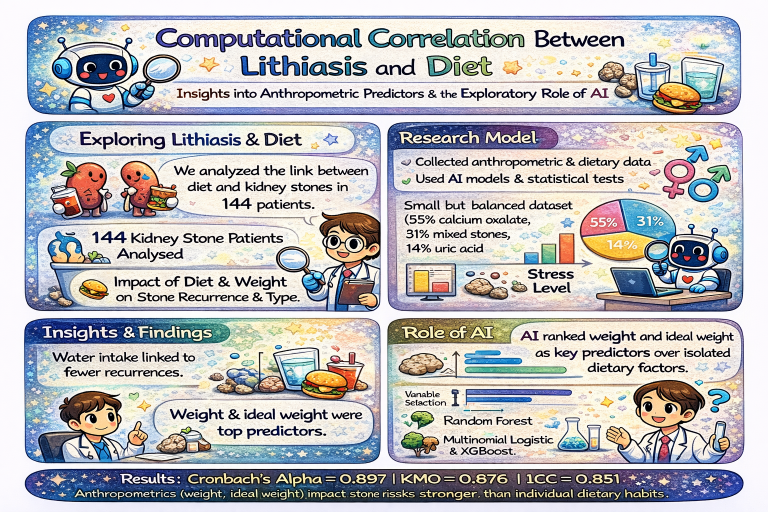
Disclaimer: This image was generated using artificial intelligence and may contain inaccuracies or inconsistencies. It is provided solely as a visual aid to facilitate the rapid understanding of the key ideas presented in this article. Our editorial team conducts ongoing reviews of AI-generated images and will correct or replace them whenever an error or discrepancy is identified or reported.
Authors:
Mihaela
Nikolic
, Roxana
Lazăr
, Marius
Ivănuță
, Dorel
Ureche
, Mircea
Nicușor Nicoară
, Ramona
Alexandra Ciaușu
, Ancuța
Andreea Miler
, Paul
Corneliu Boișteanu
Abstract:The relationship between lithiasis (kidney stone disease) and dietary habits has been widely debated but remains incompletely clarified. This study used a computational framework that combined statistical testing with AI-based exploratory modelling to assess the relative contributions of dietary and anthropometric parameters on lithiasis recurrence and stone type. Data from 144 patients with documented kidney stones were analysed. AI algorithms were not intended as predictive tools due to the small and imbalanced dataset; they served to identify the most influential variables. Classical statistical methods revealed no significant associations between relapse and isolated dietary factors such as fast-food or carbonated drinks, though higher water intake showed a protective trend (p ≈ 0.09). Anthropometric features, particularly ideal weight, were significantly associated with both relapse (p ≈ 0.006) and stone type (corrected p ≈ 0.046). Machine learning models (multinomial logistic regression, Random Forest, and XGBoost) demonstrated modest predictive performance (accuracy ≈ 55–63%), with variable importance analyses highlighting weight, ideal weight, and water intake as stronger predictors than single dietary variables. The findings suggest that anthropometric parameters, rather than isolated dietary habits, show stronger associations with stone type and recurrence, and that AI models hold promise but require larger datasets and biochemical variables to achieve clinical utility.
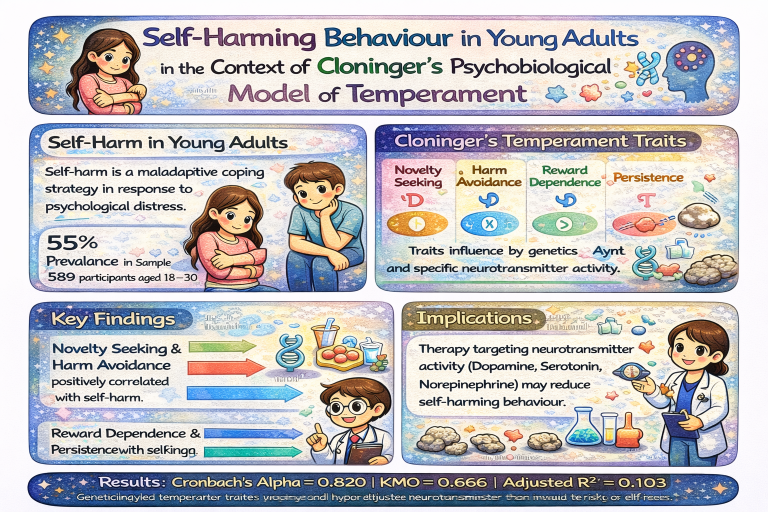
Disclaimer: This image was generated using artificial intelligence and may contain inaccuracies or inconsistencies. It is provided solely as a visual aid to facilitate the rapid understanding of the key ideas presented in this article. Our editorial team conducts ongoing reviews of AI-generated images and will correct or replace them whenever an error or discrepancy is identified or reported.
Authors:
Slavka
Demuthova
, Zuzana
Rojkova
Abstract:
Self-harming behaviour, a maladaptive coping strategy employed in response to psychological distress, predominantly manifests during adolescence and early adulthood, and poses serious consequences for both physical and mental health. Its high risk and escalating prevalence have directed scholarly attention toward elucidating factors that contribute to its onset and persistence within the repertoire of maladaptive responses to stress and emotionally charged situations. One important avenue of investigation concerns the personality characteristics of individuals who engage in self-harm, particularly their stable, genetically influenced traits that may increase vulnerability to such behaviour. The present study aims to: (1) examine the association between self-harming behavior and temperament dimensions as conceptualized by R. C. Cloninger’s psychobiological model of personality (novelty seeking, harm avoidance, reward dependence, and persistence), grounded in genetic variations influencing the activity of specific neurotransmitters (dopamine, serotonin, and norepinephrine); and (2) evaluate the predictive utility of these temperament traits for self-harming behavior. The study sample comprised 589 individuals aged 18–30 years (M = 22.04; SD = 3.145), of whom 301 (51.1%) were female. The prevalence of self-harming behaviour within the sample was 55%. Correlational analyses revealed statistically significant (p < .001) positive associations between self-harm and the traits of novelty seeking and harm avoidance, alongside statistically significant (p < .001) negative associations with reward dependence and persistence. Subsequent linear regression identified three temperament traits—excluding persistence—as significant predictors of self-harming behaviour, collectively explaining 10.3% of its variance. Genetically influenced alterations in the activity and levels of serotonin, dopamine, and norepinephrine—reflected in specific temperament traits—not only elevate the risk of self-harming behaviour but also correlate with other psychiatric disorders comorbid with self-harm. These findings underscore the potential benefit of therapeutic interventions targeting atypical neurotransmitter functioning to mitigate the adverse consequences of self-harming behavior.
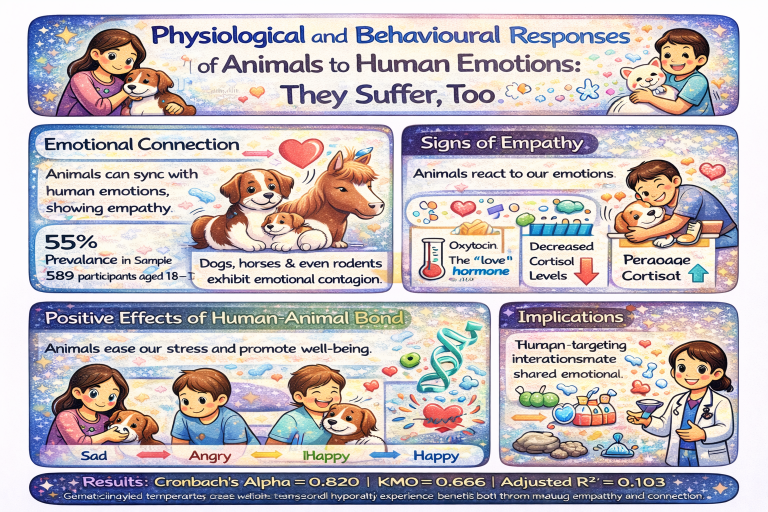
Disclaimer: This image was generated using artificial intelligence and may contain inaccuracies or inconsistencies. It is provided solely as a visual aid to facilitate the rapid understanding of the key ideas presented in this article. Our editorial team conducts ongoing reviews of AI-generated images and will correct or replace them whenever an error or discrepancy is identified or reported.
Authors:
Vincenzo
Mastronardi
, Monica
Calderaro
, Ionuț
Virgil Șerban
, Camilla
Fruet
, Beatrice
Marra
Abstract:Neurophysiological research highlights that emotion is a complex process with an adaptive function, that is crucial for survival. A fundamental element of this dynamic is emotional contagion, the automatic tendency to share and synchronise emotional states, which is not limited to the human species but is significantly evident in animals such as dogs, horses, and rodents, suggesting a profound interspecific connection. Human–Animal Interactions (HAI) generate measurable positive effects, classified as social, psychological, cognitive, and, most notably, physiological (Beetz et al., 2012; Barker & Wolen, 2008). The review by Beetz and colleagues (2012) confirms that contact with animals reduces stress (via decreased cortisol levels) and improves cardiovascular health. This well-being is largely mediated by the release of oxytocin, a key hormone for social bonding and relaxation, creating a positive feedback loop between species and confirming that emotional contagion is a shared neurobiological process.