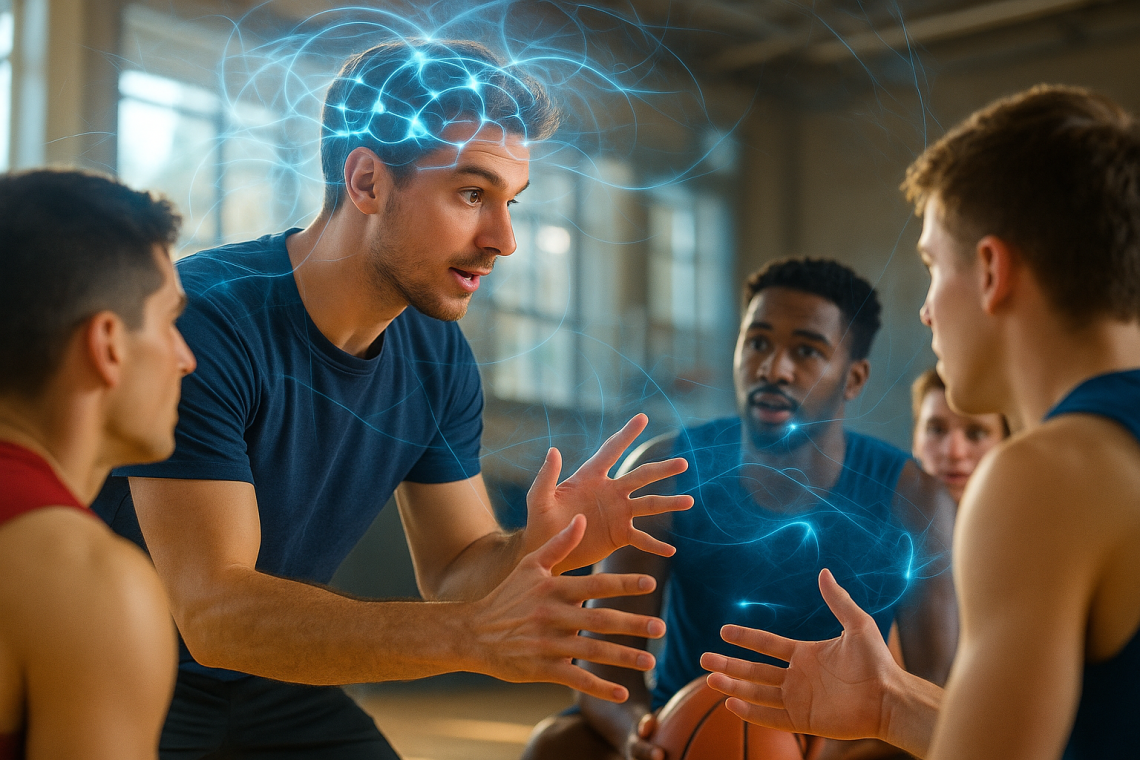
This post highlights an experimental pedagogical study that explores how neurophysiological principles can enhance communication training for future sports coaches. Conducted by a team of Ukrainian researchers, the study demonstrates how targeted educational interventions can improve communicative competence — a crucial skill for coaching, leadership, and athlete motivation.
Authors:
Yuliia Nenko – National University of Civil Defence of Ukraine (UA)
Serhii Medynskyi – Bohdan Khmelnytsky Melitopol State Pedagogical University, Ukraine (UA)
Borys Maksymchuk – Izmail State University of Humanities, Ukraine (UA)
Lidiia Lymarenko – Kherson State University, Ukraine (UA)
Larysa Rudenko – Lviv State University of Life Safety, State Emergency Service of Ukraine (UA)
Serhii Kharchenko – Sumy National Agrarian University, Ukraine (UA)
Andriy Kolomiets – Sumy National Agrarian University, Ukraine (UA)
Iryna Maksymchuk – Izmail State University of Humanities, Ukraine (UA)
Introduction
Effective communication is at the heart of successful coaching, influencing athlete performance, team cohesion, and psychological resilience. For future sports coaches, communication competence is not merely a social skill — it’s a neurophysiological process involving attention, perception, emotion regulation, and empathy.
This study, “Communication Training of Future Sports Coaches in the Context of Neurophysiological Patterns,” investigates how integrating neurophysiological mechanisms of communication into educational training can strengthen professional readiness among sports coaching students.
Purpose of the Study
The main goal of the research was to experimentally verify pedagogical conditions that improve communicative competence in future sports coaches by:
- Cultivating a value-based attitude toward professional communication;
- Implementing interactive learning methods grounded in neurophysiological understanding;
- Enhancing educational and methodological support;
- Promoting subject–subject interaction through simulated professional communication situations.
Methodology
The study involved 211 students, divided into:
- Experimental group (EG): 105 participants;
- Control group (CG): 106 participants.
All participants voluntarily took part in the research, which combined didactic innovation, interactive modeling, and neuropsychological diagnostics.
Key methods included:
- Development of author-designed educational materials tailored to communicative training;
- Simulation exercises replicating real-life coaching interactions;
- Diagnostic tools assessing emotional regulation, empathy, verbal/non-verbal skills, and attention control, reflecting neurophysiological patterns of communication.
Findings
After the formative experiment, the results showed significant improvement in communicative preparedness among students in the experimental group:
- High level of communicative readiness: +12.4%
- Average level: +13.3%
- Low level: −25.7%
These findings confirm that neuro-informed pedagogical conditions enhance professional communication skills by aligning teaching with the brain’s natural mechanisms of learning and adaptation.
Discussion
The results demonstrate that effective communication training requires more than role-play or rhetoric exercises — it demands attention to how the nervous system processes information, emotion, and feedback.
By integrating neurophysiological principles such as:
- Attention control (focus and concentration during interaction),
- Mirror neuron activation (empathy and imitation in communication),
- Emotional regulation (stress resilience and feedback management),
future coaches can achieve higher engagement, emotional intelligence, and behavioral adaptability.
This approach transforms communication from a surface skill into a neurologically grounded competency, essential for motivating athletes, managing conflict, and fostering team trust.
Conclusion
The experimental data provide strong evidence that neurophysiologically informed teaching strategies can significantly enhance communicative readiness among future sports coaches.
By focusing on autonomy, empathy, feedback responsiveness, and cognitive regulation, educators can train professionals capable of leading teams both intellectually and emotionally.
The study contributes to a growing body of work on neuroeducation, showing that understanding the brain’s communication mechanisms leads to more effective, sustainable learning outcomes in sports pedagogy and beyond.
See full paper here: https://doi.org/10.18662/brain/13.1/268.

