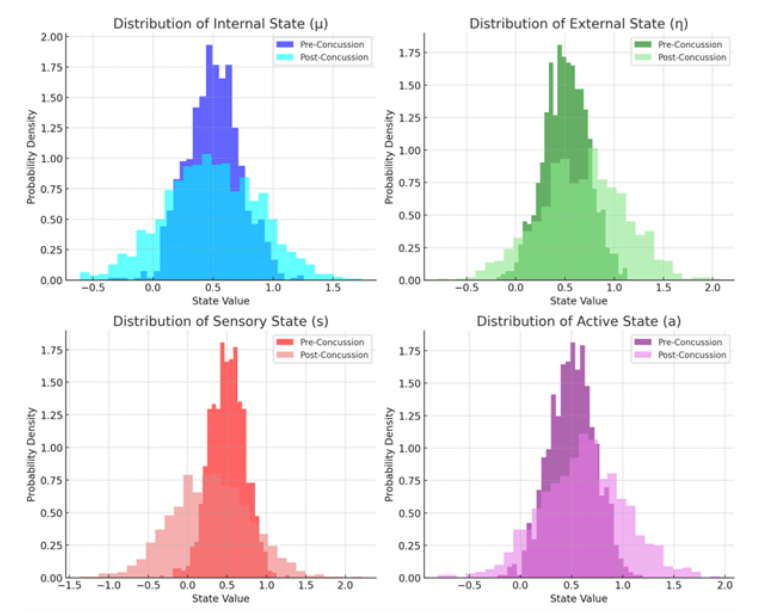
In Volume 15, Issue 3 (February 2026) of BRAIN. Broad Research in Artificial Intelligence and Neuroscience, we are pleased to present the article “Markov Blankets and Cognitive Dysfunction in mTBI: Insights from Simulation Models.”
This contribution stands out for its interdisciplinary integration of neuroscience, artificial intelligence, and computational modeling to address a clinically significant problem: the persistent cognitive deficits associated with mild Traumatic Brain Injury (mTBI). The authors propose an original perspective by applying the theoretical construct of Markov blankets to the pathophysiology of post-concussion cognitive dysfunction.
Through carefully designed simulation models, the study illustrates how neurometabolic disturbances and reduced neural connectivity following mTBI may disrupt the functional boundaries between internal and external brain states. By framing these disruptions in terms of predictive coding impairment, the paper offers a compelling explanation for delayed sensory processing, motor disturbances, and cognitive instability frequently observed in affected patients.
We consider this work particularly valuable for advancing conceptual bridges between theoretical neuroscience and clinical neurology. It not only deepens our understanding of how brain injuries affect cognitive architecture, but also suggests promising directions for future diagnostic frameworks and therapeutic strategies grounded in computational neuroscience.
We believe this article will be of significant interest to researchers and clinicians working at the intersection of brain science, artificial intelligence, and cognitive modeling.