BRAIN. Broad Research in Artificial Intelligence and Neuroscience | Vol. 17, Issue 2
Published: June 3, 2026.
DOI: http://dx.doi.org/10.70594/brain/17.2
In this issue, we include works originating from Europe, Asia, Africa, and North America. The authors represent academic institutions and research centers from Czech Republic, Ukraine, Lithuania, Romania, China, Kyrgystan, North Cyprus, Vietnam, Russia, South Korea, India, Italy, France, and United States of America.
The structure of the journal, organized into four major categories, reflects the breadth and emerging directions of contemporary research.
𝑨. 𝑨𝒓𝒕𝒊𝒇𝒊𝒄𝒊𝒂𝒍 𝑰𝒏𝒕𝒆𝒍𝒍𝒊𝒈𝒆𝒏𝒄𝒆, 𝑺𝒐𝒄𝒊𝒆𝒕𝒚 & 𝑫𝒊𝒈𝒊𝒕𝒂𝒍 𝑰𝒏𝒏𝒐𝒗𝒂𝒕𝒊𝒐𝒏
𝑩. 𝑵𝒆𝒖𝒓𝒐𝒔𝒄𝒊𝒆𝒏𝒄𝒆𝒔 𝒊𝒏 𝒕𝒉𝒆 𝑨𝒈𝒆 𝒐𝒇 𝑨𝑰
𝑪. 𝑩𝒊𝒐𝒎𝒆𝒅𝒊𝒄𝒂𝒍 & 𝑪𝒍𝒊𝒏𝒊𝒄𝒂𝒍 𝑨𝑰 𝑨𝒑𝒑𝒍𝒊𝒄𝒂𝒕𝒊𝒐𝒏𝒔
𝑫. 𝑷𝒔𝒚𝒄𝒉𝒐𝒍𝒐𝒈𝒚, 𝑷𝒔𝒚𝒄𝒉𝒐𝒕𝒉𝒆𝒓𝒂𝒑𝒚, 𝑪𝒍𝒊𝒏𝒊𝒄𝒂𝒍 𝑵𝒆𝒖𝒓𝒐𝒔𝒄𝒊𝒆𝒏𝒄𝒆 & 𝑴𝒆𝒏𝒕𝒂𝒍 𝑯𝒆𝒂𝒍𝒕𝒉
Disclaimer: These images were generated using artificial intelligence and may contain inaccuracies or inconsistencies.
They are provided solely as a visual aid to facilitate the rapid understanding of the key ideas presented
in these article. Our editorial team conducts ongoing reviews of AI-generated images and will correct
or replace them whenever an error or discrepancy is identified or reported.
Authors:
Bogdan
Patrut
Abstract:
BRAIN-Broad Research in Artificial Intelligence and Neuroscience aims to create links between researchers from apparently different scientific fields, such as Computer Science and Neurology. In fact, many topics, such as Artificial Intelligence, Cognitive Sciences, and
Neurosciences, can intersect in the study of the brain and its intelligence functions.
Our journal contains peer-reviewed articles. These should be original and unpublished works by the authors. The peer review process is conducted anonymously, with reviewers being
well-recognised scientists from our scientific board, as well as independent experts.
Some innovative young researchers from around the world had the idea to edit and publish in the BRAIN journal in order to make an agora of an interdisciplinary study of the brain. Young scientists and seniors in artificial intelligence, cognitive sciences, and neurology fields are expected to publish their original works in our journal.
BRAIN Journal is an open-source journal, dedicated to promoting the latest scientific news in the field of multidisciplinary studies of the brain, consciousness, and their connection with artificial intelligence.
BRAIN Journal supports research and novelty in health, medicine, and the life sciences.
Artificial Intelligence, Society & Digital Innovation
Disclaimer: This image was generated using artificial intelligence and may contain inaccuracies or inconsistencies.
It is provided solely as a visual aid to facilitate the rapid understanding of the key ideas presented
in this article. Our editorial team conducts ongoing reviews of AI-generated images and will correct
or replace them whenever an error or discrepancy is identified or reported.
Authors:
Alois
Daněk
Abstract:
Educational work in residential childcare unfolds in environments marked by instability, diverse life histories of children, and the need to balance educational aims with everyday caregiving responsibilities. Professionals in these settings must translate heterogeneous sources of information into meaningful educational and developmental activities. Institutional rules, cultural and linguistic contexts, health-related constraints, and disrupted educational trajectories often intersect in ways that require continuous interpretation and adaptation. Artificial intelligence has recently attracted attention as a tool capable of assisting educators in organising complex information and supporting the preparation of individualised activities. This qualitative study employs a multiple case study design examining practical interactions between educators and an AI-based conversational system during educational planning in residential childcare. The analysis draws on several practice-oriented cases reflecting different developmental and social contexts, including cultural diversity, gender identity sensitivity, health-related dietary restrictions, and situations involving children without significant developmental difficulties. In these cases, AI-assisted tools were used to support tasks such as language mediation, interpretation of cultural frameworks, identification of potential tensions between institutional expectations and children’s backgrounds, and the preparation of structured educational activities. The findings suggest that artificial intelligence can assist educators in synthesising contextual information and structuring pedagogical planning in demanding institutional environments. When used within clear professional and ethical boundaries, AI may strengthen the capacity of educators to respond to the diverse needs of children exposed to risks of social exclusion.
Disclaimer: This image was generated using artificial intelligence and may contain inaccuracies or inconsistencies.
It is provided solely as a visual aid to facilitate the rapid understanding of the key ideas presented
in this article. Our editorial team conducts ongoing reviews of AI-generated images and will correct
or replace them whenever an error or discrepancy is identified or reported.
Authors:
Vasyl
Pikiniar
, Gennadii
Riabtsev
, Valerii
Tertychka
, Oleksandr
Kiliievych
, Anna
Karpyn
, Lesya
Ilchenko Syuyva
Abstract:
This article explores the integration of intelligent transportation systems (ITS). Smart management of urban resources, including energy, water, and other critical systems, is a tool for enhancing economic efficiency in cities. The article also discusses how digital platforms for territorial governance and the automation of administrative processes create conditions for more transparent and efficient administration, while improving citizen engagement. Special attention is given to the issue of cybersecurity and the protection of digital systems, which ensure the stability and reliability of infrastructure. The article also explores the role of digital technologies and artificial intelligence (AI) in the planning, development, and modernisation of territories and infrastructure. It examines the possibilities of integrating digital governance into urban development, transport, energy, communications, and environmental monitoring. The potential of AI is analysed in terms of processing large volumes of data, forecasting socio-economic processes, optimising resource use, and enhancing the efficiency of decision-making. Particular attention is given to the concepts of “smart cities,” digital transformation of regions, and decentralised governance platforms. The article outlines the key advantages, risks, and ethical challenges associated with the implementation of AI in spatial planning and infrastructure renewal.
Disclaimer: This image was generated using artificial intelligence and may contain inaccuracies or inconsistencies.
It is provided solely as a visual aid to facilitate the rapid understanding of the key ideas presented
in this article. Our editorial team conducts ongoing reviews of AI-generated images and will correct
or replace them whenever an error or discrepancy is identified or reported.
Authors:
Ioana
Florina Coita
, Laura
Filip
, Marius
Vlad Pop
Abstract:
This study examines the role of artificial intelligence (AI) in accounting and auditing through a two-stage design that combines bibliometric analysis with an exploratory comparative evaluation of AI-based solutions. The current literature shows a fragmentation between conceptual reviews and vendor-driven case descriptions, while a structured cross-cutting view of how AI technologies are actually integrated into financial workflows, and of how this integration differs by entity size and by the trustworthiness profile of the underlying systems, is still limited. The bibliometric component examines 729 peer-reviewed articles indexed in the Web of Science database (post-2015), processed using VOSviewer for keyword co-occurrence analysis. The exploratory component evaluates ten AI-based solutions against a framework that covers AI subset, functional category, target entity size, audit relevance, and disclosed architectural transparency. The bibliometric results indicate that the field is organised around six dominant terms (artificial intelligence, deep learning, machine learning, performance, classification, and model), reflecting a strong methodological convergence on supervised and deep-learning approaches. The exploratory results show that current AI offerings cluster into three functional categories (process automation, analytics and business intelligence, and predictive or audit-oriented systems), with adoption patterns that differ by company size: small and medium-sized entities (SMEs) gain the most benefits from process automation and optical character recognition, while large entities derive higher value from full-population analytics and ensemble-based anomaly detection. The study contributes a replicable methodological pipeline that links bibliometric mapping with applied tool evaluation, a comparative framework that addresses the often undisclosed AI architecture behind vendor black-box tools, and a discussion of trustworthiness limits, including the constitutive (non-error) nature of probabilistic AI failures, with implications for audit assurance and emerging regulatory frameworks such as the EU AI Act and ISO/IEC 42001.
Disclaimer: This image was generated using artificial intelligence and may contain inaccuracies or inconsistencies.
It is provided solely as a visual aid to facilitate the rapid understanding of the key ideas presented
in this article. Our editorial team conducts ongoing reviews of AI-generated images and will correct
or replace them whenever an error or discrepancy is identified or reported.
Authors:
Dmytro
Zubov
, Eran
Edirisinghe
, Sam
Goundar
, Azamat
Azarov
, Andrey
Kupin
, Deepak
Kumar Jain
, Aruuke
Sanzharbekova
Abstract:
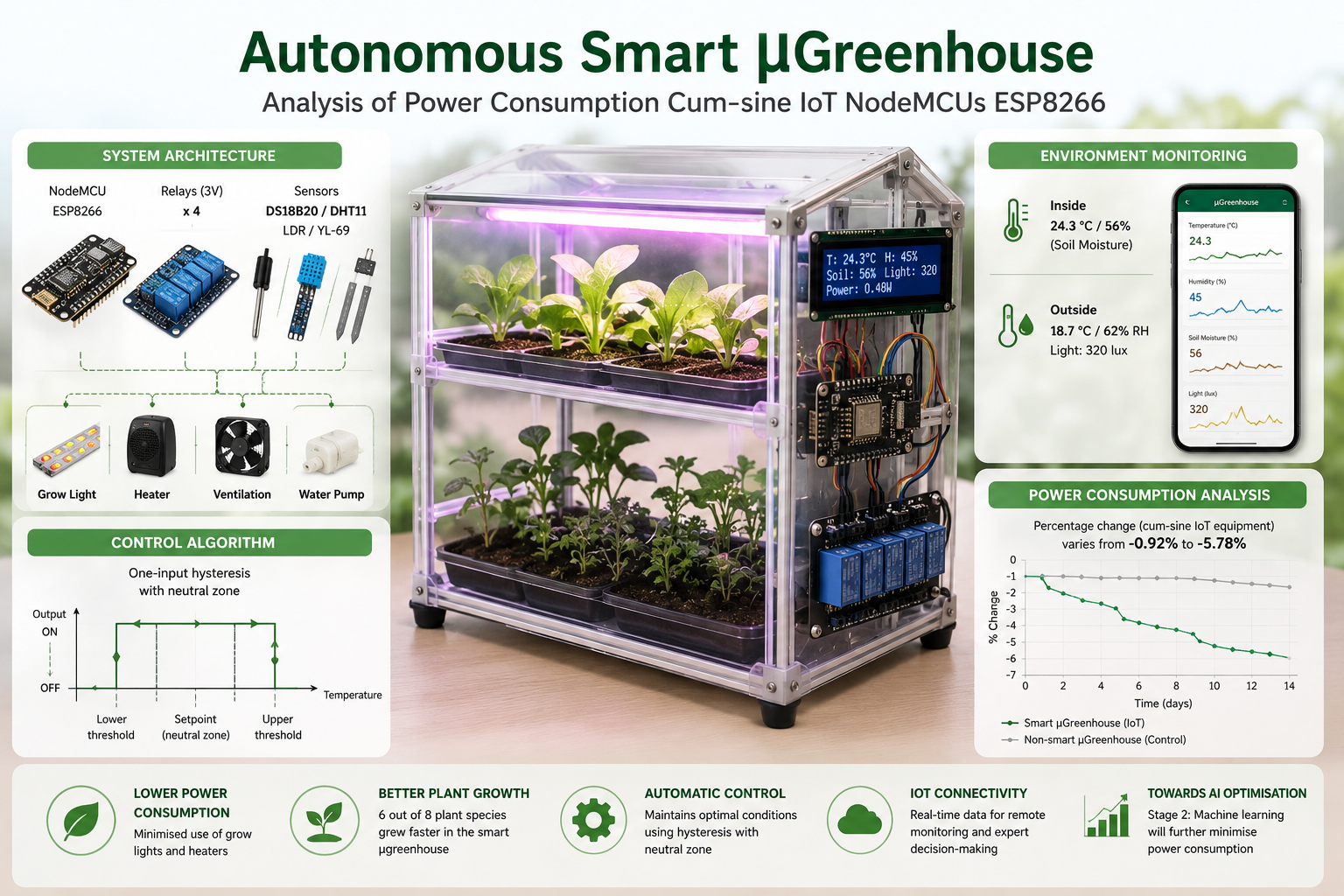
This study presents the results of the first stage of the “COMMON Initiative: Climate-Smart Agriculture Demonstration Plot” project at the University of Central Asia – developing an autonomous smart micro-greenhouse with low-cost IoT equipment (two NodeMCU ESP8266 boards, four 3V relays, and sensors DS18B20/DHT11/LDR/YL-69) and analysing its power consumption in relation to the IoT component. The experiment with eight commonly cultivated plant species (dill, garden strawberry, lettuce, stock, basil, parsley, sorrel, and spinach) in two identical μgreenhouses of size 30x 26x 20cm each (testbed located at the elevation of 800m – Bishkek, Kyrgyz Republic) demonstrated that the power consumption is less with IoT equipment because the use of plant grow lights and heaters is minimised. Observational findings indicate that six plants (except basil and garden strawberry) grew faster in a smart μgreenhouse. The control algorithm employs one-input hysteresis with a neutral zone to automatically regulate the light and temperature inside a μgreenhouse. The percentage change for two time series (cum-sine IoT equipment) varies from -0.92% to -5.78% during the experiment. The data on temperature/soil moisture inside and the temperature/humidity/light intensity outside a μgreenhouse are provided to the human expert to support the decision-making process on plants’ watering. In the second stage of this project, a machine learning algorithm will be employed to further minimise power consumption.
Disclaimer: This image was generated using artificial intelligence and may contain inaccuracies or inconsistencies.
It is provided solely as a visual aid to facilitate the rapid understanding of the key ideas presented
in this article. Our editorial team conducts ongoing reviews of AI-generated images and will correct
or replace them whenever an error or discrepancy is identified or reported.
Authors:
İpek
Maaşoğlu
Abstract:
This paper examines the attitudes of university students at Near East University, Northern Cyprus, regarding autonomous learning through the application of the flipped classroom model. A mixed method research design was employed, and quantitative data were collected from 110 undergraduate students using a structured questionnaire while qualitative data were obtained through semi-structured interviews held with 10 students with the purpose of looking into the perceived challenges regarding flipped learning and potential solutions. Quantitative findings revealed that students displayed a positive attitude in general towards using flipped classrooms in the learning process (mean = 3.67). The results of an independent samples t-test showed that there is no statistical difference between students’ attitudes based gender. However, significant differences were found according to academic grade, with students in upper grades having developed a more positive attitude towards flipped learning compared to students in lower grades. Multiple regression analysis showed that self-regulation was the strongest predictor of positive attitudes (beta = .425, p < .001), followed by technological accessibility and instructional support. Qualitative findings also supported these findings emphasising that increased flexibility, improved student engagement and the promotion of self-determined learning are the basic benefits of the flipped classroom model. In this study, these findings were examined within a neuro-pedagogical framework, and self-regulation skills were linked to prefrontal executive functions. Despite these advantages, students reported challenges including limited access to technological resources, unstable internet connections, and inadequate digital skills. The findings indicate that when technological infrastructure and pedagogical support are adequate, the flipped classroom model can effectively promote autonomous learning in higher education.
Disclaimer: This image was generated using artificial intelligence and may contain inaccuracies or inconsistencies.
It is provided solely as a visual aid to facilitate the rapid understanding of the key ideas presented
in this article. Our editorial team conducts ongoing reviews of AI-generated images and will correct
or replace them whenever an error or discrepancy is identified or reported.
Authors:
Nedime
Karasel
, Zehra
Altınay
, Muhammet
Berigel
Abstract:
This study examines and deeply investigates how university students define and negotiate the ethical use of artificial intelligence in higher education within different pedagogical contexts. Focusing on Management Information Systems students at Karadeniz Technical University, the study explores how artificial intelligence is used in technical, theoretical, and project-based courses and how ethical boundaries are shaped based on usage aim. Using a qualitative case study design, data were collected through semi-structured interviews with undergraduate students and analysed using reflexive thematic analysis. The findings show that students do not evaluate the ethical use of artificial intelligence through fixed rules or institutional prohibitions, but rather through context-sensitive judgements based on learning goals, personal effort, responsibility, and course type. Artificial intelligence is mainly positioned as a technical assistant in programming-related courses, as a cognitive support tool in theoretical courses, and as a creative partner in project-based learning. Ethical concerns emerge when artificial intelligence replaces students’ own thinking, creativity, or responsibility. The chapter concludes that the ethical use of artificial intelligence in higher education should be addressed through flexible, pedagogically informed, and student-centred approaches rather than rigid policies, highlighting the importance of shared responsibility among students, instructors, and institutions.
Disclaimer: This image was generated using artificial intelligence and may contain inaccuracies or inconsistencies.
It is provided solely as a visual aid to facilitate the rapid understanding of the key ideas presented
in this article. Our editorial team conducts ongoing reviews of AI-generated images and will correct
or replace them whenever an error or discrepancy is identified or reported.
Authors:
Pham
Thi Lien
, Nguyen
Thu Huong
, Nguyen
The Long
Abstract:
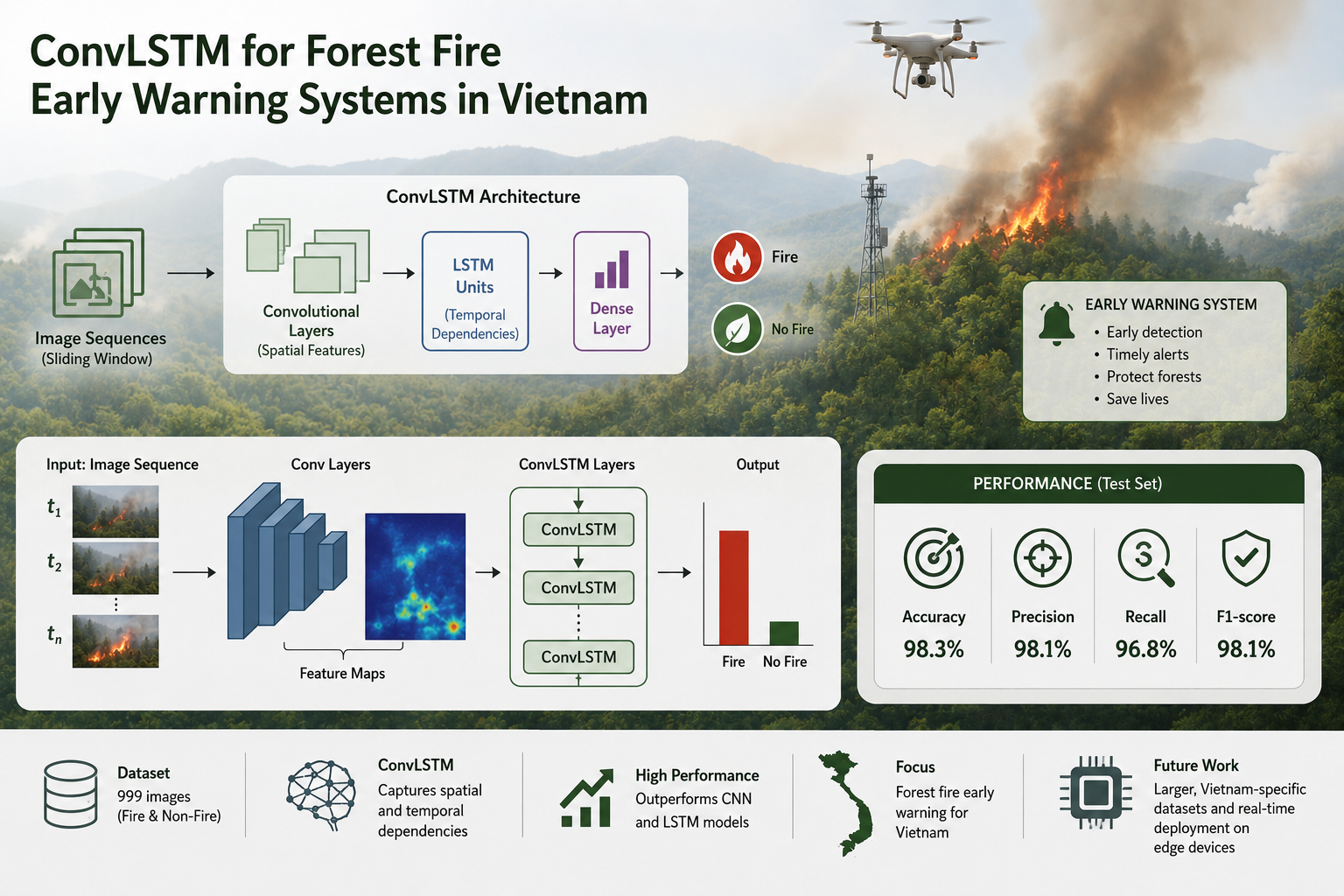
Forest fires pose a significant threat to Viet Nam, particularly during the dry season. This study investigates a ConvLSTM-based deep learning architecture for early fire detection. Unlike single-frame or threshold-based methods, ConvLSTM jointly models spatial features (via convolutional layers) and temporal dependencies (via LSTM units). We utilize a publicly available dataset of 999 fire and non-fire images. To apply ConvLSTM to static images, we construct temporal sequences using a sliding window over augmented variants. The proposed model achieves 98.3% accuracy, 98.1% precision, 96.8% recall, and a 98.1% F1-score on the test set. These results are compared with standalone CNN and LSTM models. Limitations include the limited dataset size, class imbalance (75% fire images), and the lack of Viet Nam-specific data. Future work should focus on larger, region-specific datasets and real-time deployment on edge devices.
Disclaimer: This image was generated using artificial intelligence and may contain inaccuracies or inconsistencies.
It is provided solely as a visual aid to facilitate the rapid understanding of the key ideas presented
in this article. Our editorial team conducts ongoing reviews of AI-generated images and will correct
or replace them whenever an error or discrepancy is identified or reported.
Authors:
Denisa-Daniela
Frimu-Pascu
, Ciprian
Dobre
, Edmond
Gabriel Olteanu
Abstract:
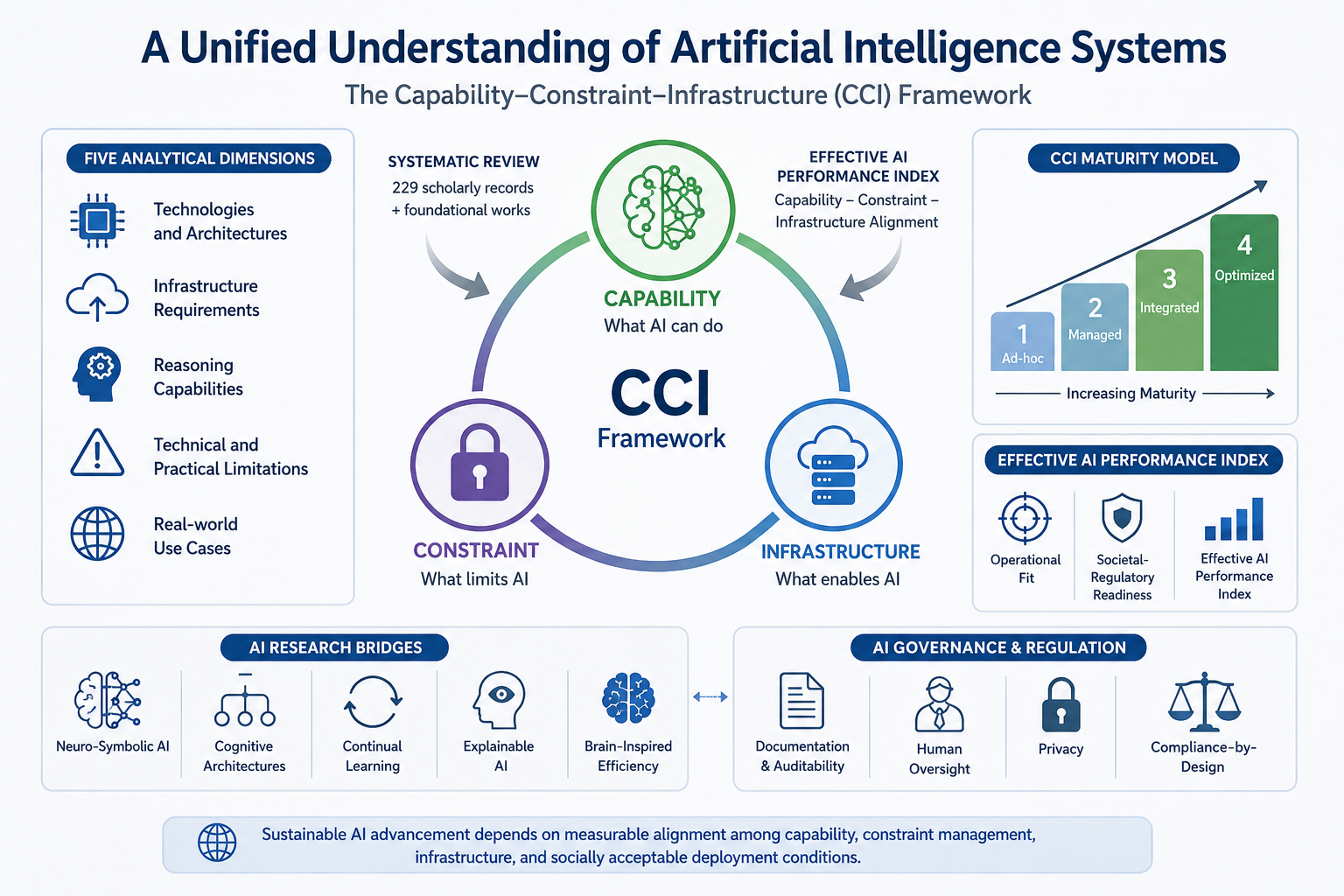
This systematic review synthesises 229 scholarly records on contemporary artificial intelligence (AI), complemented by selected foundational works needed for theoretical interpretation. The evidence is organised across five analytical dimensions: (1) technologies and architectures, (2) infrastructure requirements, (3) reasoning capabilities, (4) technical and practical limitations, and (5) real-world use cases. The review follows PRISMA-aligned reporting principles and analyses the literature through an operational Capability–Constraint–Infrastructure (CCI) framework. The framework defines normalised component scores for capability, constraint burden, infrastructure adequacy, operational fit, and societal-regulatory readiness, and combines them in an effective AI performance index. This quantitative interpretation is complemented by a four-level CCI maturity model with explicit threshold logic. The synthesis shows that current AI progress is driven by substantial gains in perception, generation, and narrow-task performance, but remains constrained by reasoning limitations, catastrophic forgetting, interpretability challenges, data dependence, and increasing computational cost. To align the analysis with neuroscience-oriented AI research, the review examines neuro-symbolic AI, cognitive architectures, continual learning, and biologically inspired efficiency as bridges between engineering practice and brain-inspired intelligence. A legal-governance perspective is incorporated by treating documentation, auditability, privacy, human oversight, and compliance-by-design as practical ingredients of deployment readiness in regulated domains. Overall, the paper argues that sustainable AI advancement depends less on scale alone and more on measurable alignment among capability, constraint management, infrastructure, and socially acceptable deployment conditions.
Disclaimer: This image was generated using artificial intelligence and may contain inaccuracies or inconsistencies.
It is provided solely as a visual aid to facilitate the rapid understanding of the key ideas presented
in this article. Our editorial team conducts ongoing reviews of AI-generated images and will correct
or replace them whenever an error or discrepancy is identified or reported.
Authors:
Liviana
Andreea Nimineț
, Andreea
Feraru-Prepeliță
, Valer
Nimineț
Abstract:
Artificial intelligence (AI) and neuroscience technologies are transforming the workplace at an accelerating pace, offering significant gains in operational efficiency, talent identification, and workforce analytics, while simultaneously generating profound ethical, legal, and social risks. This paper examines their impact on human resources (HR) management from a rigorous interdisciplinary perspective, integrating recent statistical data from Romania and European Union member states with insights from organisational psychology, applied ethics, and machine-learning theory. We analyse concrete applications in recruitment, performance evaluation, diversity management, and employee well-being, providing empirical data that illuminate prevailing trends and disparities. Key findings include: only 13.5% of EU enterprises had formally adopted AI by 2024, with Romania recording a mere 3.1% adoption rate (Eurostat, 2025), contrasted with a striking ground-level reality in which approximately 35% of Romanian office workers already use AI tools regularly (Romania Journal, 2024). This divergence between formal enterprise adoption and informal employee use is conceptualised as a complex governance problem-rather than a mere technological lag-situated at the intersection of organisational psychology, applied ethics, and machine-learning theory, a unified framing that underlies the entire analytical framework of this paper. We systematically identify ethical risks - algorithmic bias in automated hiring (exemplified by Amazon’s now-discontinued recruiting engine that penalised women’s resumes), covert neuro-surveillance via wearable EEG headsets, and opacity in AI-driven performance appraisal - and ground mitigation strategies in both the EU AI Act (2024) and the emerging Neurotechnology Framework. As a novel contribution, we propose and elaborate a mathematical optimisation model in which organisations maximise a utility function combining productivity gains, bias penalties, and privacy risk costs, subject to formal fairness (equal opportunity) and neurorights constraints. The model, solved via Lagrangian methods, is demonstrated through a detailed case study of a hypothetical Romanian technology firm. This structured, data-driven, ethically grounded approach offers concrete guidance for HR professionals, corporate governance bodies, and policymakers seeking to deploy AI and neurotechnology responsibly and in compliance with EU law.
Disclaimer: This image was generated using artificial intelligence and may contain inaccuracies or inconsistencies.
It is provided solely as a visual aid to facilitate the rapid understanding of the key ideas presented
in this article. Our editorial team conducts ongoing reviews of AI-generated images and will correct
or replace them whenever an error or discrepancy is identified or reported.
Authors:
Virgil
Constantin Fătu
, Dan
Gabriel Sîmbotin
Abstract:
This article examines the complex relationship between the rapid development of Smart Cities and the psychosocial and ethical implications of implementing AI and IoT technologies. While smart cities promise enhanced efficiency, sustainability, and quality of life through advanced connectivity and data collection, we can argue that this technological focus often neglects crucial psycho-social and ethical challenges. It was identified the main technological problems such as are the rapid pace of technological change, significant data privacy and security vulnerabilities, problems with system interoperability, and the vendor lock-in. Even the pursuit of technological efficiency can have significant negative psycho-social impacts on residents. Efficiency and stress (constant connectivity and the push for algorithmic efficiency can exponentially increase the rhythm of life, leading to higher levels of stress and anxiety among inhabitants), digital divide and social exclusion (digital systems often favor young, educated, and high-income individuals with high digital literacy. Vulnerable groups, such as the elderly, people with disabilities, or migrants who do not speak the local language, risk being excluded from essential services, becoming "invisible people" within the urban landscape), loss of cognitive abilities and autonomy (dependence on technology can lead to cognitive offloading and digital amnesia, progressively limiting critical thinking and complex problem-solving skills) and filter bubbles and echo chambers (search systems and applications often create "filter bubbles" and "echo chambers" that isolate users within information confirming their existing beliefs, limiting access to diverse perspectives and potentially leading to conceptual radicalization ) are the most important negative effects. In the last part, it was underlined the ethical principle, based on kantian deonthology: "First, the Human being". The smart cities must prioritize human well-being and ethical behavior such as inclusivity, equity, and transparency. In conclusion, we advocate for a "Social Smart" approach, arguing that technology should act as an "infrastructure of empathy" rather than an end in itself.
Neuroscience in the Age of Artificial Intelligence
Disclaimer: This image was generated using artificial intelligence and may contain inaccuracies or inconsistencies.
It is provided solely as a visual aid to facilitate the rapid understanding of the key ideas presented
in this article. Our editorial team conducts ongoing reviews of AI-generated images and will correct
or replace them whenever an error or discrepancy is identified or reported.
Authors:
Viktoriia
Ragozina
, Iryna
Maidaniuk
, Viktoriia
Zviekova
, Iryna
Hrynchuk
, Oksana
Komarovska
, Oksana
Huminska
Abstract:
This article is the first in international discourse to explore the evolving role of Ukrainian music education in new military and political conditions. It aims to examine global trends in music education for youth and describe the unique context in Ukraine. The article proposes a neuropedagogical model of musical and patriotic education, incorporating elements of music therapy, along with general methodical recommendations. As researchers and ethnic Ukrainians, the authors can observe the growing neurosocial distinctiveness of Ukrainian identity. This identity is reflected in non-verbal, authentic narratives such as music, dance, and cultural symbols. While these expressions are largely suggestive and reflective, they contribute to a broader, holistic perception. The authors have attempted to apply this perception to the sensitive field of music education, especially given its current emotionally charged and patriotically heightened state. Research methods rely on descriptive, reflective, analytical-synthetic, and modelling approaches (both pedagogical and neuroscientific), which have led to several key findings. The first is the confirmation of absolute heteromorphism in the values and goals of patriotic education across different geopolitical regions. The authors also emphasise the special significance of such education in areas experiencing national uncertainty or military-political conflict. Additionally, the authors used a personal-professional anxiety scale for music teachers. The article shows that educational environments in Ukraine are open and highly sensitive. Their participants also display a strong tendency towards reflection. On this basis, the authors of the article have developed two models: a relatively closed, multi-vector model of musical and patriotic education and an open neuropedagogical model intended for use in the current military-political context.
Disclaimer: This image was generated using artificial intelligence and may contain inaccuracies or inconsistencies.
It is provided solely as a visual aid to facilitate the rapid understanding of the key ideas presented
in this article. Our editorial team conducts ongoing reviews of AI-generated images and will correct
or replace them whenever an error or discrepancy is identified or reported.
Authors:
T.
Janani
, A.
Leo
, J.
James Alaguraja
, Ben
M Jebin
, Fulvia
Chiampo
Abstract:
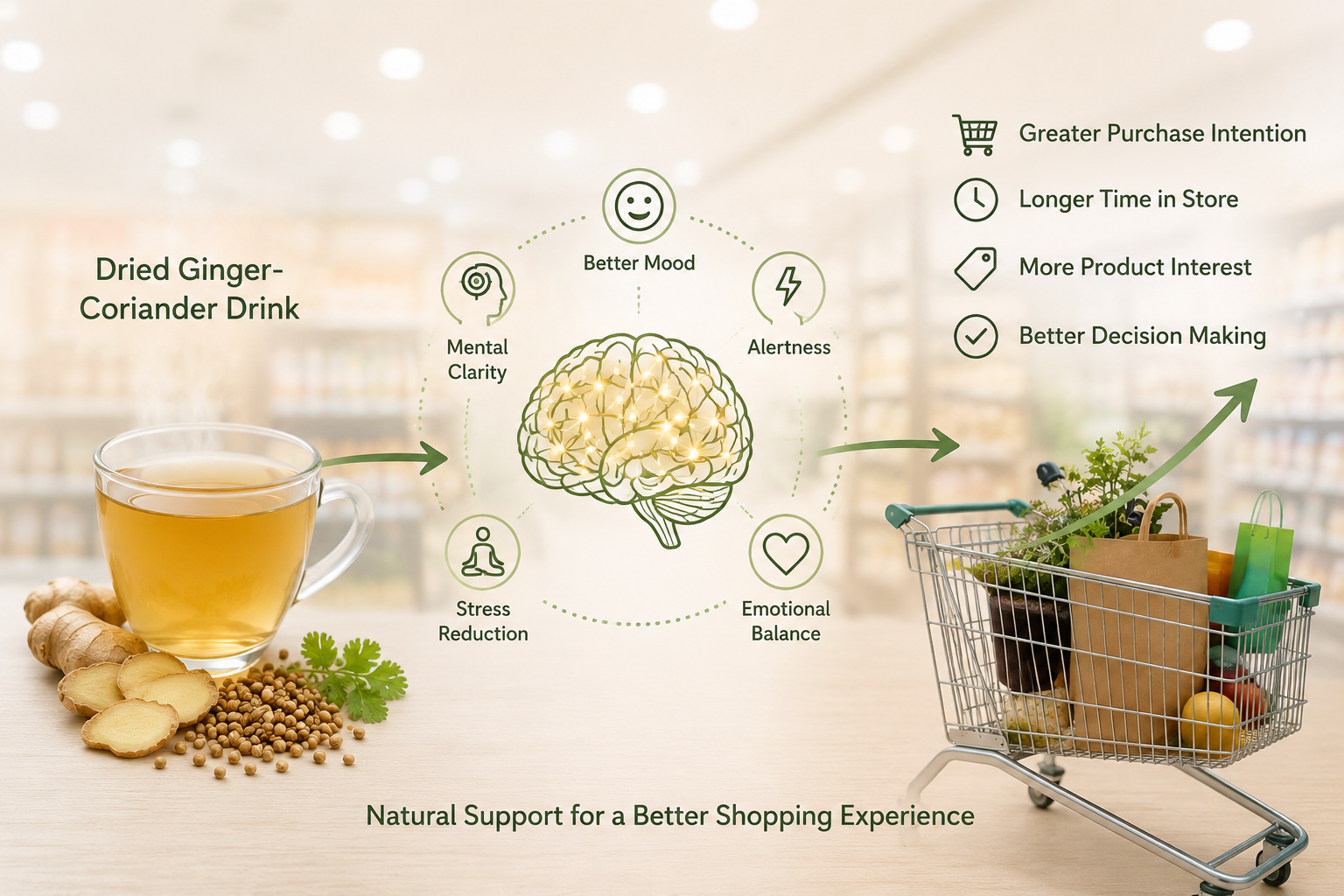
Retail settings are often known to subject consumers to cognitive overburden and mental exhaustion, and therefore produce a negative effect on mood, the allocation of attention, and decision-making. In light of the present-day neuromarketing and food neuroscience, beverages naturally prepared and supplemented with bioactive phytochemicals can be used to influence psychophysiological processes which can be associated with emotional balance, cognitive alertness and stress reduction. According to this school of thought, these nutritive interventions may promote a more balanced affective states in shoppers, which may result in a better quality of their retail experience and the soundness of their buying decisions. To test this hypothesis empirically, the current study investigated the psychological and behavioural effects of a traditionally made drink of Dried Ginger-Coriander on the affective state and decision-making behaviour of consumers in a realistic retail environment. The quantitative experimental approach was used, and 300 consumers who consumed the Dried Ginger-Coriander drink during the shopping process served as the study sample. The subjects’ self-reported responses regarding mood, alertness, mental concentration, stress alleviation, interest in the shopping environment, and purchase intention were recorded on a five-point Likert scale. The statistical analysis was performed with the help of SPSS, and the descriptive statistics and one-way Analysis of Variance (ANOVA) were used to verify the proposed hypotheses. The findings showed statistically significant improvements in those who drank the beverage and included improvements in the perceived energy, alertness, and clarity of mind, as well as a decrease in stress and enjoyment of the shopping experience (p < 0.05). The behavioural outcomes also revealed increased product interest, an increased length of time spent at the store and a greater purchase intention. The combination of these results shows that Dried Ginger-Coriander drink has a positive effect on the cognitive states and consumer decision-making behaviour, which confirms its potential as an ethical, natural intervention to promote consumer well-being and enhance deeper engagement in retail settings.
Disclaimer: This image was generated using artificial intelligence and may contain inaccuracies or inconsistencies.
It is provided solely as a visual aid to facilitate the rapid understanding of the key ideas presented
in this article. Our editorial team conducts ongoing reviews of AI-generated images and will correct
or replace them whenever an error or discrepancy is identified or reported.
Authors:
Oksana
Yashyna
, Denys
Makaryshkin
, Yurii
Forkun
, Roman
Kustovskyi
, Vitalii
Sorokolit
Abstract:
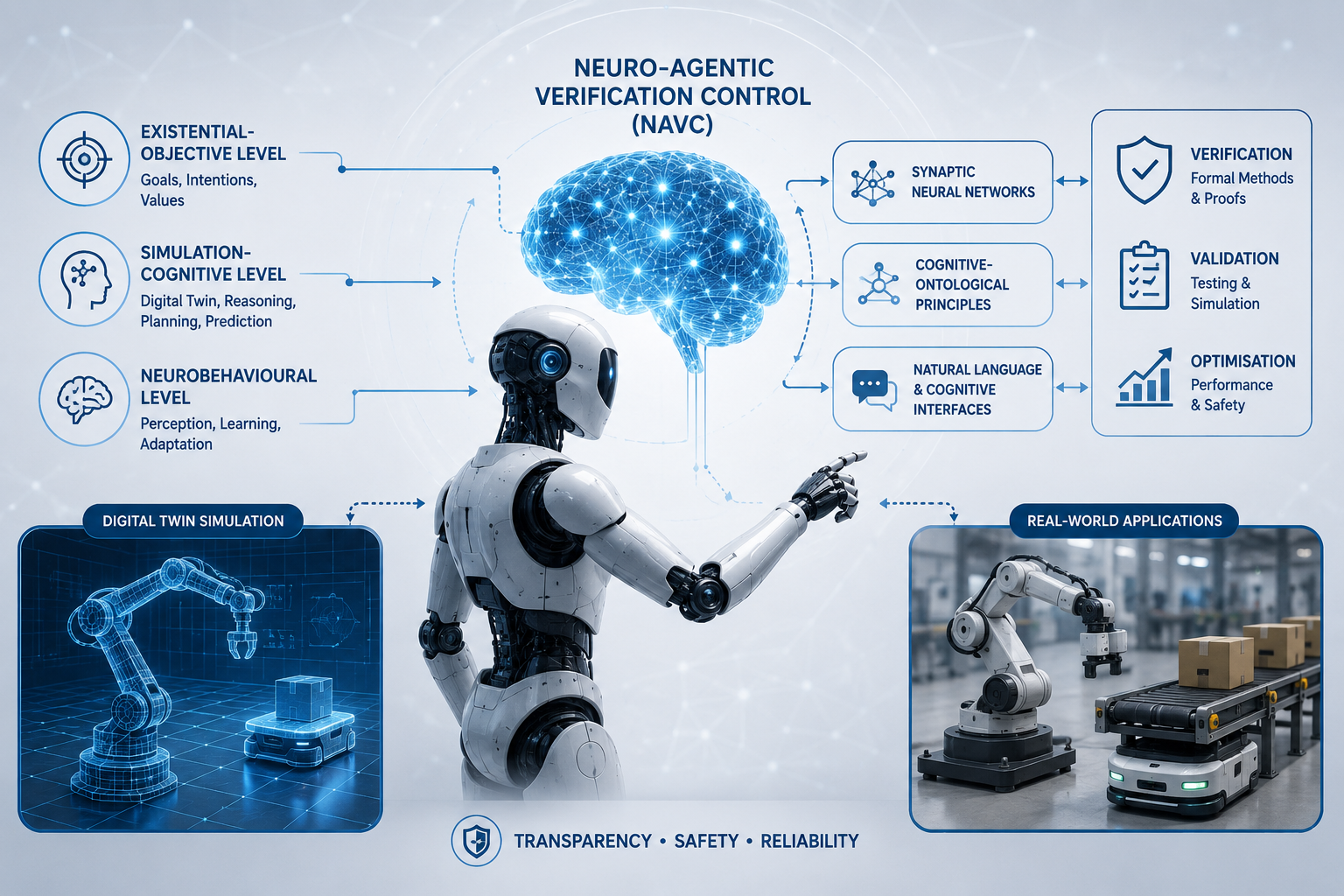
Using artificial intelligence and the latest developments in neuroscience, the authors investigate the challenges in improving the efficiency of agent-oriented control in robotic systems. The goal is to develop a theoretical concept taking into account the existential-objective, simulation-cognitive, and neurobehavioural levels of control in agent-oriented systems. This will lay the groundwork for improving the hardware and software of such agents. The article employs methods of system-analytical and comparative analysis, neuro-oriented modelling of control concepts, and formal verification approaches. The research results in the creation of an original theoretical foundation for Neuro-Agentic Verification Control (NAVC), which combines digital twin simulation, synaptic neural networks, and cognitive-ontological principles. The authors paid significant attention to the integration of formal interfaces and natural language, and other cognitive systems. Finally, the authors provide formal proofs to demonstrate the validity of the key components of the proposed architecture. The article’s international significance is determined by the relevance of addressing challenges related to transparency, safety, and reliability of autonomous robotic systems in critical domains, including transportation, industry, and defence.
Disclaimer: This image was generated using artificial intelligence and may contain inaccuracies or inconsistencies.
It is provided solely as a visual aid to facilitate the rapid understanding of the key ideas presented
in this article. Our editorial team conducts ongoing reviews of AI-generated images and will correct
or replace them whenever an error or discrepancy is identified or reported.
Authors:
Uliana
Hudyma
, Nataliia
Pavlova
, Dmytro
Kuiavets
, Viktoriia
Apukhtina
, Zorislav
Makarov
, Maksym
Pshenychnyi
Abstract:
The use of e-learning in higher education institutions (HEIs) enables the development of new educational models. These models help ensure that teaching remains responsive to ongoing scientific and technological progress. It also enriches and diversifies instruction across different disciplines. E-learning enhances the didactic potential of current instructional tools. It fosters the adaptation of teaching content, forms, and methods to meet educational demands. Special attention is given to technologies that stimulate neuroplasticity, lower stress levels, and support effective teacher–student interaction. The findings are significant for improving the overall effectiveness of e-learning and for strengthening students’ cognitive skills and emotional resilience. They create optimal conditions for developing students’ intellectual potential in an increasingly digitalised educational environment. Finally, an empirical study was conducted to examine the attitudes of e-learning users in HEIs towards the digitalisation of education.
Disclaimer: This image was generated using artificial intelligence and may contain inaccuracies or inconsistencies.
It is provided solely as a visual aid to facilitate the rapid understanding of the key ideas presented
in this article. Our editorial team conducts ongoing reviews of AI-generated images and will correct
or replace them whenever an error or discrepancy is identified or reported.
Authors:
Dipmala
Salunke
, Yash
Bandal
, Alexander
Zakharov
, Natalia
Romanchuk
, Maria
Sergeeva
, Yuliya
Komarova
, Igor
Shirolapov
, D.
Jude Hemanth
Abstract:
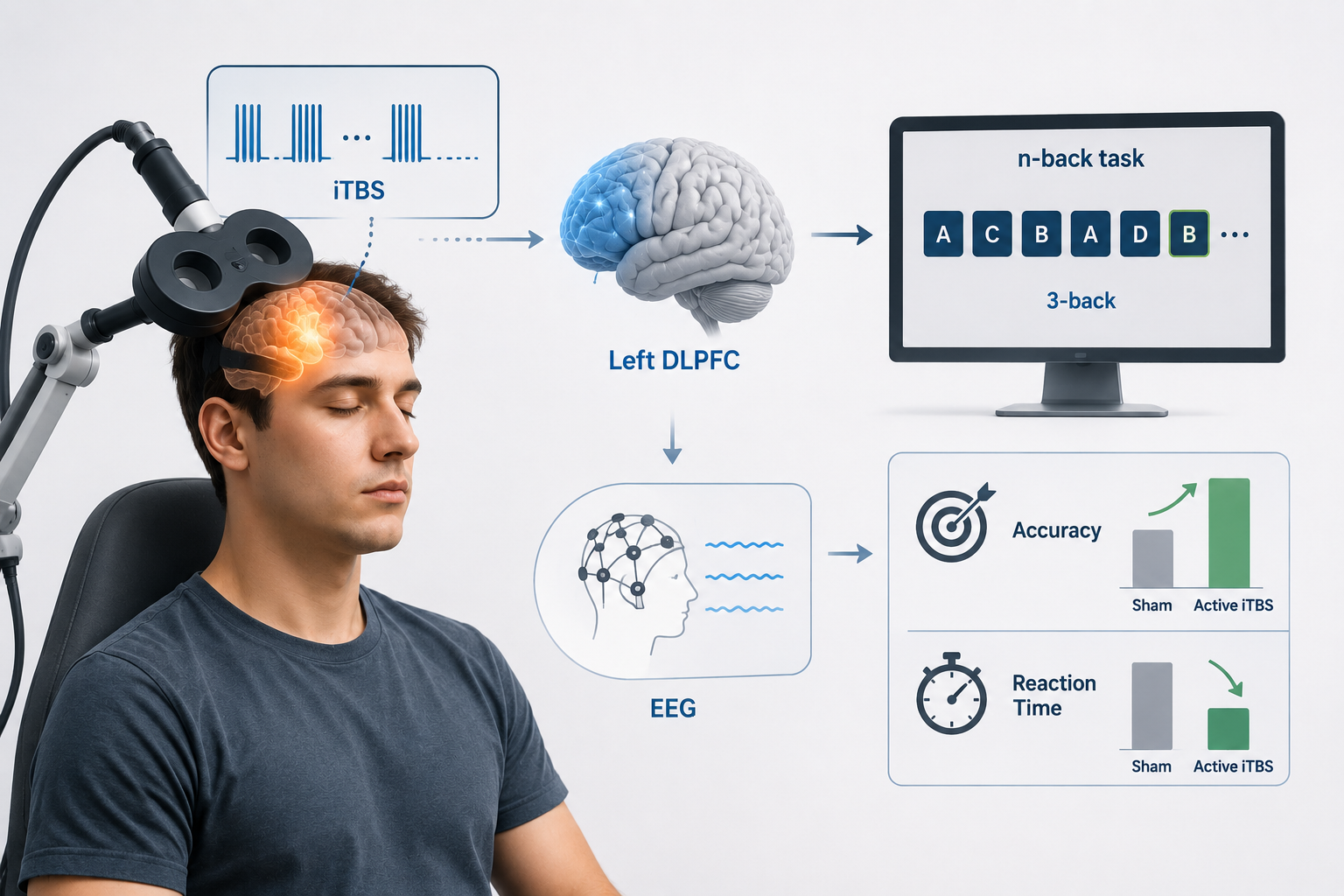
Transcranial magnetic stimulation (TMS), especially intermittent theta burst stimulation (iTBS), has been extensively studied to improve brain function. Its ability to enhance cognitive functions, particularly working memory, has been widely investigated. This study aims to analyse the effects of a single session of iTBS applied to the left dorsolateral prefrontal cortex (DLPFC) on cognitive test performance, electroencephalography (EEG) correlates of working memory in healthy young subjects, and to assess accuracy and reaction time. A group of 14 healthy young adults aged between 19 and 23 years participated in the study. The subjects were arbitrarily distributed into two groups: with active (N=7) and sham (N=7) iTBS. The active 3-back test showed a positive impact on working memory performance with an increasing accuracy and with reduced average reaction time after 30 minutes of TMS session. It is concluded that iTBS over the DLPFC was responsible for enhancing working memory performance in healthy young adults, based on an observation that depicted improved accuracy and faster response times, especially within the Active 3 back test.
Biomedical and Clinical Artificial Intelligence Applications
Disclaimer: This image was generated using artificial intelligence and may contain inaccuracies or inconsistencies.
It is provided solely as a visual aid to facilitate the rapid understanding of the key ideas presented
in this article. Our editorial team conducts ongoing reviews of AI-generated images and will correct
or replace them whenever an error or discrepancy is identified or reported.
Authors:
Elena
Costescu
, Oana
Georgiana Oprea
, Vasile
Burlui
, Alin
Ciobica
, Daniela
Ivona Tomita
, Diana
Gheban
Abstract:
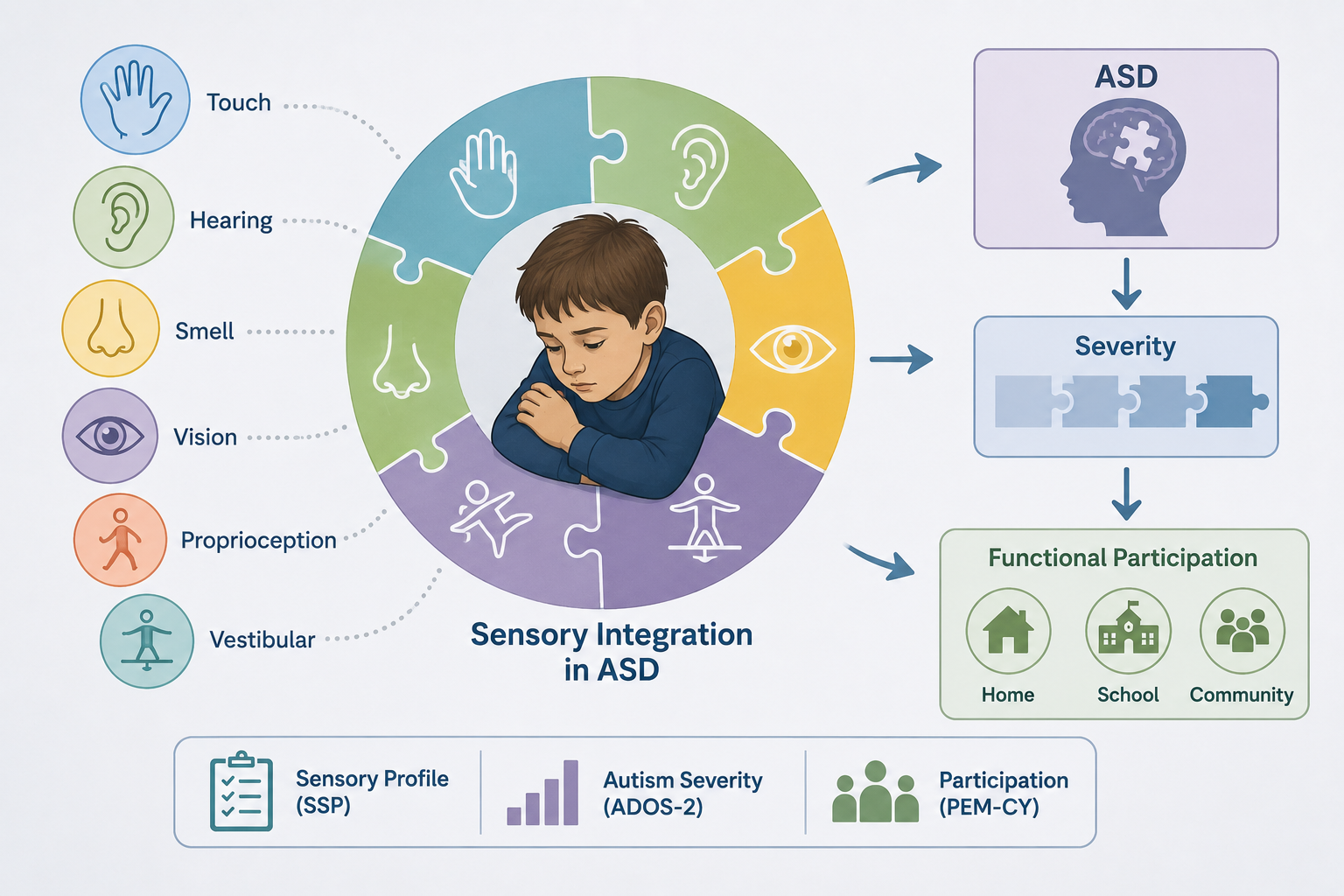
Background: Sensory processing differences are highly prevalent in Autism Spectrum Disorder (ASD) and are increasingly recognised as clinically relevant determinants of daily functioning. However, the relationship between sensory integration profiles, autism severity, and real-life participation remains insufficiently characterised in many clinical settings. This study aimed to describe sensory processing patterns in children with ASD and examine their associations with symptom severity and participation outcomes. Methods: A cross-sectional observational clinical study was conducted in 78 children with ASD aged 6–12 years. Sensory processing was assessed using the Short Sensory Profile (SSP). Autism symptom severity was evaluated using ADOS-2 calibrated severity scores. Functional participation across home, school, and community contexts was measured with the Participation and Environment Measure–Children and Youth (PEM-CY). Pearson correlations and multiple linear regression analyses were performed. Results: Most participants (65.4%) showed “definite difference” sensory profiles. SSP total scores were significantly associated with ADOS-2 severity (r = −0.44, p < 0.001). Higher SSP scores were correlated with greater participation involvement, particularly in school (r = 0.38, p < 0.001) and community settings (r = 0.33, p = 0.004). In adjusted regression models, SSP remained an independent predictor of school and community involvement after controlling for age and ADOS-2 severity. Conclusions: Sensory integration differences are common in ASD and are meaningfully associated with symptom severity and participation restrictions. Systematic sensory assessment may support individualised interventions aimed at improving functional participation in everyday environments.
Disclaimer: This image was generated using artificial intelligence and may contain inaccuracies or inconsistencies.
It is provided solely as a visual aid to facilitate the rapid understanding of the key ideas presented
in this article. Our editorial team conducts ongoing reviews of AI-generated images and will correct
or replace them whenever an error or discrepancy is identified or reported.
Authors:
Marius
Dobîndă Albu
Abstract:
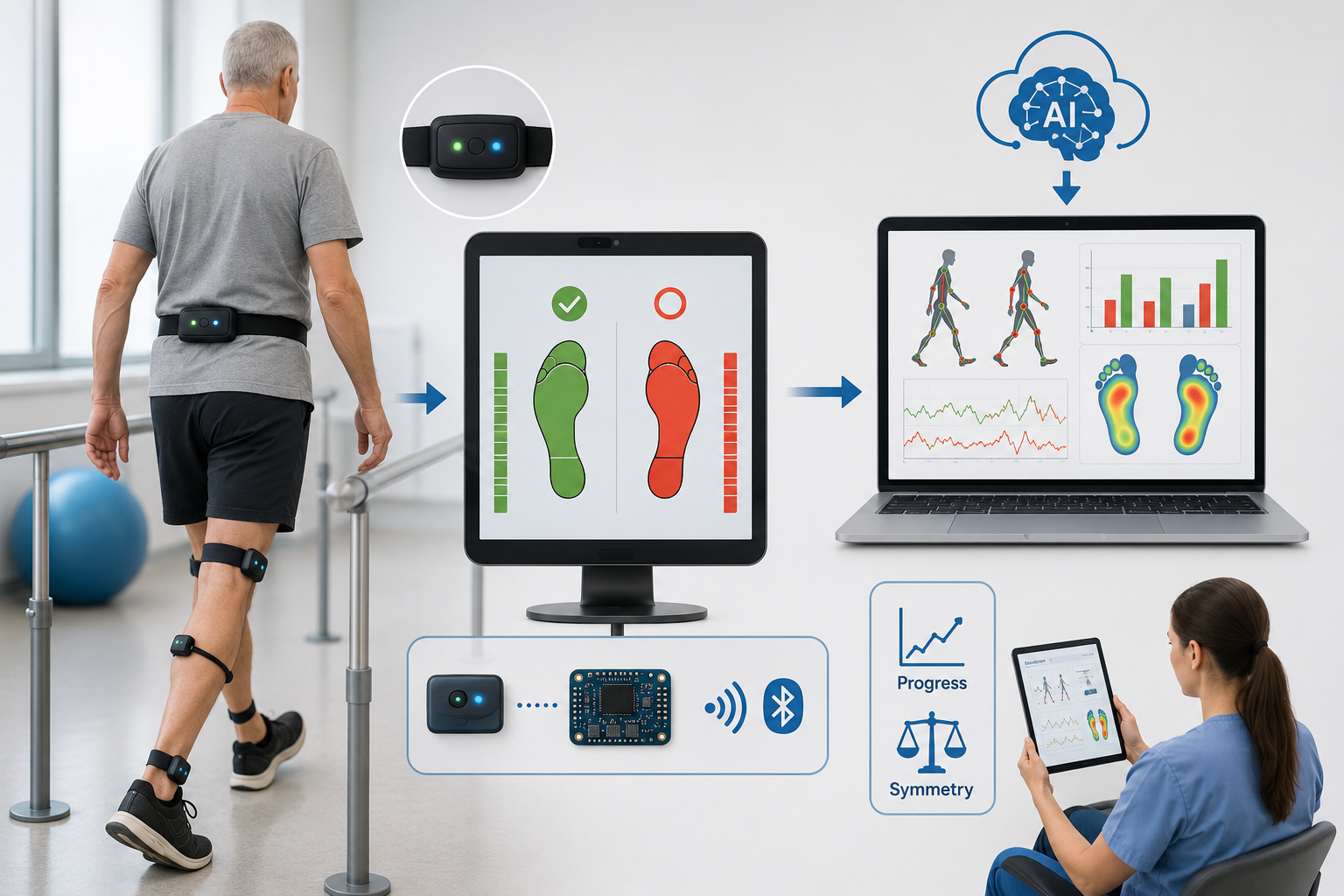
The success of motor rehabilitation is closely related to the quality of communication between the therapist and the patient. Cognitive impairment is common among acute stroke survivors and is frequently associated with slowed information processing. Under such conditions, verbal instructions often fail to be conveyed in a form that the patient can effectively translate into action. This paper presents two complementary electronic systems developed to provide language-independent feedback for gait re-education. The first is a low-cost device built on an Arduino MKR1000 platform that combines a triaxial accelerometer and three FSR pressure sensors to provide real-time visual feedback during walking, with no AI on board. The second one uses an STM32 microcontroller with six synchronised accelerometers to record multi-segment gait data for offline processing using Gait Flow Analyser, which provides graphical summaries, descriptive statistics, and an optional AI module that detects deviations from a learned normal gait baseline. Preliminary clinical use with 12 patients over six months suggested that visual cues can prompt movement correction without verbal direction. The STM32 system has additionally been evaluated in a parallel investigation on a cohort of 30 participants (15 neurological participants and 15 healthy controls), thereby providing broader empirical context for the descriptive findings reported here. The two systems are not alternatives. Real-time feedback supports the therapeutic session, whereas offline AI-assisted analysis provides the therapist with an objective assessment of gait asymmetry and its evolution over time. Together, they establish a rehabilitation framework in which therapeutic guidance relies less on verbal communication and more on directly interpretable visual feedback.
Disclaimer: This image was generated using artificial intelligence and may contain inaccuracies or inconsistencies.
It is provided solely as a visual aid to facilitate the rapid understanding of the key ideas presented
in this article. Our editorial team conducts ongoing reviews of AI-generated images and will correct
or replace them whenever an error or discrepancy is identified or reported.
Authors:
Ionut
Alexandru Chelaru
, Ramona
Alexandra Ciausu
, Mircea
Nicusor Nicoara
, Alin
Stelian Ciobica
, Camelia
Ureche
, Gabriel
Andrei Andronic
, Dorel
Ureche
Abstract:
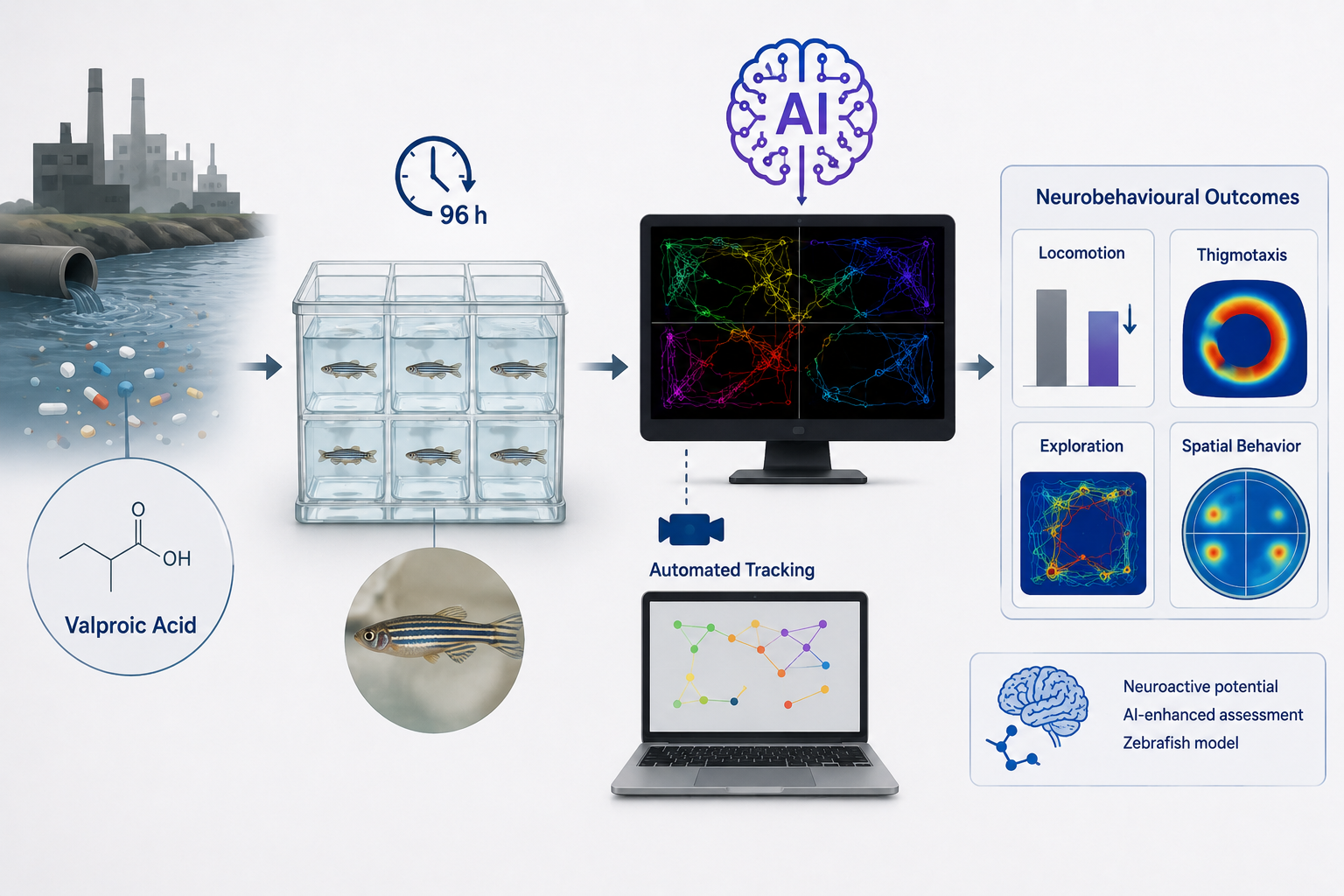
The increasing presence of pharmaceuticals in aquatic ecosystems has raised significant concerns due to their detrimental effects on both environmental and human health. The present study discusses the rising concern about pharmaceuticals in aquatic environments, focusing on valproic acid (VPA), an antiepileptic drug identified as a neuroactive contaminant. Its persistence in wastewater and limited removal by conventional treatments, along with its known neuroactive properties, prompted the investigation of its neurobehavioural effects in zebrafish (Danio rerio), a model organism for environmental neurotoxicology. Conventional behavioural scoring techniques frequently suffer from subjectivity and inadequate resolution, especially when evaluating the nuanced effects of low-dose exposure or mixture-induced, characteristic in the natural environments. The study highlights the importance of behavioural endpoints as indicators of brain disorders and the role of artificial intelligence (AI) in improving behavioral analysis. By integrating automated video tracking with an AI-assisted exploratory workflow and multivariate analytics, this study illustrates the feasibility of computational approaches for detecting neurobehavioural alterations. After 96 h of exposure, VPA was associated with altered locomotor and spatial behavior in adult zebrafish, evaluated using an optimised low-variance subset (n = 5 per group) within a proof-of-concept framework. These findings highlight the neuroactive potential of VPA and support the use of AI-enhanced zebrafish behavioural models for exploratory environmental neurotoxicology.
Disclaimer: This image was generated using artificial intelligence and may contain inaccuracies or inconsistencies.
It is provided solely as a visual aid to facilitate the rapid understanding of the key ideas presented
in this article. Our editorial team conducts ongoing reviews of AI-generated images and will correct
or replace them whenever an error or discrepancy is identified or reported.
Authors:
Bijoy
Chhetri
, Lalit
Mohan Goyal
, Mamta
Mittal
Abstract:
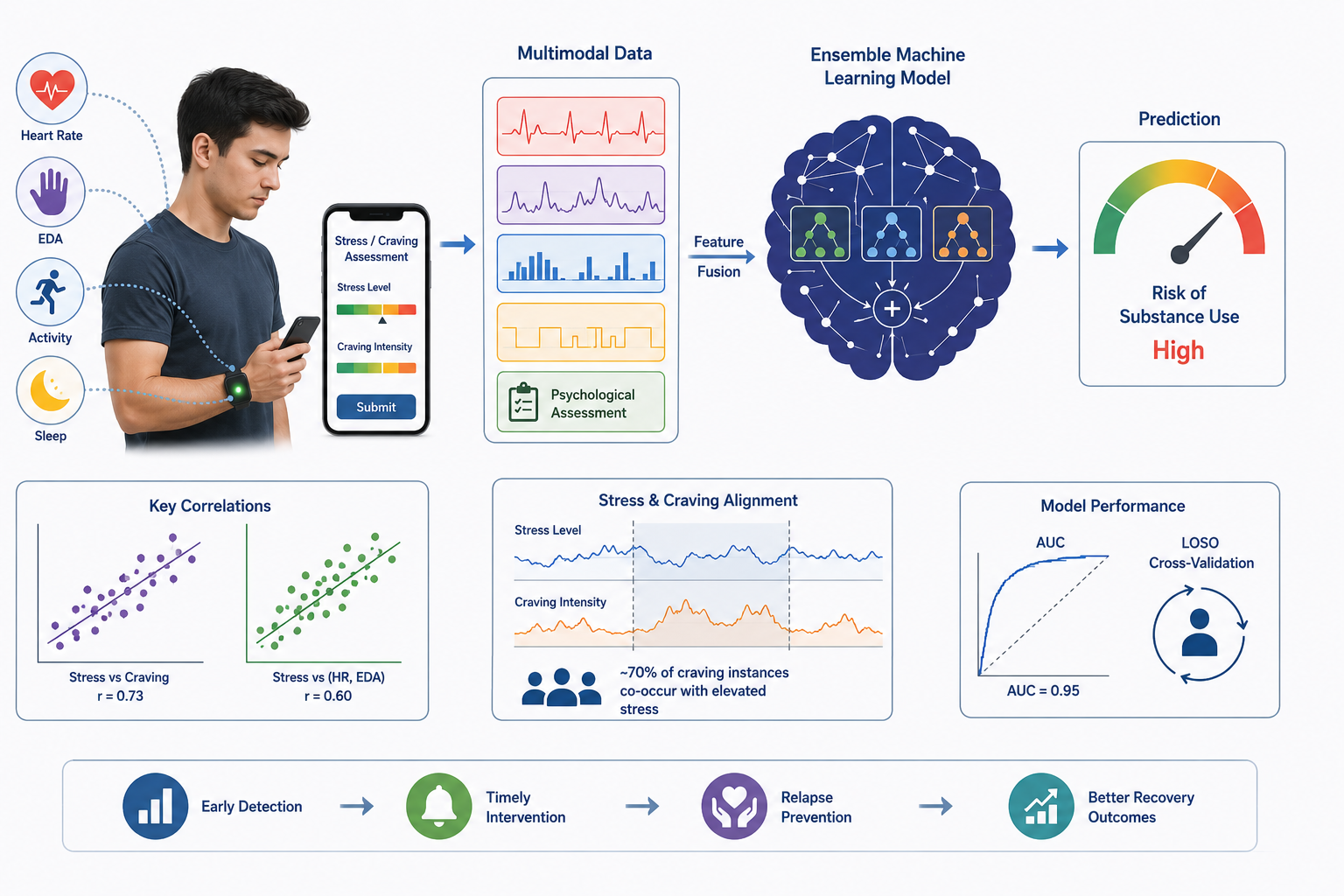
The importance of understanding stress-related substance use episodes is a key research area, as it offers new insight into the association between stress and substance use behaviours. Existing methods are typically limited to analysing self-reported or isolated physiological signals, without providing real-time contextual analysis. This study proposes a multimodal approach for data acquisition and an ensemble machine learning technique to analyse how stress affects an individual’s substance use behaviour. The dataset was acquired using wearable sensors and a psychological stress assessment questionnaire with a craving intensity scale. A dataset consisting of 1,325 instances was acquired from 53 voluntary participants in certified recovery environments in North-East India. Furthermore, a fusion-based Ensemble Random Forest Machine Learning (ERFML) model is proposed to analyse an integrated dataset of physiological, psychological, and craving features. It has been observed from the experiments that the proposed model has higher prediction accuracy (AUC=0.95) for stress-induced substance use. Furthermore, a positive correlation between stress and craving was identified (r=.73). Likewise, heart rate and electrodermal activity features reflect physiological imbalances that take place during stress(r=0.60). Approximately 70% of craving instances were observed to co-occur with elevated stress levels within a defined temporal window, where stress and craving measurements were aligned at the same or preceding time step. The model is further validated using Leave-One-Subject-Out cross-validation to ensure subject-independent generalisability. This fusion-based model provides enhanced prediction of addiction vulnerability prediction using wearable biosignals and psychological assessments to manage relapse and recovery during treatment.
Disclaimer: This image was generated using artificial intelligence and may contain inaccuracies or inconsistencies.
It is provided solely as a visual aid to facilitate the rapid understanding of the key ideas presented
in this article. Our editorial team conducts ongoing reviews of AI-generated images and will correct
or replace them whenever an error or discrepancy is identified or reported.
Authors:
Bogdan
Gireadă
, Dan
Cătălin Oprea
, Irina
Dobrin
, Radu
Gavril
, Vlad
Teodor Iacob
, Raluca
Gavril
, Andreea
Bejenariu
, Petru
Romeo Dobrin
Abstract:
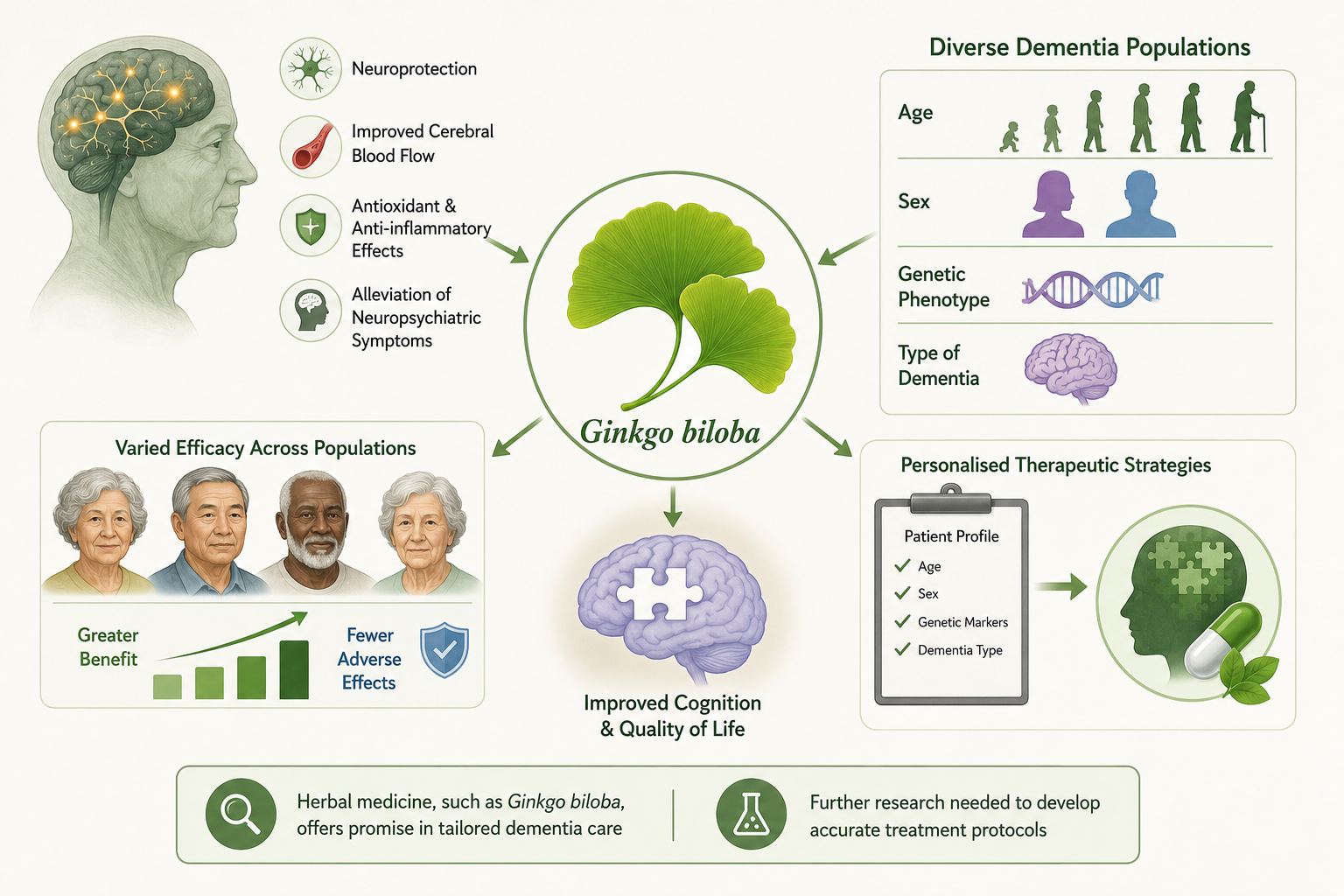
With the burden of dementia growing worldwide and its increasing prevalence, there is an urgent need for treatments that can effectively target the main mechanisms of the neurodegenerative process. A substantial level of hope lies in traditional herbal medicine, particularly Ginkgo biloba, which is believed to not only inhibit the neurodegenerative process but also to alleviate the neuropsychiatric symptoms of dementia. However, the current literature tends to overlook the demographic-specific effects of Ginkgo biloba, failing to adequately clarify its efficacy across diverse patient populations. In this context, we conducted a thorough search across multiple databases, focusing on the impact of Ginkgo biloba on age, sex, genetic phenotype, and type of dementia. Our findings revealed varied efficacy across demographic groups, with noticeable benefits in some populations and fewer adverse effects in others. In particular, we identified that groups of older adults with specific genetic markers showed the greatest improvements in cognition, suggesting a strong need for personalised therapeutic strategies that incorporate demographic factors into clinical decision-making. This review highlights the benefits of herbal medicine, particularly Ginkgo biloba, in tailored dementia care, although further research is needed to develop accurate treatment protocols for diverse patient populations.
Disclaimer: This image was generated using artificial intelligence and may contain inaccuracies or inconsistencies.
It is provided solely as a visual aid to facilitate the rapid understanding of the key ideas presented
in this article. Our editorial team conducts ongoing reviews of AI-generated images and will correct
or replace them whenever an error or discrepancy is identified or reported.
Authors:
Priya
Shanthini D.R
, Vasu
Koduri
, Naveen
Maddukuri
, M
Kalpana Chowdary
, Bini
Darwin
, Shajin
Prince
Abstract:
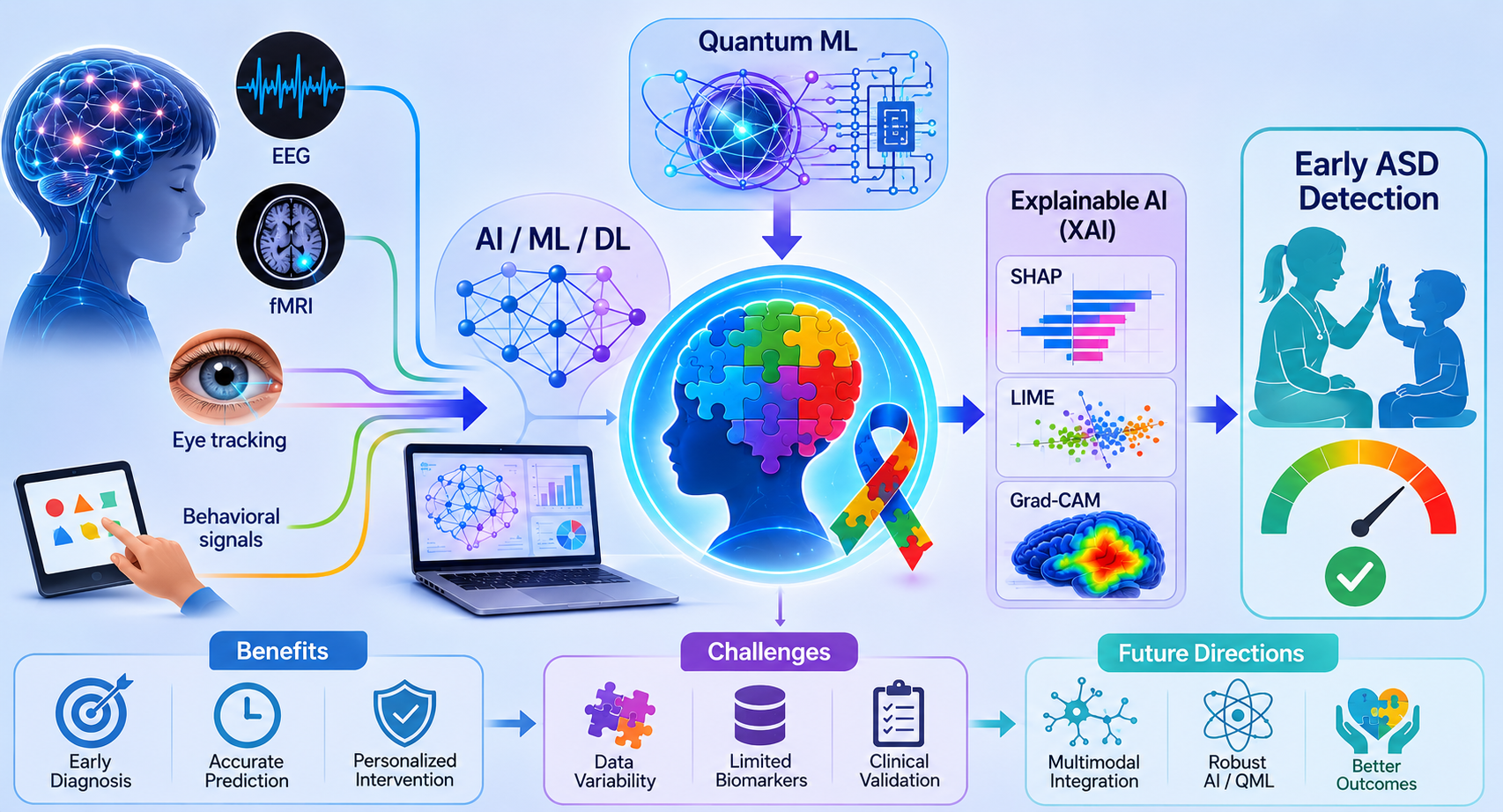
Autism Spectrum Disorder (ASD) is a complex neurodevelopmental disorder characterised by persistent social communication difficulties together with restricted and repetitive behavioural patterns. Early and accurate diagnosis is critical for timely intervention,however, traditional clinical assessment methods require extended time and extensive resources while assessment results depend on evaluator judgement. The development of Artificial Intelligence (AI) technologies including Machine Learning (ML) and Deep Learning (DL) has made it possible to automatically identify ASD through the analysis of EEG data and neuroimaging information and eye-tracking results and behavioural signals. The “black-box” characteristics of these models create two main problems which reduce their effectiveness as predictive tools for medical applications. The introduction of Explainable Artificial Intelligence (XAI) techniques, including SHAP, LIME, and Grad-CAM, provides a framework for improving model interpretability and transparency. Quantum Machine Learning (QML) presents two main benefits through its ability to process high-dimensional data while showing improved performance in computational tasks. This review examines the principal datasets, preprocessing techniques, feature extraction methods, and AI-based detection models used in ASD diagnosis.However, researchers continue to study three main problems which include standardised biomarker deficiencies, data variability and clinical validation shortages. The article presents future research paths which will lead to systems that achieve interpretability and robustness while maintaining clinical usability.
Disclaimer: This image was generated using artificial intelligence and may contain inaccuracies or inconsistencies.
It is provided solely as a visual aid to facilitate the rapid understanding of the key ideas presented
in this article. Our editorial team conducts ongoing reviews of AI-generated images and will correct
or replace them whenever an error or discrepancy is identified or reported.
Authors:
Delia
Reurean-Pintilei
, Ilie
Onu
, Dan
Trofin
, Andrei
Tutu
, Gabriela
Rusu Zota
Abstract:
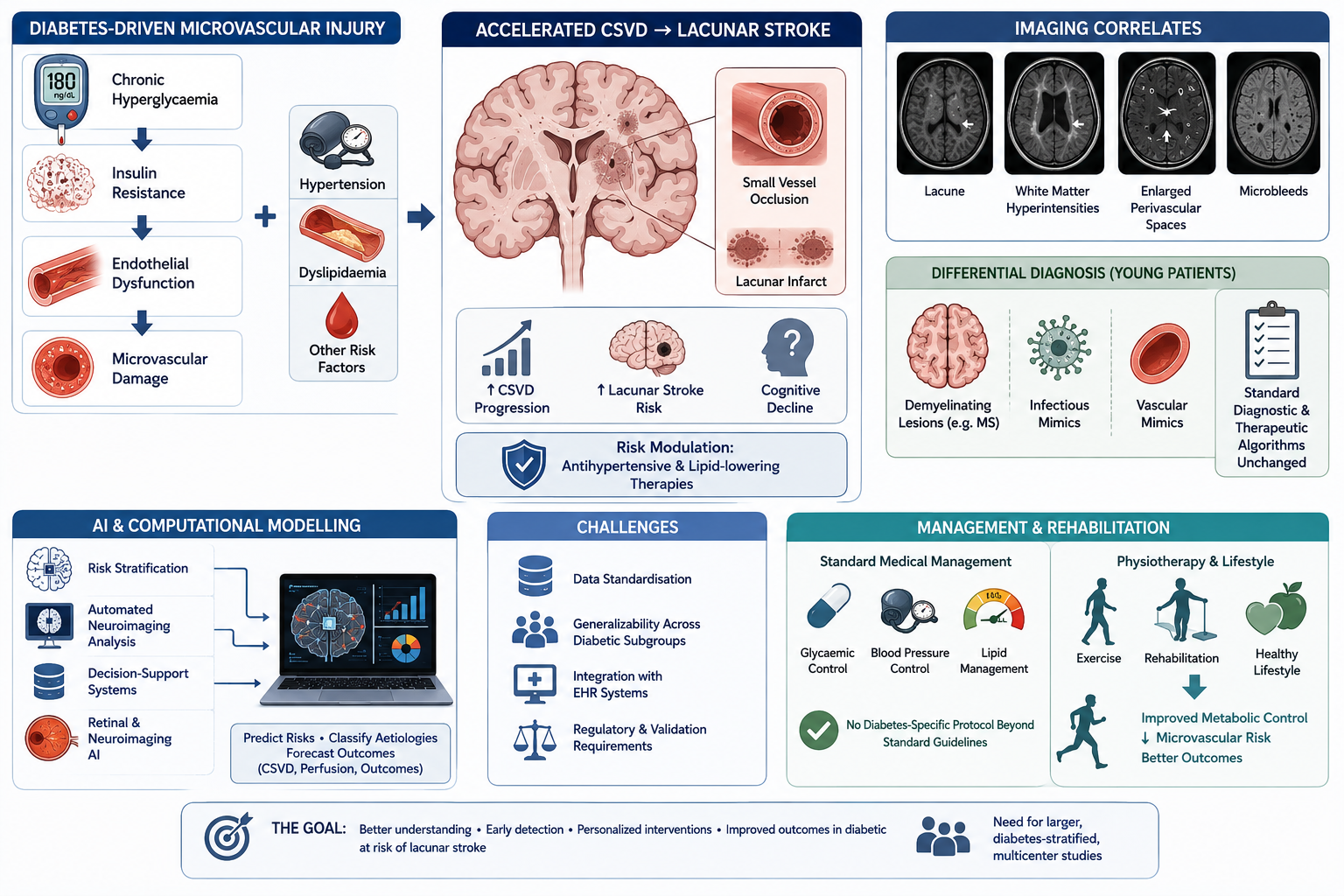
The relationship between diabetes mellitus (DM) and microvascular brain pathology is complex and not very well debated, especially when referred to lacunar strokes, a major subset of cerebral small vessel disease (CSVD). Chronic hyperglycaemia, insulin resistance, and endothelial dysfunction drive microvascular injury, often compounded by coexisting hypertension and dyslipidaemia. Imaging and cohort studies confirm that DM accelerates CSVD progression and increases the risk of lacunar strokes, while antihypertensive and lipid-lowering therapies can modulate this risk. Nonetheless, a differential diagnosis of demyelinating lesions of the brain remains complicated, especially in young patients, as DM increases the likelihood of vascular or infectious mimics, but does not fundamentally influence diagnostic or pharmacological algorithms for acquired demyelinating syndromes. The differential diagnosis for Multiple Sclerosis is also essential in young patients with an autoimmune background. There is also growing evidence that artificial intelligence (AI) and computational modelling are increasingly useful when applied to cerebrovascular disease with DM as a key risk factor, by providing: risk stratification, automated neuroimaging analysis and decision-support systems, that integrate multimodal data to predict risks, classify aetiologies and forecast outcomes (along with retinal imaging and neuroimaging AI). AI-driven cerebrovascular morphology analysis, CSVD markers and perfusion imaging analyses are advancing the ability to predict short-term and longer-term outcomes, including cognitive impairment. For all that, challenges still arise throughout data standardisation, generalisability across diabetic subgroups, integration with electronic health records or regulatory considerations that need further prospective multicenter validation. Although pharmacological management in diabetic patients with lacunar stroke may not benefit from a diabetes-specific protocol beyond standard guidelines, physiotherapy stands as both a rehabilitative and preventive tool, contributing to microvascular risk reduction through exercise, improved metabolic control, and overall lifestyle modification. While calling for larger, diabetes-stratified studies to guide future interventions and refine personalised treatment strategies, the following narrative review, with emphasis on an AI and computational modelling in diabetes-related cerebrovascular disease, offers a brief insight into the current level of knowledge and recent updates in the correlations between DM and lacunar strokes.
Psychology, Psychotherapy, Clinical Neuroscience & Mental Health
Disclaimer: This image was generated using artificial intelligence and may contain inaccuracies or inconsistencies.
It is provided solely as a visual aid to facilitate the rapid understanding of the key ideas presented
in this article. Our editorial team conducts ongoing reviews of AI-generated images and will correct
or replace them whenever an error or discrepancy is identified or reported.
Authors:
Victoriia
Nazarevych
, Tetiana
Dziuba
, Olga
Litvinova
, Iryna
Boreichuk
, Liubov
Halushko
, Yana
Amurova
Abstract:
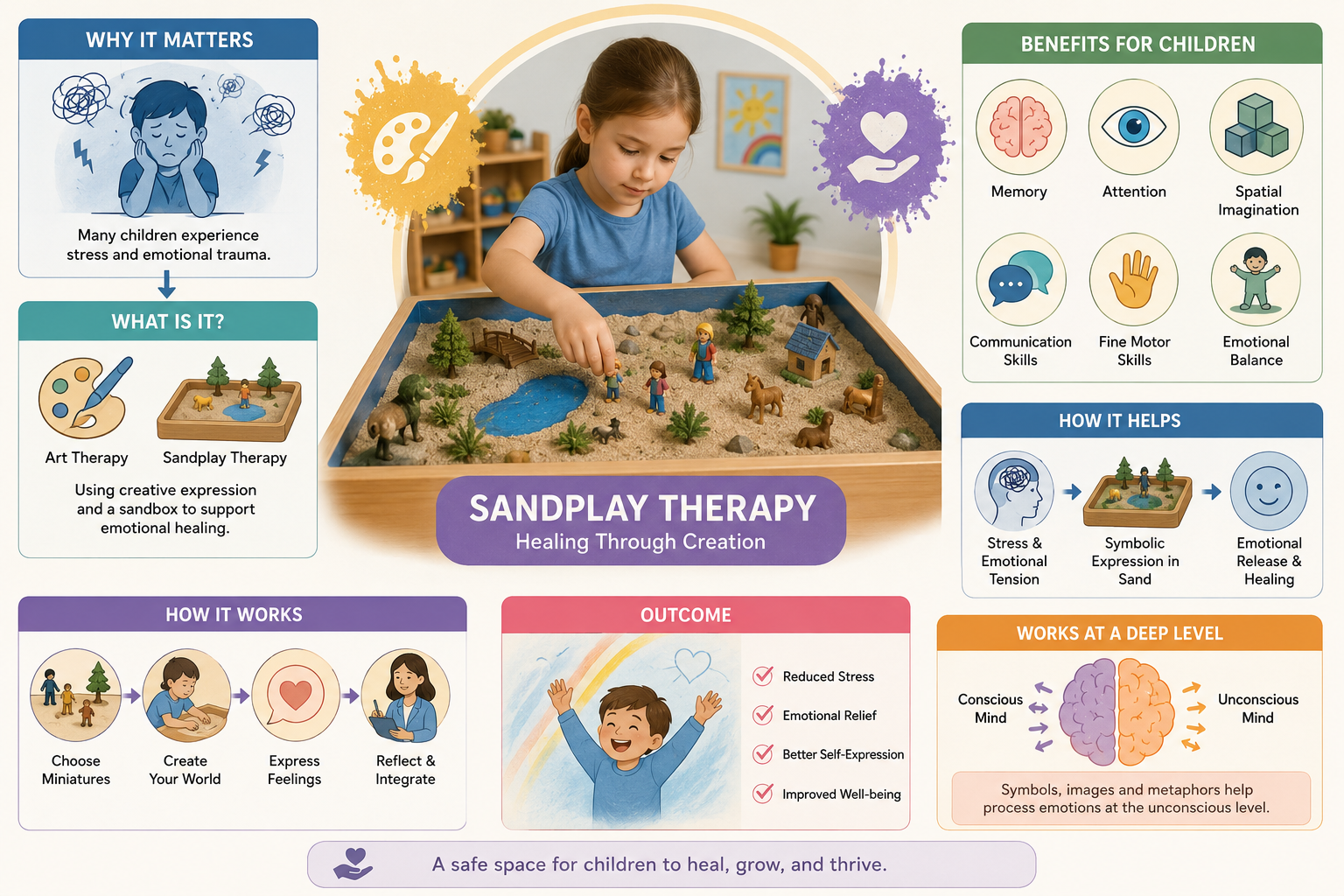
The article discusses the implementation of art therapy classes using sandplay. Its relevance stems from the increasing number of children who experience psychological trauma and require psychological support. It aims to clarify such concepts as “art therapy” and “sandplay therapy”. It also explores practical approaches to art therapy, while highlighting the effectiveness of sandplay therapy. Research methods include a detailed analysis of relevant scientific sources and a systematic review. The findings reveal that prolonged emotional exhaustion and stress negatively affect the human psyche. In turn, art therapy has proven highly effective as a universal method for psychological intervention across different age groups and mental conditions. Its mission lies in identifying psychological problems and helping the child release outdated or repressed emotions. This can be achieved through symbols, images and metaphors, thereby processing information at the unconscious level of the psyche. Sandplay therapy supports the development of memory, attention, spatial imagination, communication skills, and fine motor abilities.
Disclaimer: This image was generated using artificial intelligence and may contain inaccuracies or inconsistencies.
It is provided solely as a visual aid to facilitate the rapid understanding of the key ideas presented
in this article. Our editorial team conducts ongoing reviews of AI-generated images and will correct
or replace them whenever an error or discrepancy is identified or reported.
Authors:
Dmytro
Kuiavets
, Olena
Boiarchuk
, Nataliia
Levchuk
, Tetiana
Dziuba
, Olexiy
Granovski
, Iryna
Chorna
Abstract:
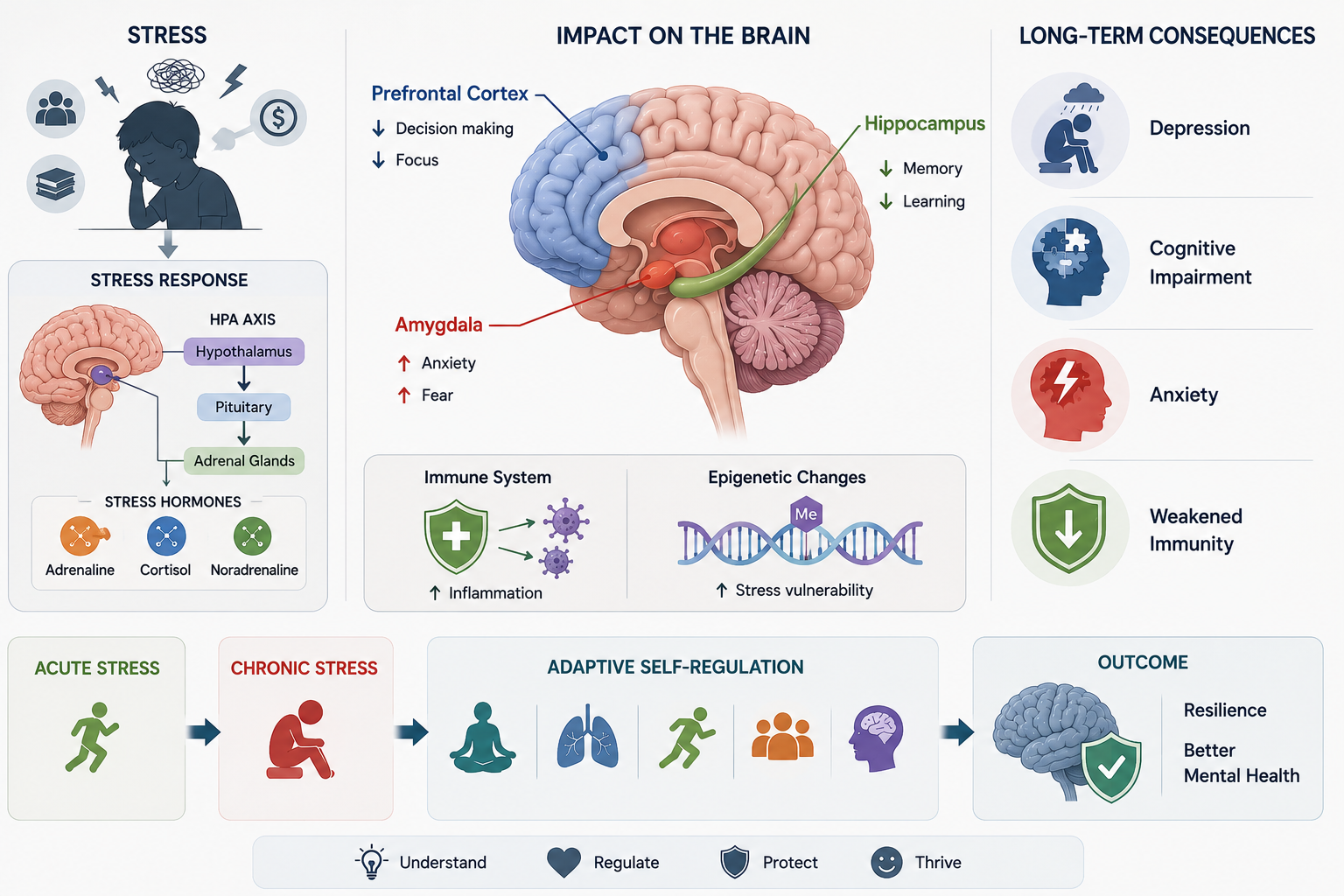
The article examines the concept of ‘stress’, highlighting both its negative and positive effects on a person’s mental and physical state.
The aim of the study is to clarify the concept of ‘stress’, review scientific sources regarding the neurobiological mechanisms of the stress response, and identify the consequences that chronic stress may have on cognitive and emotional brain functions, as well as to explore methods of rehabilitation for such conditions. Research methods: Critical analysis of scientific literature, comparison of scientific theories on the classification of stress and its types, and generalisation of neurobiological data on the effects of prolonged stress on brain structures, including the hippocampus, amygdala, and prefrontal cortex. Research results demonstrate that prolonged stress can transition into chronic stress, which in turn increases the activity of the hypothalamic-pituitary-adrenal axis, leading to the release of stress hormones: adrenaline, cortisol, and noradrenaline. As a result, individuals may experience depression, cognitive impairments, and heightened anxiety. Attention is also drawn to the interconnection between stress, the immune system, and the underlying epigenetic mechanisms. Scientific novelty lies in the holistic approach to analysing stress as a neuropsychobiological phenomenon, encompassing all levels from molecular processes to behavioural manifestations. A conceptual framework is proposed for using psychotechnologies of adaptive self-regulation as a tool for strengthening stress resilience and preventing mental disorders.
Disclaimer: This image was generated using artificial intelligence and may contain inaccuracies or inconsistencies.
It is provided solely as a visual aid to facilitate the rapid understanding of the key ideas presented
in this article. Our editorial team conducts ongoing reviews of AI-generated images and will correct
or replace them whenever an error or discrepancy is identified or reported.
Authors:
Andreea
Ursu
, Radu
George Bârliba
, Radu
Gavril
Abstract:
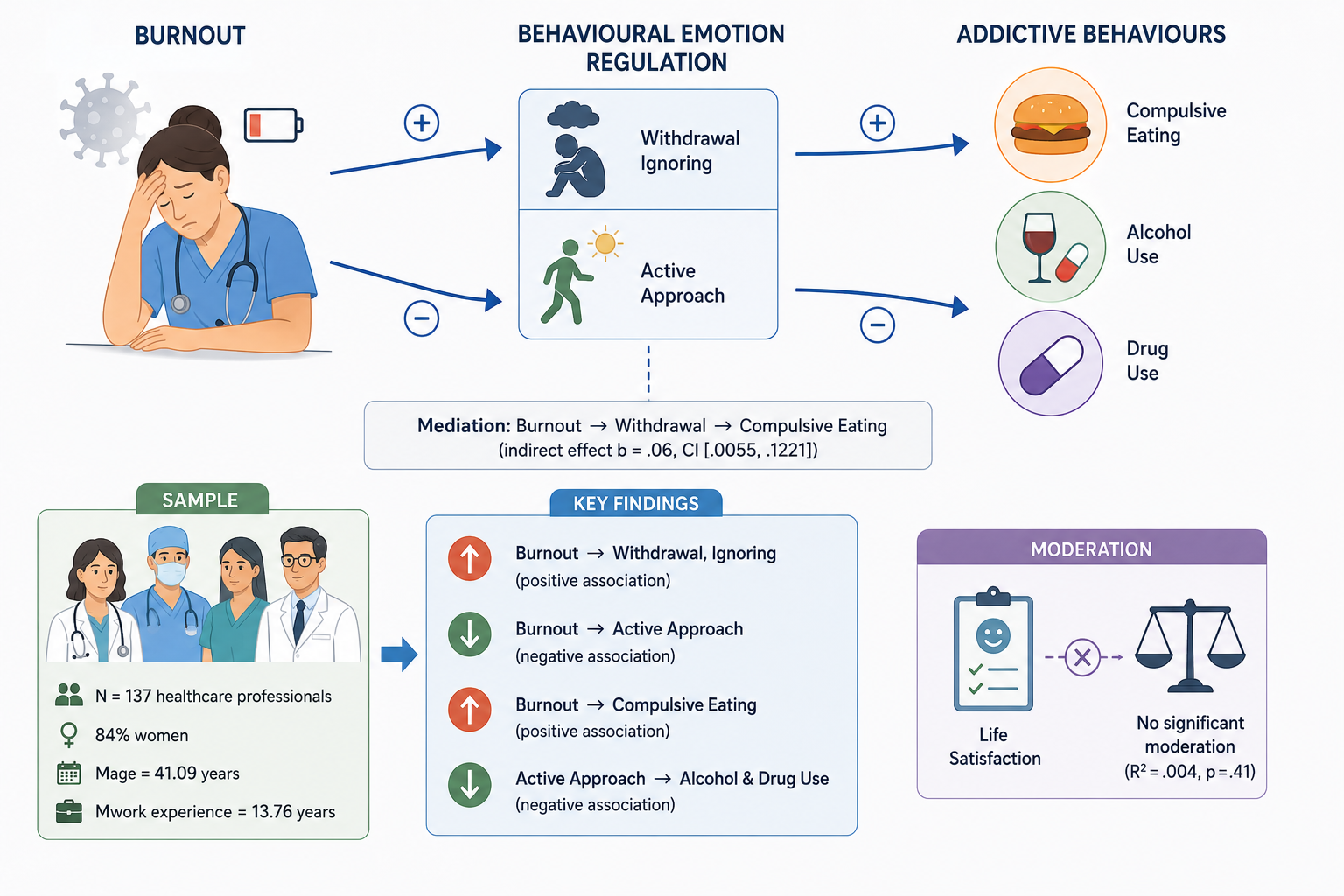
This study aimed to examine whether behavioural emotion regulation mediated the relationship between burnout and addictive behaviours and whether life satisfaction moderated this association among Romanian healthcare personnel during the COVID-19 pandemic. A total of 137 healthcare professionals (84% women, Mage = 41.09, SD = 11.22, Mwork experience = 13.76, SD = 11.09) filled out a set of online scales. The results indicated positive associations between burnout and maladaptive behavioural emotion regulation strategies (withdrawal and ignoring), as well as a negative association between burnout and the adaptive strategy of active approach. Positive associations between burnout and compulsive eating, between withdrawal and compulsive eating were also found. In contrast, active approach was negatively associated with alcohol and drug use. Mediation analysis suggested that the association between burnout and compulsive eating was indirectly linked to withdrawal (b = .06, CI [.0055, .1221]). However, moderated mediation analyses showed that life satisfaction did not significantly moderate the relationship between burnout and compulsive eating among healthcare personnel (R²=.004, p =.41).
Disclaimer: This image was generated using artificial intelligence and may contain inaccuracies or inconsistencies.
It is provided solely as a visual aid to facilitate the rapid understanding of the key ideas presented
in this article. Our editorial team conducts ongoing reviews of AI-generated images and will correct
or replace them whenever an error or discrepancy is identified or reported.
Authors:
Ana
Maria Dumitrescu
, Anca
Sava
, Crînguța
Paraschiv
, Lucia
Corina Dima Cozma
, Ana
Maria Slănină
, Irina
Florentina Bușilă
, Laura
Florea
, Mihaela
Dora Donciu
, Carmen
Valerica Rîpă
, Claudia
Florida Costea
, Roxana
Gabriela Cobzaru
Abstract:
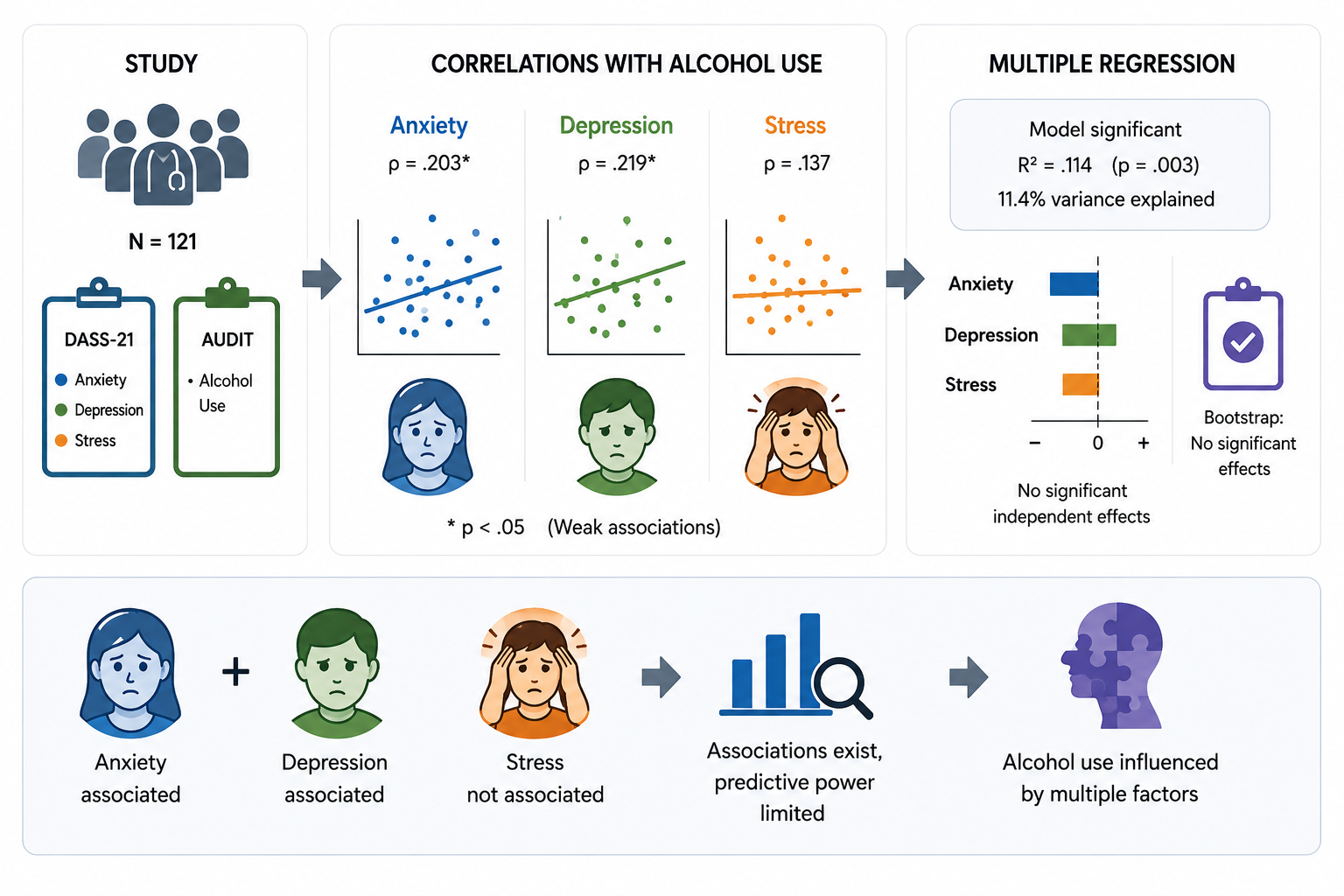
Alcohol consumption represents a complex behavioural phenomenon influenced by multiple psychological factors. The present study aimed to examine the associations between emotional distress—specifically anxiety, depression, and stress—and alcohol consumption in a cross-sectional sample.
A total of 121 participants completed standardised self-report measures, including the Depression Anxiety Stress Scales (DASS-21) and the Alcohol Use Disorders Identification Test (AUDIT). Spearman’s correlation analyses indicated that both anxiety (ρ = .203, p = .025) and depression (ρ = .219, p = .016) were positively and significantly associated with alcohol consumption, although the strength of these relationships was weak. In contrast, stress was not significantly correlated with alcohol use (ρ = .137, p = .134).
A multiple regression analysis revealed that the overall model was statistically significant, F(3, 117) = 4.997, p = .003, explaining 11.4% of the variance in alcohol consumption (R² = .114). However, none of the individual predictors—anxiety, depression, or stress—demonstrated statistically significant independent effects. Additional bootstrap analyses confirmed the absence of significant effects, suggesting that the relationships observed at the correlational level did not translate into robust predictive effects.
These findings highlight the nuanced role of emotional distress in alcohol consumption, suggesting that while anxiety and depression are associated with alcohol use, their predictive power may be limited when considered concurrently. The results support the importance of adopting a multidimensional perspective when examining psychological influences on alcohol-related behaviours.
Disclaimer: This image was generated using artificial intelligence and may contain inaccuracies or inconsistencies.
It is provided solely as a visual aid to facilitate the rapid understanding of the key ideas presented
in this article. Our editorial team conducts ongoing reviews of AI-generated images and will correct
or replace them whenever an error or discrepancy is identified or reported.
Authors:
Nicoleta
Stoenescu
, Ștefan
Lucian Burlea
, Anamaria
Ciubară
Abstract:
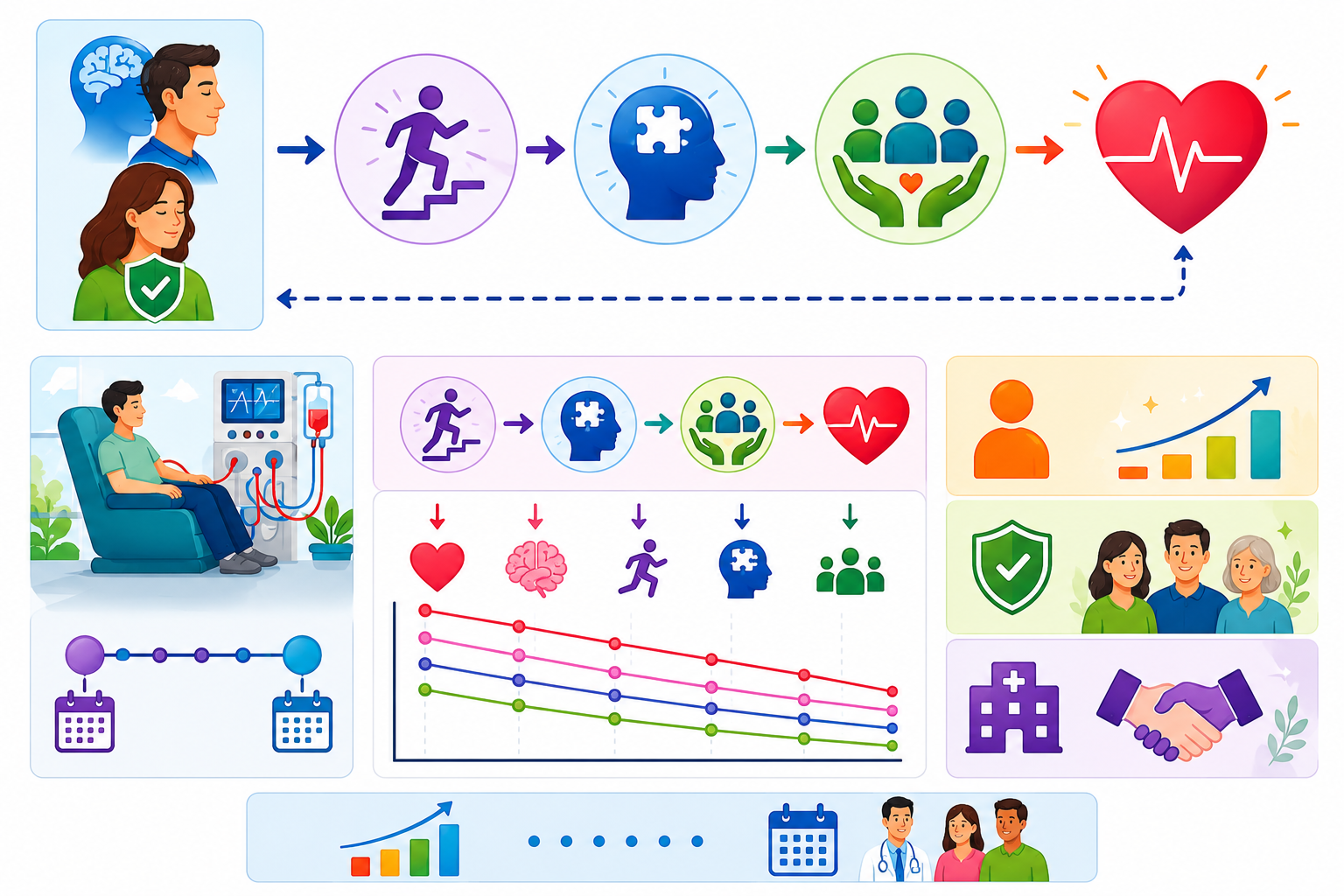
Objective. The aim of the research is to investigate the relationship between personality traits (conscientiousness and emotional stability) and quality of life in dialysis patients, through psychosocial mediation mechanisms (autonomous motivation, problem-focused coping and social support). The study also examines the longitudinal stability of these relationships and the differences between clinical groups defined according to medical indication and patient attitude towards kidney transplantation. Materials and methods. The preliminary study included 70 dialysis patients, assessed at two time points (T1 – beginning of the study, T2 – 6 months). Standardised instruments were used to assess personality (BFI-50), motivation (TSRQ), coping (Brief COPE), social support (ISEL) and quality of life (KDQOL-SF 1.3). Statistical analyses consisted of PROCESS Model 6 for testing serial mediation and mixed ANOVA for assessing longitudinal stability and between-group differences. Results. Personality influenced quality of life through significant indirect effects of autonomous motivation (T1), problem-focused coping (T2), and social support (T2), confirming the serial mediation model (p < .05). A full mediation effect was identified for conscientiousness, whereas emotional stability showed a partial mediation effect, highlighting distinct pathways through which personality traits influence quality of life. Between T1 and T2, significant decreases were observed in physical health, F(1,66) = 2101.67, p < .01, mental health, F(1,66) = 18.41, p < .01, as well as in psychosocial resources (autonomous motivation, F(1,66) = 49.27, p < .01; problem-focused coping, F(1,66) = 26.44, p < .01; social support, F(1,66) = 49.37, p < .01). Time × group interactions were observed for both physical health and problem-focused coping F(3,66) = 3.08, p < .05. Conclusions. The preliminary study confirms hypothesis H1, demonstrating that personality traits influence quality of life through psychosocial mechanisms, and hypothesis H2 was partially confirmed: the relationships of the model remained stable over time, but the differences between groups were limited, except for problem-focused coping. These results emphasise the importance of integrating psychosocial factors into clinical practice and will be complemented by the inclusion of data from T3 to test the robustness and stability of the proposed model.
Disclaimer: This image was generated using artificial intelligence and may contain inaccuracies or inconsistencies.
It is provided solely as a visual aid to facilitate the rapid understanding of the key ideas presented
in this article. Our editorial team conducts ongoing reviews of AI-generated images and will correct
or replace them whenever an error or discrepancy is identified or reported.
Authors:
Bogdan
Pavlovici
Abstract:
The termination of a therapeutic relationship constitutes a clinically significant moment that can either consolidate prior therapeutic gains or, conversely, reactivate core psychological vulnerabilities. This is particularly true in patients with preexisting attachment pathology. Endings of clinical therapy that are imposed externally, driven by institutional constraints rather than clinical readiness, present a specific challenge for which there is limited published guidance, especially in paediatric contexts. This paper presents a clinical case study that illustrates the use of systemic storytelling as a technique for facilitating a forced therapy termination in paediatric psychiatry. The patient, a 13-year-old boy with a history of sexual abuse, severe attachment disorder, placement instability, and multiple early maladaptive schemas, faced an abrupt, institutionally mandated end to a long-standing therapeutic relationship. Drawing on Philippe Caillé's method of the systemic tale and integrating a preparatory state of calm to minimise dissociative risk, the therapist composed a metaphorical narrative encoding the patient's relational history, therapeutic journey, and separation, which was read aloud during the final session in the presence of two significant attachment figures. The intervention appeared to facilitate a meaningful, emotionally contained farewell, which resulted in interrupting the patient's established pattern of crisis-driven relational endings. Follow-up information obtained over two years post-termination indicates sustained clinical improvement, including cessation of crisis hospitalisations and successful integration into vocational and social contexts. The systemic tale offers a flexible tool for navigating therapy termination in complex paediatric cases where conventional ending protocols cannot be used. The case also helps to show the countertransference dimensions of forced endings and the role of clinical supervision as a generative space for creative therapeutic solutions.
Disclaimer: This image was generated using artificial intelligence and may contain inaccuracies or inconsistencies.
It is provided solely as a visual aid to facilitate the rapid understanding of the key ideas presented
in this article. Our editorial team conducts ongoing reviews of AI-generated images and will correct
or replace them whenever an error or discrepancy is identified or reported.
Authors:
Adriana
Olaru
, Alexandra
Boloș
, George
Cătălin Moroșan
, Andreea
Cătălina Moroșan
, Florin
Ștefan Olaru
, Marius
Cocu
, Cristina
Nedelcu
, Valeriu
Aurelian Chirică
, Iulia
Olaru
, Silvana
Andreea Szalontay
Abstract:
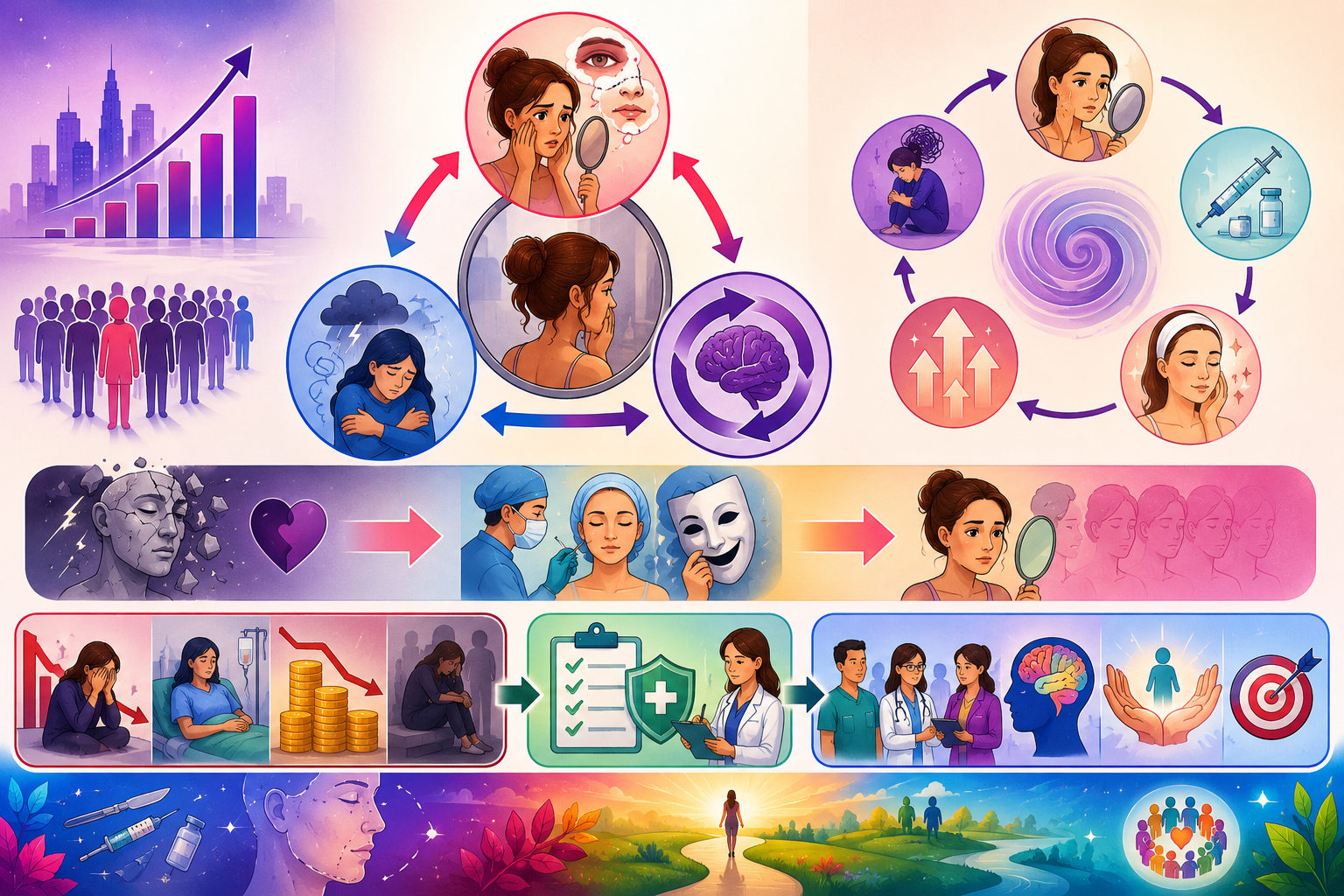
The exponential growth of the aesthetic medical industry has precipitated a parallel increase in patients presenting with problematic cosmetic procedure seeking (PCPS). While aesthetic interventions generally yield high satisfaction rates for the normative population, a discernible subset of patients engages in a relentless, maladaptive pursuit of physical alteration. This narrative review synthesises current literature to examine the triadic relationship between body dysmorphic symptoms, emotion dysregulation, and compulsive behavioural patterns in the context of PCPS. We explore how perceived physical defects are often somatic manifestations of underlying affective distress; wherein cosmetic interventions are erroneously utilised as an externalising coping mechanism for internal emotional dysregulation. Furthermore, we conceptualise repeated procedure seeking through the lens of the obsessive-compulsive spectrum, highlighting the transient nature of postoperative relief and the cyclical escalation of interventions. By delineating these psychological underpinnings, this review underscores the critical need for integrated psychiatric screening within aesthetic practice and advocates for a paradigm shift from purely surgical or dermatological solutions towards comprehensive, multidisciplinary patient care.
Disclaimer: This image was generated using artificial intelligence and may contain inaccuracies or inconsistencies.
It is provided solely as a visual aid to facilitate the rapid understanding of the key ideas presented
in this article. Our editorial team conducts ongoing reviews of AI-generated images and will correct
or replace them whenever an error or discrepancy is identified or reported.
Authors:
Alexandru
Rareș Puni
, Ștefan
Ciobanu
, Ileana
Monica Popovici
, Constantin
Nacu
, Beatrice
Aurelia Abalașei
Abstract:
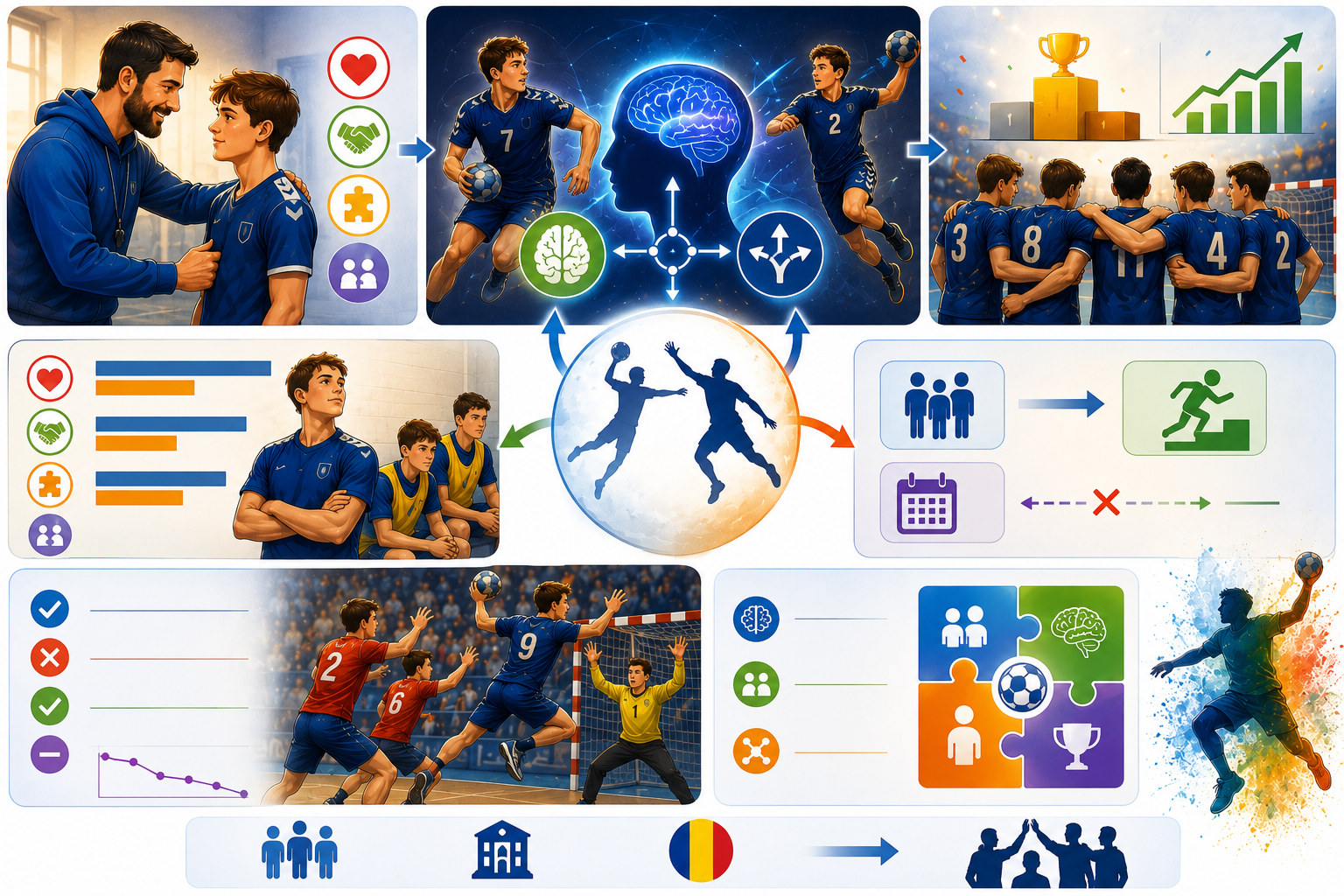
The present study investigates the role of the coach–athlete relationship (CAR) in shaping individual player status and collective team performance in youth handball. In addition, the study explores CAR as a potential contextual factor influencing cognitive and decision-making processes in sport performance. The sample consisted of 270 athletes (aged 13–19 years) from 18 teams competing in the Romanian National Handball Championship. The coach–athlete relationship was assessed using the Coach–Athlete Relationship Questionnaire (CART-Q; 3+1C model: closeness, commitment, and complementarity), alongside objective indicators of team performance (final ranking and win rate). The results revealed strong intercorrelations among CAR dimensions, supporting the coherence of the construct. No significant associations were identified between CAR and collective team performance, and regression analyses indicated a lack of predictive capacity in this regard. However, significant differences were observed between starting and rotation players, with starters reporting higher levels of closeness, commitment, and complementarity. Furthermore, CAR emerged as a significant predictor of player status, while age was not significant, although a negative association between age and relationship quality was identified. These findings suggest that the coach–athlete relationship plays a relevant role in differentiating individual player status and may contribute to performance through indirect, cognitively mediated mechanisms, rather than directly influencing collective outcomes. The study highlights the importance of relational dynamics in athlete development and supports a multidimensional perspective on performance in team sports.
Disclaimer: This image was generated using artificial intelligence and may contain inaccuracies or inconsistencies.
It is provided solely as a visual aid to facilitate the rapid understanding of the key ideas presented
in this article. Our editorial team conducts ongoing reviews of AI-generated images and will correct
or replace them whenever an error or discrepancy is identified or reported.
Authors:
Eva
Maria Elkan
, Monica
Laura Zlati
, Diana
Andreea Ciortea
, Mădalina
Covrig Duceac
, Nicoleta
Andreea Țovârnac
, Alexandra
Nicoleta Bran
, Letiția
Doina Duceac
, Florin
Tovirnac
, Anamaria
Ciubara
Abstract:
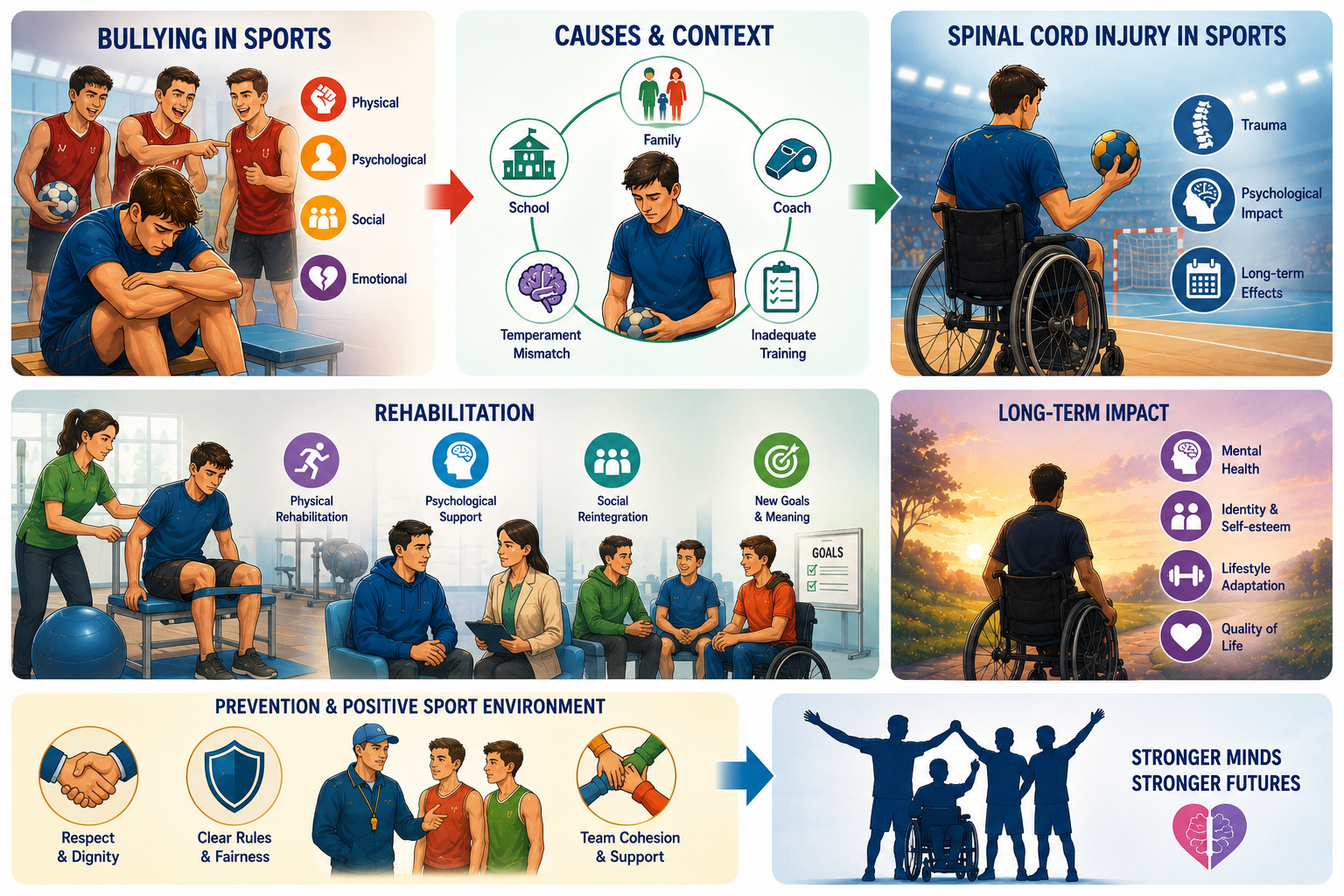
Bullying in sport is different as effects account for the impact on the sports-men. The frequency and type of bullying is different in relation to sport practice. Greater physical impact is correlated to sports like football, handball and basket-ball. Trauma can be produced also in volley-ball but because it is a sport in which all teammates are dependent on each other. Sport practitioners have developed a very high sense of dignity and justice. In many situations sport is practiced from a very young age which means that the collaboration between family, school and sports trainer is very close. The coach has the role to realize educational mentoring. Sometimes the mistake of parents is to drive their children to sports inadequate to their temperament, and here we can find the causes of the amplification of aggressivity of some sports practitioners against their colleagues. In many cases the sport practitioner is not al-ways choosing themselves the sport branch which they practice. Very important are the abilities of the sports instructor, which can practice in the school or outside the school time schedule. Sometimes there are sport instructors which are not prepared efficiently for the sport branches in which they are training and are not always correctly evaluating the physical effort of the sportsmen which they are training. In sport branches where sports men are evolving, it is important to put emphasis not only on performing good results, but also it is important to give attention to group cohesion and the maintaining of the interest in sport for a healthy life. It is also important to psychologically evaluate the sport practitioners if needed. Bullying is a wide-spread situation and so it is found also in the sports practice and the sports mentors must take in account the prevention and the fight against these facts.
Disclaimer: This image was generated using artificial intelligence and may contain inaccuracies or inconsistencies.
It is provided solely as a visual aid to facilitate the rapid understanding of the key ideas presented
in this article. Our editorial team conducts ongoing reviews of AI-generated images and will correct
or replace them whenever an error or discrepancy is identified or reported.
Authors:
Dan
Octavian Rusu
, Cristian
Delcea
, Ionut
Virgil Șerban
Abstract:
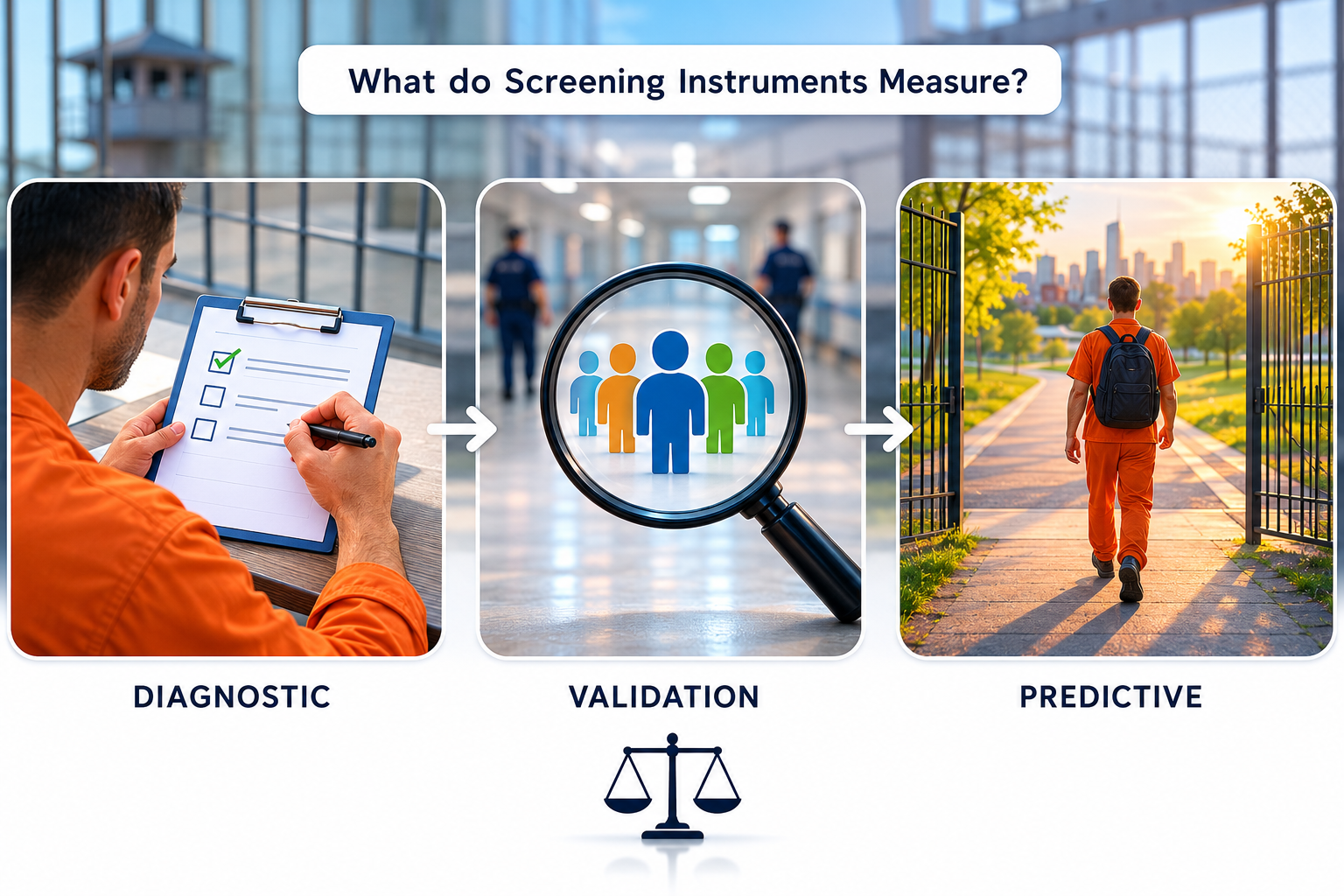
Substance use disorders are highly prevalent in adult correctional and forensic populations. However, brief screening instruments are often interpreted without clear differentiation between diagnostic, validation, and predictive purposes. In this study, we synthesize evidence on commonly used substance use screening tools using a stratified meta-analytic framework designed to clarify their legitimate inferential roles in custodial settings. Evidence was organized into three analytic tiers: Tier 1 (CORE: Diagnostic Accuracy) included studies permitting formal estimation of diagnostic accuracy against explicit clinical reference standards. Tier 2 (Extended Forensic Validation) comprised extended forensic validation studies employing context-specific or severity-based frameworks. Tier 3 (Predictive Validity) addressed predictive validity for substance-relevant post-release outcomes. Quantitative synthesis was restricted to Tier 1 studies and indicated high sensitivity with moderate specificity for brief screening instruments when evaluated against structured diagnostic assessments. Given the limited number of eligible studies, these pooled estimates should be interpreted as preliminary indicators rather than stable population parameters. Tier 2 studies demonstrated broadly consistent performance across diverse forensic contexts but substantial heterogeneity in reference standards, precluding pooled diagnostic inference. Limited Tier 3 evidence suggested that screening-derived severity classifications may be associated with substance-relevant post-release outcomes. Overall, the findings indicate that brief screening instruments support distinct, tier-specific functions. Evidence for one inferential purpose should not be generalized to others.
Disclaimer: This image was generated using artificial intelligence and may contain inaccuracies or inconsistencies.
It is provided solely as a visual aid to facilitate the rapid understanding of the key ideas presented
in this article. Our editorial team conducts ongoing reviews of AI-generated images and will correct
or replace them whenever an error or discrepancy is identified or reported.
Authors:
Olena
Bielikova
, Hanna
Krasina
, Iryna
Maksymchuk
, Olena
Andrusyk
, Nina
Harkavenko
, Vira
Dub
Abstract:
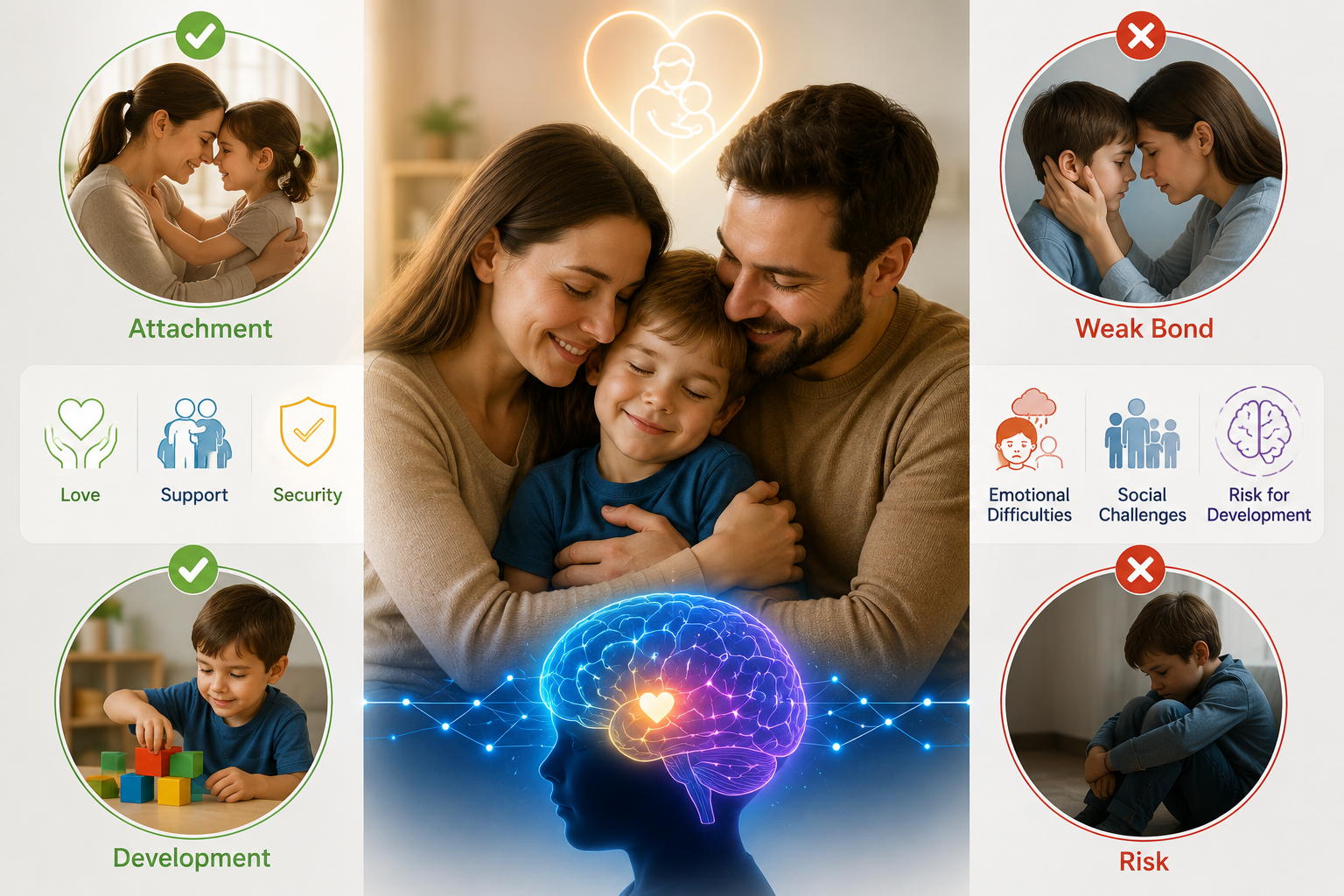
The emotional bond between parents and children is fundamental to healthy child development. This article examines how the bond between parents and children influences a child’s emotional stability and social skills. It explores the factors that promote strong emotional connections and the potential consequences when these connections are weak. The discussion highlights the important role of attachment in a child’s personality development. The authors analyse how parenting style, family circumstances, and the emotional state of parents can either support or weaken secure emotional relationships. They also analyse the neuropeducational aspects of emotional contact and how they influence brain development. Finally, the article emphasises that regular and consistent emotional contact is crucial for a child’s emotional, cognitive, and neurodevelopmental growth.
Disclaimer: This image was generated using artificial intelligence and may contain inaccuracies or inconsistencies.
It is provided solely as a visual aid to facilitate the rapid understanding of the key ideas presented
in this article. Our editorial team conducts ongoing reviews of AI-generated images and will correct
or replace them whenever an error or discrepancy is identified or reported.
Authors:
Halyna
Shpak
, Oksana
Krus
, Tetyana
Kryzhanovska
, Olena
Rebrova
, Nataliia
Riabukha
, Inha
Khmelevska
Abstract:
The article presents a review of existing approaches, theory and practice of music students' development under the conditions of war in Ukraine. The presented material can significantly enrich the content of music pedagogical education on the study of neuro-pedagogical aspect of music students' development under the conditions of war in Ukraine, in the process of implementation of disciplines of professional psychological and pedagogical disciplines.The leading idea of the article is the recognition that music is one of the most powerful means of emotional regulation of the mental activity of music students in the conditions of war in Ukraine. It develops a person's ability to recognise and control their emotions, enhancing their emotional intelligence. In this article, the main types of musical activity - listening to music, its instrumental performance and vocalisation - are used to investigate the neuropedagogical influence on the development of music students under the conditions of war in Ukraine. The effects of listening to various classical works revealed by current science in the development of music students under conditions of war in Ukraine are investigated. Factors influencing the perception of music are discussed, namely, the psycho-emotional state of music students during the war in Ukraine at the moment of listening, as well as the peculiarities of their nervous system, temperament, and personality type. It is noted that significantly enliven the emotional sphere of music students, activate its independence and creative activity, singing and playing musical instruments, the distinctive feature of which is the ability to improvise.
Disclaimer: This image was generated using artificial intelligence and may contain inaccuracies or inconsistencies.
It is provided solely as a visual aid to facilitate the rapid understanding of the key ideas presented
in this article. Our editorial team conducts ongoing reviews of AI-generated images and will correct
or replace them whenever an error or discrepancy is identified or reported.
Authors:
Viktoriia
Bedan
, Halyna
Radchuk
, Oksana
Chuyko
, Nataliia
Zhyliak
, Nadiia
Kogutiak
, Volodymyr
Mytsko
Abstract:
The article provides a theoretical analysis and substantiates the potential for integrating the concepts of resilience, self-transformation, and the meaning in life into modern neuropsychological and neuro-pedagogical programmes.The article is presented as a conceptual review with the inclusion of pilot study results. It has been determined that, under conditions of global instability, traditional methods of cognitive function correction require supplementation with tools for developing personal resilience and individual agency. The neurophysiological impact of chronic stress on brain structures (particularly the hippocampus and prefrontal cortex) has been examined, and the effectiveness of neurofeedback, mindfulness, and cognitive training practices in restoring neuroplasticity has been demonstrated.The author proposes the protocol of the integrated “Neuro-Sense” programme, identifies its neurobiological efficacy markers (HRV, cortisol), and outlines the ethical framework for working with vulnerable groups. The author proposes an interdisciplinary approach in which resilience serves as the fundamental mechanism of adaptation, self-transformation as the volitional tool for neural network remodelling, and the meaning in life as the cognitive vector that activates prefrontal control and the individual’s motivational resources.Particular attention is paid to the methodology for implementing resilience programmes across different population segments (school, business, inclusion) and their connection to fundamental psychological concepts. The work systematises the factors contributing to the development of resilience (social support, sociability, optimism) and proposes practical models for their integration into educational and therapeutic settings. Methods for evaluating the effectiveness of such programmes are highlighted, and the challenges of implementing integrated approaches are analysed, including the need to reform educational standards and provide specialised training for professionals.











 ▲
▲